
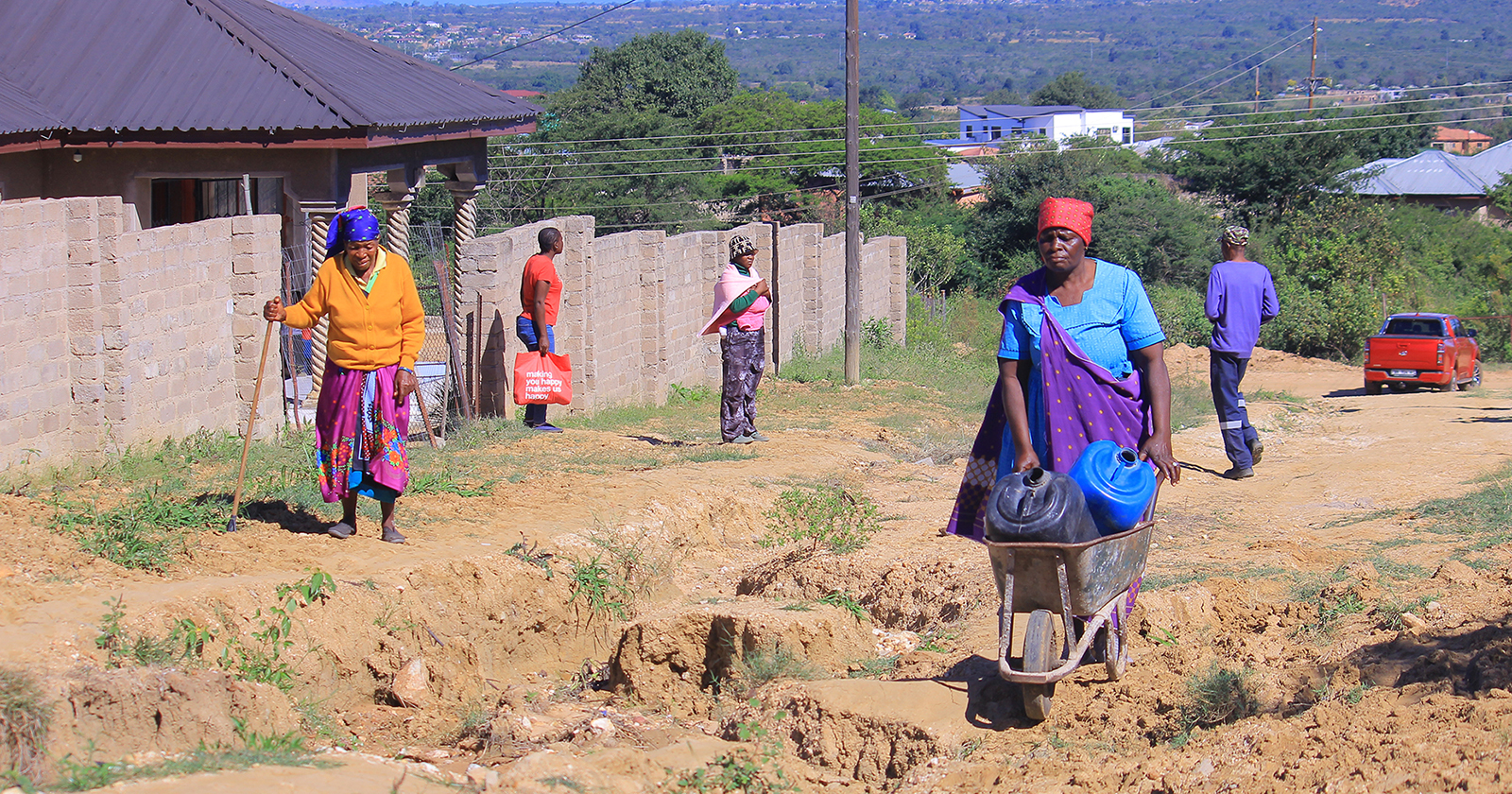
Residents in Chavani and surrounding villages are still without running water despite the completion of a R486 million bulk water and reticulation system intended to serve about 40,981 households.
The Chavani and surrounding villages bulk pipeline and water reticulation project, which started in 2022, was designed to deliver potable water to several villages, including Chavani, Shirley, Njhakanjhaka, Basani, Xitaci and Bungeni.
However, residents say they are still relying on alternative water sources months after infrastructure works were reportedly completed. They say the system has not yet been fully handed over for household use, despite officials indicating that construction is complete and final testing is underway.
Community members say the project raised expectations that water would finally reach their taps, but there has been no meaningful improvement in supply. Many still travel several kilometres with wheelbarrows to buy water per container.
“I use my SASSA grant money to buy water and we are tired of the government. I will not vote in the coming election because I don’t believe anything will change. They damaged our streets and never fixed the roads. How do we push wheelbarrows [with water] now?” said Grace Rikhotso from Bungeni, who lives a few metres from the water reservoirs.
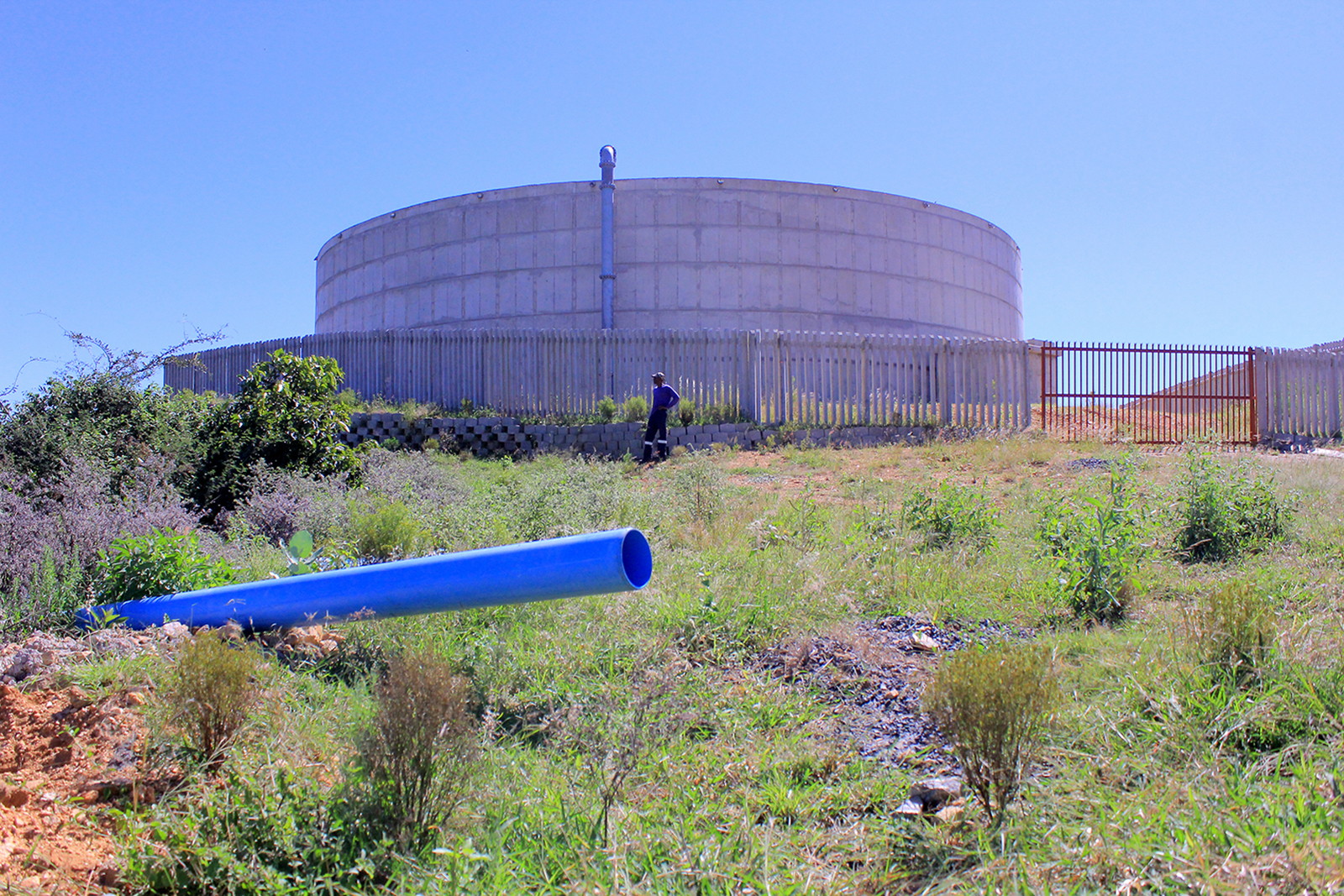
An empty water reservoir in Bungeni, part of the Chavani and surrounding villages Bulk Water Project,
which residents say has not yet delivered water to households despite the infrastructure being completed.
Photo: Thembi Siaga.
The project is being implemented in three phases, with Phase 1 focusing on bulk pipeline and internal reticulation infrastructure. It includes five main components: a bulk pipeline from Nkuzani to Bungeni with pump stations at both ends (R96 million); the Njhakanjhaka reticulation system (R30 million); Basani reticulation (R26 million); Xitaci reticulation (R36 million); and Bungeni reticulation (R41 million). These are intended to form the backbone of the system linking households to a central water supply.
Despite this infrastructure being in place, residents say water has not yet reached households. “They just use our village name for the project, but our people are not benefiting anything. In Chavani they drilled three boreholes in three villages, but there is no water for residents, and they supplied two tanks and stands for each village,” said Chief Sikheto Thomas Mukhari.
In Bungeni, residents say the project damaged an old water pipeline from the N’waManungu Dam, also known as the Middle Letaba, which previously supplied the area before it was vandalised.
“There are no standpipes and we noticed that many things were not done properly in the project. They told us the project is at 100% but it was not handed over to the community. We are calling on them to either complete the project or restore the old water pipeline,” said Vonani Khorombi, project steering committee chairperson.
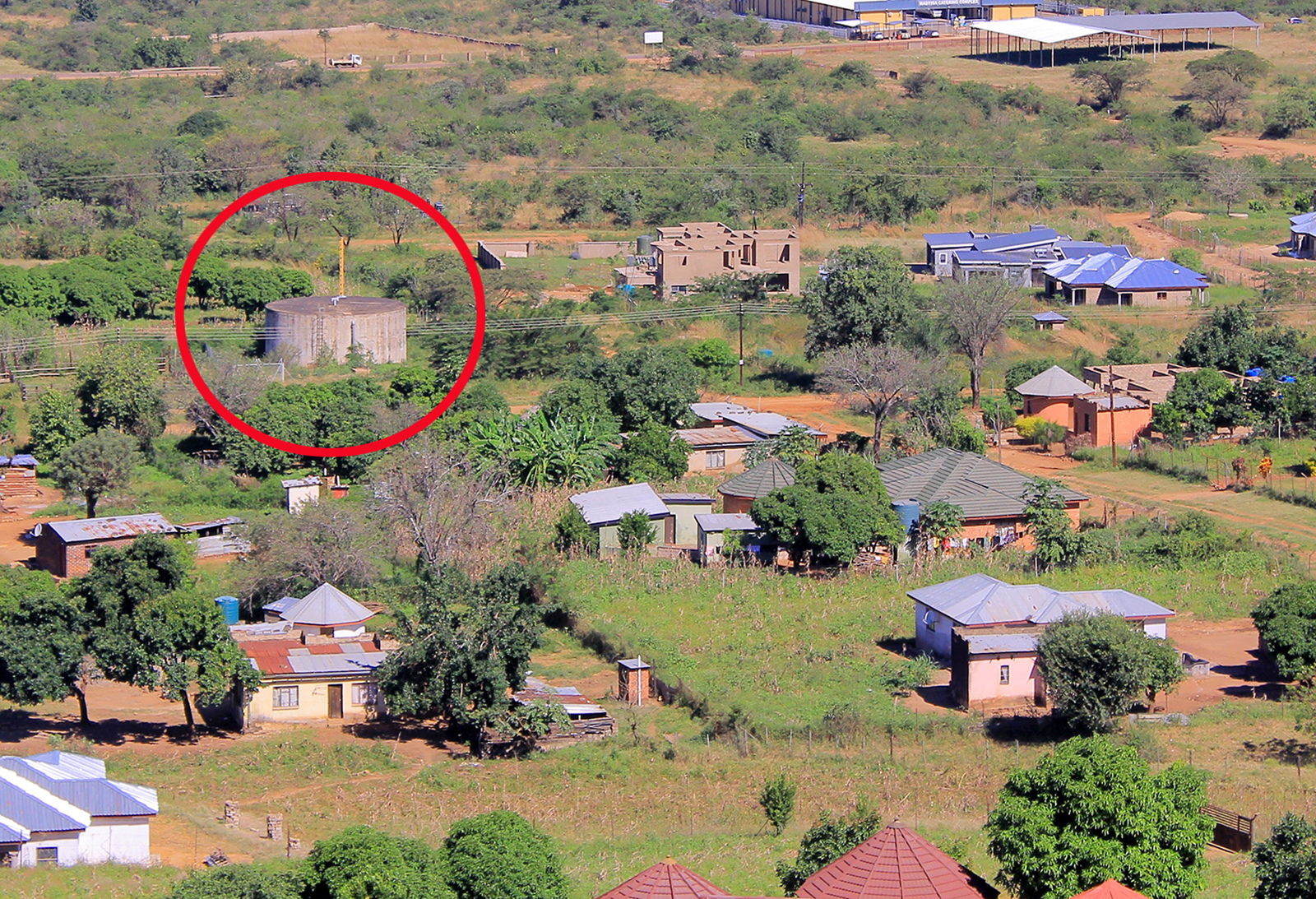
An old reservoir in Bungeni that previously stored water supplied from the N’waManungu Dam,
before parts of the old pipeline system were damaged during the construction of a new bulk water project.
Photo: Thembi Siaga.
Vhembe District Municipality spokesperson Moses Shibambu confirmed that installation of the bulk and reticulation system, including pumps and reservoirs, has been completed. He said the system is currently undergoing final testing, after which water distribution is expected to commence by the end of May 2026.
He said Phase 1 infrastructure works were completed in November 2025, but testing was delayed due to insufficient water availability. He added that recent rainfall has enabled full-capacity testing. On implementation, he said five companies and more than 20 local SMMEs were involved in Phase 1.
Shibambu said the system has been designed with larger storage capacity and an additional command reservoir to improve distribution once operational. However, he acknowledged that vandalism along parts of the supply line has also affected readiness.
Shibambu said the original MIG-approved budget was R318 million, later revised to R486 million, with total expenditure to date standing at R483 million.
According to information published on the Department of Water and Sanitation website, the increase in project costs was attributed to inflation, fuel price increases and exchange rate fluctuations. The department also cited differences between engineers’ estimates and contractor pricing during the tender process, with bids varying significantly from initial estimates.