
In 2013, local baobab expert Dr Sarah Venter from Louis Trichardt had a vision of creating a culture of caring for the Limpopo environment by training rural women to nurture baby baobabs until they are three metres tall and able to withstand threats and thrive on their own.
They planted out their first seedlings in December 2014, and so the Baobab Guardians Project was born. Sarah's dream was to have 50 trees planted in the wild by the end of 2017 and on 14 November the dream came true.
With huge cumulus clouds building up in clear blue skies, the last of the 50 baby Baobabs were planted by one of 48 rural Baobab Guardians, women and men of the Niani region in the far north of Venda, a few kilometres away from the Kruger Park's Pafuri gate and the Limpopo River.
Here most people grow up in the shade of a baobab tree but never think they might one day become a proud guardian for the benefit of their descendants of 200 years to come. This care and vision were celebrated on that day when the first eight Baobab Guardians got their certificates for protecting their "babies" up until they had grown three metres tall and now "releasing" them for the benefit and joy of their grandchildren's grandchildren.
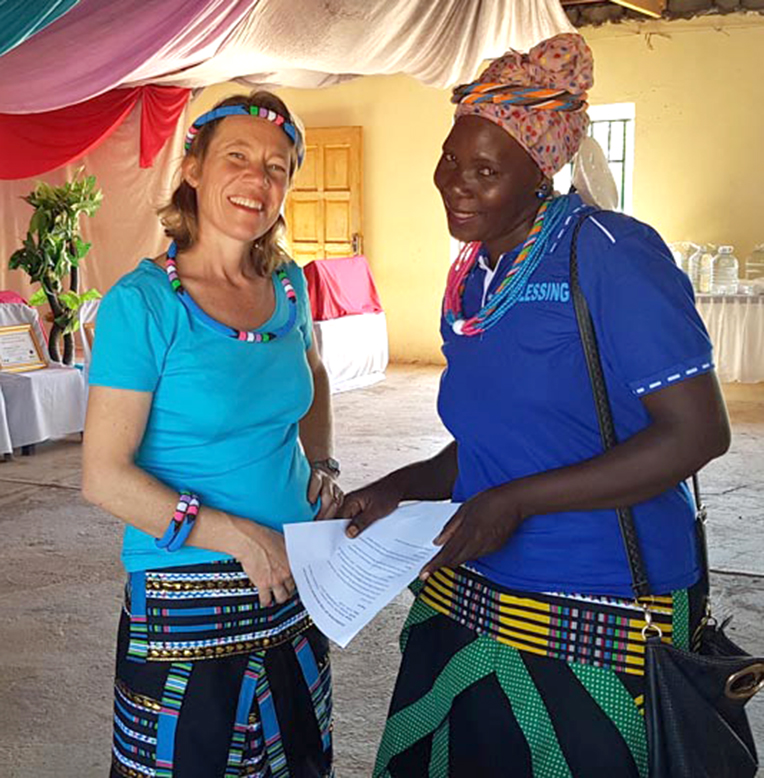
The guardians donned their best Minwendas (traditional Venda attire) and started dancing as soon as their feet touched the ground as they got out of the taxis at the church between baobabs and mopanis in Zwigodini village. Between each certificate, the audience ululated and the guardian did a deep bow (losha) and a little dance.
Part of Sarah's dream was to release her informative Little Baobab book in Tshivenda for all locals to use and to spread the message of a culture of caring at rural schools, churches and crèches. This also came to fruition on 14 November when each delegate of the 100-odd audience got their own Tshivenda booklet, Bugu Thukhu ya Muvhuyu Muhulu, with big smiles and excitement. "Our tree in our language," said the VhaMusanda of Muswodi and held the booklet in the air. In the corner sat Sarah in her minwenda, dead tired but deeply happy that all of them had come so far on this worthy road.
"The baobab tree takes 200 years to produce its first fruits, can live for over 1000 years, survives and even flourishes in almost desert-like conditions; but even this mighty giant is succumbing to the environmental impact created by our civilization. While fruit collection remains a sustainable practice, and doesn't in any way impact on the ecology or wellbeing of baobabs, studies show that the survival of baobab populations is being threatened in the long-term by environmental degradation and climate change," said Sarah. She added that as impressively huge as baobabs are, like all growing things they begin very small and baobab seedlings don't survive easily these days. "Their tasty young tender shoots get eaten up by livestock such as goats, nor can they tolerate drought at this young age, so it's rare for a seedling to last the three years it requires until reaching self-sufficiency in the wild," said Sarah.
Sarah also thanked all her wonderful supporters, including Afke and Liesbeth from the Netherlands, Melissa Krige from Platbos Forest Reserve & African Tree Essences, the Vhembe Biosphere Reserve, Bonga Foods and the Bonga Foundation, who has generously given sufficient seed funding to get this project started, Sevenhills Wholefoods for supporting the writing and printing of the first baobab booklet, and support also received from Cosmetic Ingredients, Meester Masjineering, Graham Barker, Park School (Bournmouth), Murry and Sally Smyth, Lather, Tri-K Industries and Protec Botanica.