
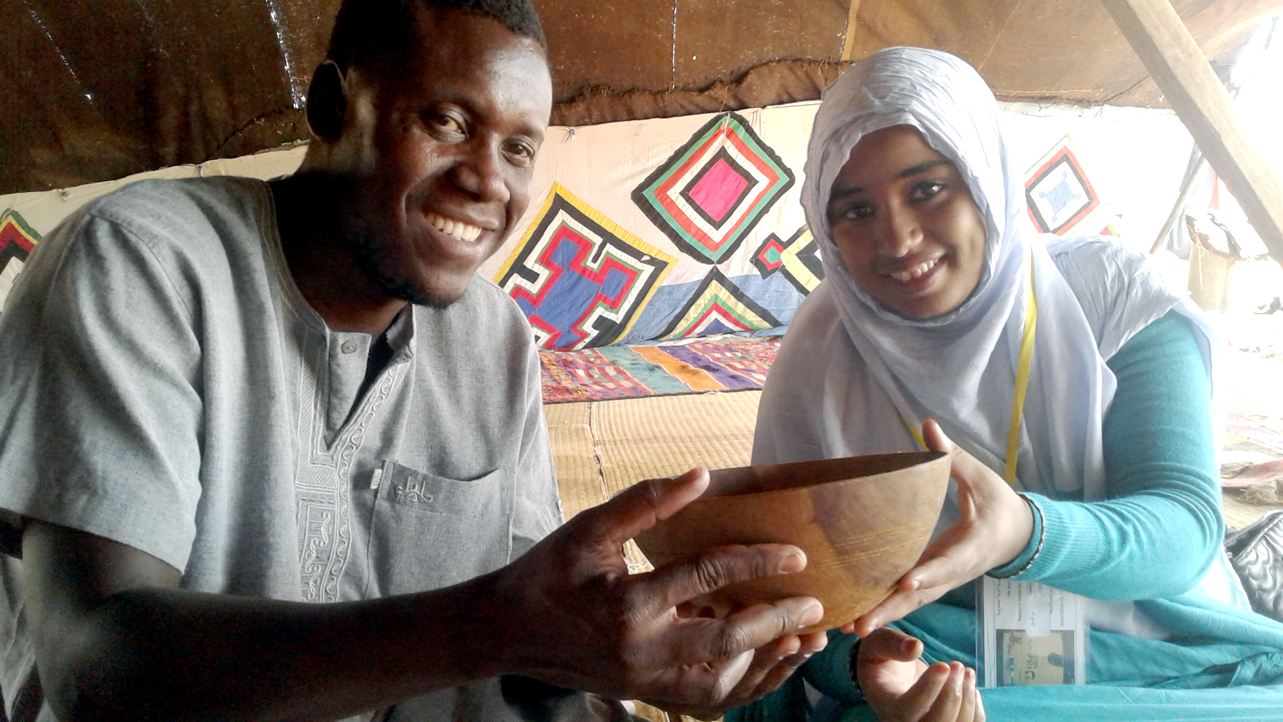
A published author and correspondent of Limpopo Mirror, Given Mukwevho, describes his experiences as tourist for the sake of art…
The joy of travelling the world as an artist has never been small for me. It always comes in leaps and bounds. I know that I will meet a totally new culture and new people.
This is exactly what stayed in my mind as I was buying a neck rest, which had the head of an elephant, at the OR Tambo International Airport. It is normally wise to get one when you are going to be aboard for many hours, as long-distance flights can be daunting at times.
I was going to Dakhla refugee camp in the desert in Algeria, for the annual Western Sahara International Film Festival (FiSahara).
On 9 October at around 20:00 I boarded the flight to Cairo, and connected to Algiers the next morning. The very evening I had to take another flight to Tindouf airport, an airport in the desert. Then in Tindouf, I met other people from different countries across the world, who were attending the FiSahara.
The FiSahara is an international film festival that aims to give hope to Western Saharan exiles who have been living in the desert camps for more than 30 years now. The Saharawis, they told me, had been chased out of their rightful land by Moroccans and then Algeria had given them refuge.
As part of the South African delegation, we were welcomed by the Saharawis and were accommodated with a family who looked after us for eight days. They shared their culture and values with us.
The festival took place from 11 to 16 October. The festival's activities included audiovisual workshops, film screenings, a cultural fair, camel races, concerts, round tables and many other cultural activities.
During the festival, I recited my poetry and read from my published books, which drew much interest among my listeners, some of whom had not met a writer before, and a young author to boot. This gave them hope that they too could grab the pen and tell their own stories.
What I liked most about the festival was not only participating and watching documentaries on the lives of the Western Saharawis; I enjoyed interacting with exiles in Dakhla and Boujdor camps, learning about the people's challenges and difficulties as exiles. I was truly moved and touched by their love; they are a good people.
So, from my experience in the desert with the Saharawis, I incepted two different ideas for two stories. I would like to work on those stories with the purpose of highlighting the plight of an ordinary Saharawi. Many stories had been told before through the medium of film, depicting the lives and challenges of the Saharawis from overtly political perspectives. I need my stories to be about the ordinary, day-to-day life of a Saharawi in the refugee camp.
So, I can surely say that had the Department of Arts and Culture not sent me to participate in the festival, I would not have gained the kind of first-hand experience which I reaped in the desert or camps that has so inspired me to write the two stories in question.
All I can say now is: African countries are never totally free until Western Saharawis are given their land back.
Therefore, I once again thank the department for investing in me as an artist who wants to make sure that I produce the kind of literature that promotes world peace and international relations.