
By Elmon Tshikhudo and Anton van Zyl
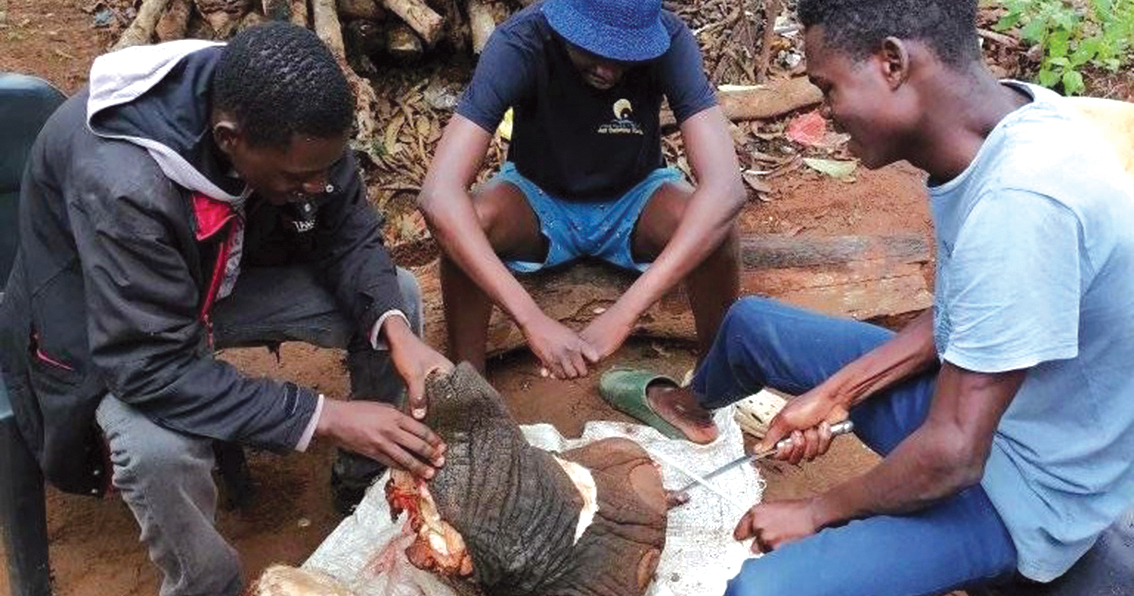
Last weekend, stray elephants ventured close to Khubvi, a village just 20 km northeast of Thohoyandou, which caused panic among residents. Two of the elephants were later shot by game rangers, but residents believe a third one is still hiding in the bushes.
Environmentalists worldwide talk about the "elephant in the room," with specific mention of the declining figures in certain parts of the world and the over-population in other parts. In Vhembe, however, it is more a case of "the elephants at our doorstep," with stray herds causing destruction and even fatalities.
Tensions ran high in the Khubvi area on Friday afternoon after residents spotted two stray elephants in the area. The animals were roaming in the bushes near the Mbwedi River between Mukula and Khubvi.
After game rangers were alerted, they came out and shot the elephants. This caused a lot of excitement as the local residents were allowed to distribute the meat among themselves. Videos of the "feast" quickly circulated on social media platforms.
Where exactly the elephants came from was not clear. Khubvi does not border a major game park where elephants are present.
The spokesperson for the Limpopo Department of Economic Development, Environment and Tourism (LEDET), Zaid Kalla, confirmed they had put down two stray elephants over the weekend. He could not shed light on the origin of the animals.
"Elephants are among the wildlife categorised as danger-causing animals," he said. "The Department will continue to put the lives of our people first. We hereby encourage our community members to alert authorities on sighting of any stray wildlife, and we further encourage our people to refrain from capturing or approaching stray wildlife," he added.
Two weeks ago, Limpopo Mirror reported that a farmer from the Makuya area, Joseph Munzhelele, had suffered heavy losses when elephants trampled his mango orchard. This was the second time in less than two years that elephants roamed into the area.
The elephants were believed to have come from the nearby Makuya Nature Reserve, which is managed by LEDET.
"These huge animals move as a herd. In our case, we spotted three while others say they were five. The safety of residents cannot be guaranteed, and these beasts can just emerge anywhere, inasmuch as the fence at the local park is not well kept," said Munzhelele. He added that the Khubvi residents might be very impressed with the sudden windfall of free meat, but the safety of residents should be a greater concern to all.
On July 27 this year, a South African National Defence Force soldier stationed near Musina was trampled to death by stray elephants crossing from Zimbabwe. Private Xavier Raynard (33) was apparently trampled by a herd of elephants on the Malala Drift road, near the banks of the Limpopo River.
The precarious position that elephants find themselves in was the topic of discussion during the "Elephant in the Room" conference held in Harare in Zimbabwe from Oct. 29-30. The main focus of the meeting was the growing elephant population in Gonarezhou National Park in southeast Zimbabwe.
During the conference, it was stated that roughly 70% of Africa's 415,000 remaining elephants are in southern Africa, about 20% in East Africa and barely 10% in Central and West Africa. Of the 44,000 elephants in South Africa, most can be found in the Kruger National Park.
The over-population of elephants in certain areas is causing serious problems, with calls that a culling process be started. This caused an outcry from animal lovers across the globe, with the debate becoming highly polarised.
In what could perhaps be described as a weird sense of humour, the Botswana government officials threatened last year to send 20,000 elephants to Germany and 10,000 to London to give Western observers a taste of the safety risks faced by rural communities in Africa, such as in northern Vhembe.
The abundance of elephants also has a severe impact on the ecology. During the Harare conference, the disproportionate role of male elephants in transforming the vegetation was highlighted. Elephant bulls knock over or damage trees, and even the mighty baobabs are under threat.
The solutions to curbing the population growth of elephants are not always very popular or practical. Culling is seen as a last resort, and options such as relocating herds or using contraceptives are more widely used.
In the Khubvi area, the feasting continues – for now. On Tuesday, two more stray elephants were spotted in the Makuya area. If such stray animals also find their way to more densely populated areas, there may be funerals instead of parties this festive season.