
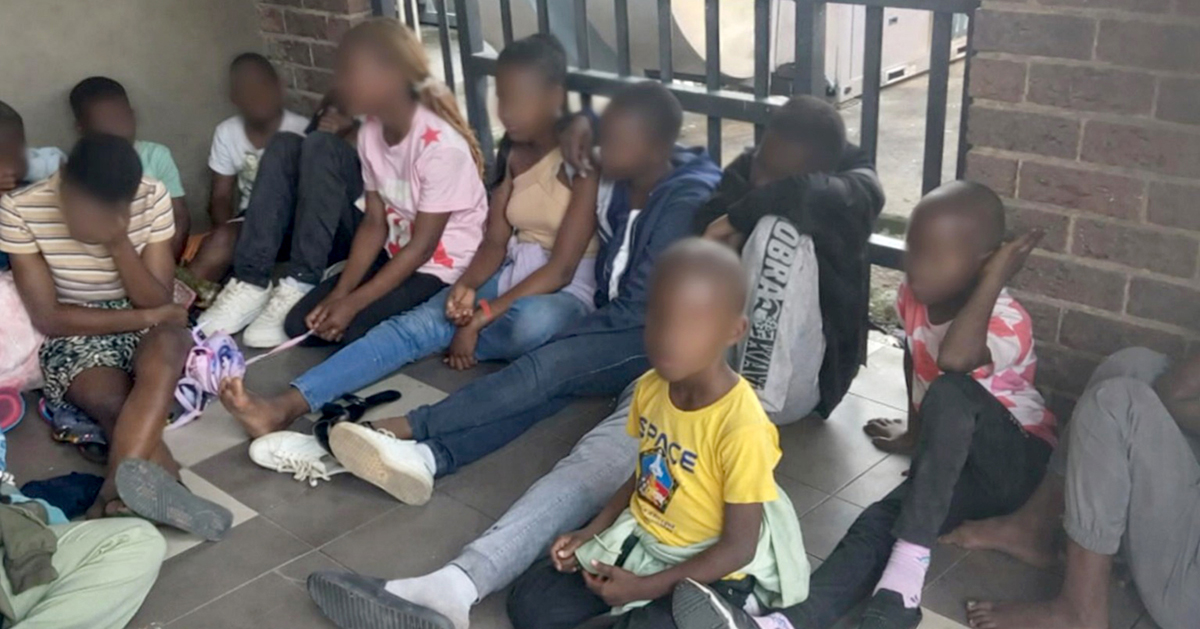
Children intercepted at the Beitbridge border post over the past few weeks were most likely not victims of child trafficking, but part of a long-standing pattern of undocumented cross-border travel driven by the high cost of legal travel documents, particularly in Zimbabwe. Several people with experience of travelling between Zimbabwe and South Africa told Limpopo Mirror that affordability, rather than criminal intent, often lies behind such cases.
The Beitbridge border post made headlines several times at the start of the year following the interception of groups of children travelling without proper documentation. On 8 January, 20 children aged between five and 17 were intercepted near the Limpopo River by the Border Management Authority (BMA), working with the South African National Defence Force (SANDF). The children were believed to be travelling from South Africa to Zimbabwe and were accompanied by 10 adults, only one of whom was a parent to one of the children. The adults were arrested.
Five days later, on 13 January, a junior border guard stopped and searched a Zimbabwe-registered minibus taxi at Beitbridge. The vehicle was transporting 33 undocumented children aged between four and 15, travelling from South Africa to Zimbabwe. Two Zimbabwean men, aged 32 and 23, were arrested for allegedly facilitating the illegal movement of the children across the border.
The arrests of the drivers and co-drivers were widely welcomed, amid concerns about child safety and the potential exploitation of minors at one of southern Africa’s busiest border crossings.
Excessive passport fees
One woman interviewed by Limpopo Mirror, who has children living in Zimbabwe, said cost was a major factor. She asked not to be named.
“The Zimbabwean passport is extremely expensive and beyond what some Zimbabweans working in South Africa can afford. The passport fee for a three-year-old child is the same as for an elderly person. The passport is valid for five years, yet within those five years my child may only visit me about three times,” she said.
Many Zimbabwean parents work in cities such as Johannesburg and Cape Town, while their children remain in Zimbabwe to continue schooling. December is often the only opportunity for families to reunite, with parents eager to see their children and children keen to visit South Africa and experience where their parents live and work.
However, the cost of securing the required documents is prohibitive for many families. Zimbabwean children travelling to South Africa must have a valid passport, an unabridged birth certificate and written consent from both parents. If a child travels with someone who is not a parent, the consent must be certified by the relevant authorities.
A Zimbabwean passport costs US$170 (about R2,800) and takes nearly two weeks to process. By comparison, a South African passport costs R600 per child, while passports in Zambia and Botswana cost about R440 and R305 respectively.
Parents must also budget for transport costs, with bus fares to Johannesburg ranging from R600 to R800, as well as food and other travel expenses.
A cheaper option
To reduce costs, some parents turn to informal cross-border transporters, known as malaichas, or certain bus operators who illegally transport children across the border. It is alleged that some drivers pay bribes to bypass immigration controls. The cost from Zimbabwe to Johannesburg, using these operators, is around R2,000.
Children travelling this way are sometimes intercepted by the BMA, as happened in the January incidents. In the 13 January case, Decent Chokuwamba (32) and Risenga Makhenza (23) were arrested and charged under the Immigration Act for allegedly facilitating the illegal movement of undocumented persons.
National Prosecuting Authority spokesperson Chegofatjo Mabanna said the two suspects appeared in the Musina Magistrate’s Court and the case was postponed to 22 January for profiling of the accused. They were remanded in custody.
It’s not trafficking
On social media, some users described the incidents as child trafficking. A representative of Lawyers for Human Rights, Nyiko Manyusa, said this was incorrect.
“Child trafficking involves the illegal movement of children through force, threats, kidnapping, or deception for criminal purposes such as child labour, sexual exploitation, abuse, murder, or the sale of body parts,” he said. “Undocumented movement, on the other hand, refers to children travelling without the necessary documentation, often with parents, relatives, or on their own.”
Manyusa said children found in such circumstances should be treated as victims rather than criminals.
“The law prohibits the arrest and harsh detention of children in these cases,” he said.
Advocate Simbab Chitando, a spokesperson for the Zimbabwean Exemption Permit Holders Association, said the matter should be dealt with urgently and with the children’s welfare at the centre.
“The best interests of the children are of paramount concern, and in this case, ensuring that the children are reunited with their parents, or guardians, and attending school, is a priority. The political issues of migration is secondary, and can be dealt with between the two governments at a later stage,” he said.