
By Mathatha Tsedu
Sundays in cities such as Johannesburg are always a marvel to see the various African Independent Churches' members in their varied costumes praying in parks and under trees. There is a crisscrossing of the cities with congregants going to their specific denominations, sometimes many kilometres away.
Most would wear white and blue, or white and green or just plain white. Others would be in khakis and green jerseys. Some walk with sticks with intricate circles, whilst others, mostly men, carry sticks, some with woollen ropes either tied to the sticks or wound around their bodies. It is not unusual to find a gardener in suburbia transformed on Sunday into a raging preacher and leader, teaching his few flock under a tree and praying for the sick.
And then the singing and the drums, with hymns, mostly unwritten, and which start slowly as the lead singer holds his hand to his jaw, with the congregation joining until it reaches the right note and crescendo. And then the dancing starts, the steps, the jumping, the circling, all interwoven into a tapestry of human movement.
It was the need to be able to do this as part of praying, to be African and Christian without contradiction; without throwing away African culture, that saw many African converts leave the "white" churches to form independent churches in the early 1900. It was part of the struggle against religious, spiritual and cultural imperialism that linked with the political forment against oppression at the time that saw the mushrooming of these churches.
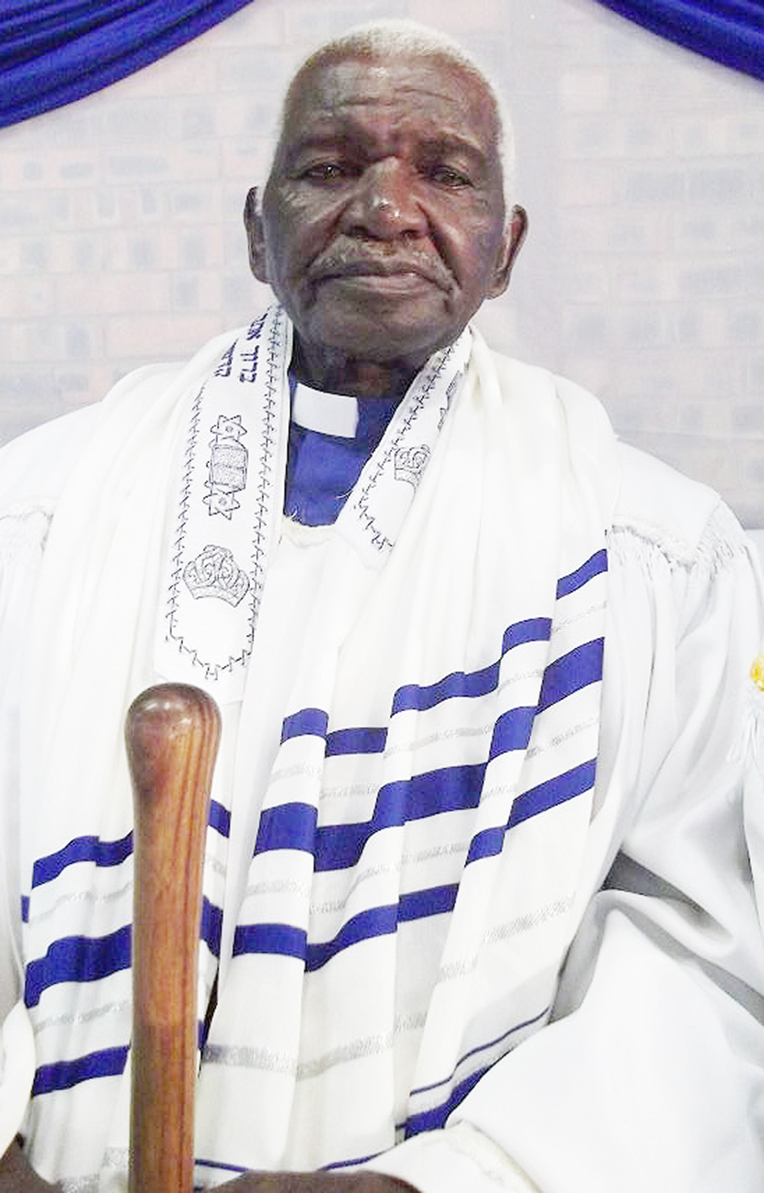
Bishop Tshamano P Makwarela, head of the Zion Apostolic Revelation Church of Africa, who died on Saturday, aged 105, was part of that generation. He met and worked with other leaders and founders of African churches such as Bishop LT Marole of the Zion City Apostolic Church, Bishop Poulos Miriri of the United African Apostolic Church (UAAC), Bishop Engenas Lekganyane of the Zion Christian Church, Elias Mahlangu of the Zion Apostolic Church and Mabiletja of the Christian Apostolic Church. These were the men of God who would not stand the hypocrisy of white people in the church.
The message of the African churches, of self-reliance and pride in African culture, resonated with the young Makwarela as he immersed himself into spirituality and learnt the bible at night, tutoring as he had not been to school at all. He grew through the ranks in the church, from a parishioner to a pastor for Tshiawelo branch in 1975, and in 1985 he became Presiding Elder for Johannesburg district and national treasurer. In 1988, following the death of Bishop WH Maguga in 1986, he was elected Bishop and General Overseer of the Zion Revelation Apostolic Church of Africa.
It was not unusual at the time to find the different denominations coming together on Sundays to worship together, or joining when there were celebrations. This was because, much as they were different, they were bound together by their belief in the defence of African values. Unlike the emerging new churches today, these men and women led simple lives and had nothing to show for the exalted positions they held.
Makwarela lived that doctrine and to his last day he lived in a simple four-room house in the Dopeni village, where he died last Saturday. He also encouraged his congregants to build church houses for worship. During his tenure as bishop, no fewer than 16 church structures were built and officially dedicated by him.
Bishop Makwarela is a descendant of the Mphaphuli royal house in Venda, Limpopo. He was born at Vuvha in 1913. He is the third-born child of the late Mr Tshikorowa Makwarela Mphaphuli and mother Muravha, who died in 1925 and 1929 respectively. After the death of both parents, he moved to Vombe to be taken care of by relatives. It was here that he joined the Zion Revelation Apostolic Church of Africa (Nzumbululo).
Makwarela was baptized by the Rev. Lucas Siaruli in 1927. Siaruli is one of the founding fathers of ZARCA who led a group that broke away from the Faith Mission Church, which was led by missionary Pieter le Roux.
Makwarela moved to Johannesburg in 1934 and worked as a domestic assistant. He never went to school but had a strong desire for learning. Between 1938 and 1940, he attended night school bible classes and it was from here that Makwarela was prepared and equipped for the work of God.
Moving out of the "white" churches meant forsaking the aid from Europe that was used to ensure a dependency syndrome. Having taken their own lives and spirituality in their hands, the ZARCA used whatever spaces they could get as their places of worship.
ZARCA's secretary general, Pastor Muvhulawa Phupheli, says "when Malan came to power in 1948, the Revelation congregation were forced to move out of town to Sophia Town where they bought a stand for GB Pounds1640.
"They built a church structure with corrugated iron sheets. This was later demolished with the removals from Sophia Town to Soweto and no compensation was ever given. It was a sore point for Bishop Makwarela and before he took seriously ill, he had been planning another trip from Nzhelele to Johannesburg to seek restitution for our land," he said.
Phupheli, who served under Makwarela for many years, added: "The Bishop was a gifted man of God. He had a sharp mind, a powerful memory of events and dates. He was a true worshiper, a prayer warrior and a humble servant of his people and flock.
"He did not have to search for Bible scriptures when he conducted his sermons. He would often boast, 'zwothe zwo nwaliwa hash mibuna yang' (All is written in my heart). He was the custodian of the culture and traditions of the Zionist church. He was nicknamed Ludongo lwa musuku (golden dish). He served his flock with dedication and remained faithful to his calling until his death on 19 August 2017 at the age of 105".
He leaves behind a denomination of 38 branches, whose members are spread throughout South Africa as well as in Zimbabwe. He is survived by two wives, nine children, 40 grandchildren and a fourth generation of 25.
Bishop Makwarela will be laid to rest at the Dopeni cemetery on Saturday, 26 August. The service will start at his home at 06:00.