
Survivors of the bus crash that claimed 43 lives have blamed the driver for speeding and overloading as the authorities continue identifying the deceased and investigating the cause of the accident that occurred on Sunday, 12 October, outside Louis Trichardt on the N1 road near Ingwe Lodge.
The bus, operated by DNC Bus Services – located in Zimbabwe but with a secondary base in East Londen - and travelling from Gqeberha to Zimbabwe, was carrying 91 passengers when it veered off the road at a sharp bend on the treacherous mountain pass. The driver allegedly lost control of the vehicle, which broke through the roadside barrier before plunging down a steep embankment, trapping many passengers beneath it.
Of the 91 occupants, 43 lost their lives, 40 received medical attention in different medical facilities while eight discharged themselves. The injured were transported to Louis Trichardt Memorial, Siloam and Elim Hospital, with one critically injured child airlifted to Tshilidzini Hospital.
Survivors describe chaos
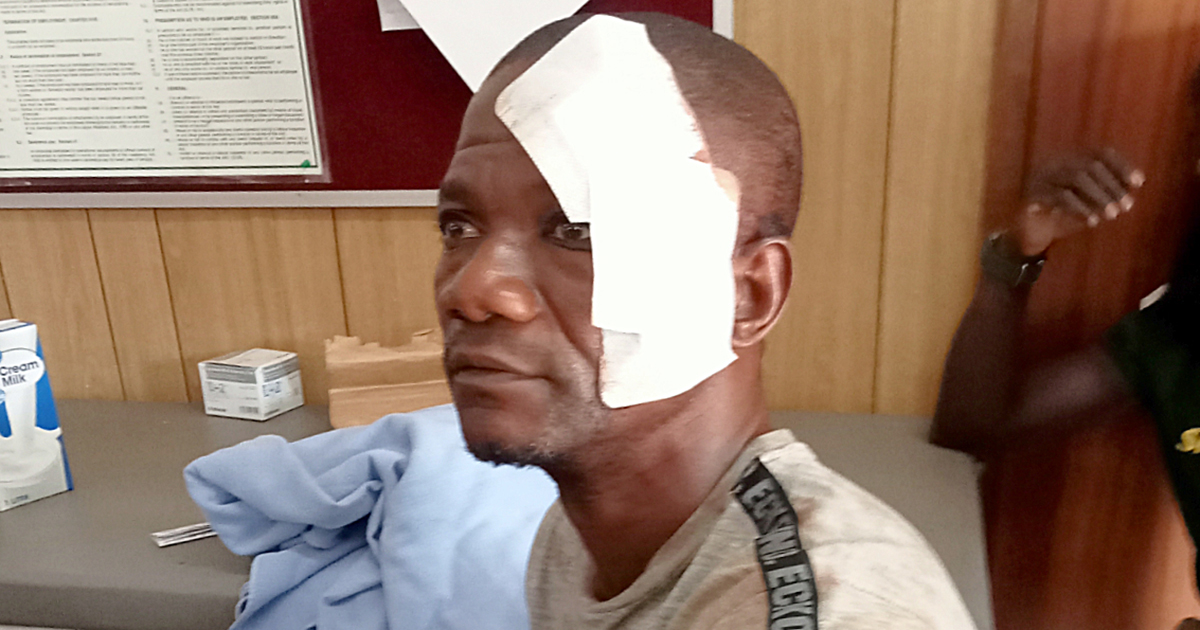
Maxwell Zacharia, a Malawian passenger, described the traumatic moments. "It's a bit traumatising, because almost everyone was sleeping and only few people could actually witness what had happened. I think everyone woke up when the bus went down the slope, so it's a bit traumatising, because there were kids in the bus, and everyone was not expecting this whole incident. I just woke up, I heard people screaming and then I looked at the road and saw that the bus was out of the road. I was in shock and panicked. I thought the bus was going to catch fire, then I opened the window so that we could be safe if the bus caught fire."
Willard Suwedi, another Malawian passenger, said that the bus became overloaded at East London. "The bus got overloaded at East London, but the conductor kept on picking up other passengers as we travelled towards Gauteng. As we travelled towards Louis Trichardt, the driver stopped because he had discovered the bus had developed some faults, but he decided to continue with the journey," he said.
Official response and identification
Transport Minister Barbara Creecy confirmed 43 fatalities, consisting of seven children, 18 adult males and 18 adult females, with 48 injured persons. She expressed concern regarding the persistent trend of road crashes involving public transport and emphasised that the current review of the National Road Safety Strategy will strengthen efforts in promoting road safety.
Premier Ramathuba identified speeding and fatigue as possible causes. "We are here as a government because we know these are difficult times for the families. This is no longer a family tragedy but a national tragedy," Ramathuba said.
As of 14 October, 17 families had arrived at Tshilidzini Hospital to identify their loved ones, with the process continuing on 15 October. The victim-identification team has taken photographs of all the deceased and started collecting fingerprint sets from all the bodies. Working with the authorities from both Zimbabwe and Malawi, the province hopes they will be able to run fingerprint comparisons, since some of the deceased do not have identification documents.
Premier Ramathuba said: "We are satisfied with the work done thus far by our teams. This is a difficult period, especially for the families, hence as the provincial government, our focus is to assist those injured to recover and for the positive identification of the deceased for their families to find closure. Investigations into the cause of the accident will take time as we analyse why the bus travelled such a long distance with so many passengers."
To date, 19 patients have been discharged from hospitals to reconnect with their families in Zimbabwe and Malawi.
International support and investigations
Zimbabwean ambassador David Hamadziripi said: "We are still trying to verify the real identity of those who perished in the accident. We have got 43 who died and we still have [people] who are still admitted in various hospitals [and some who] were treated and discharged. We're right now in contact with the families back home in Zimbabwe and Malawi, firstly to ascertain the identities of those who are in the mortuary. The government of Zimbabwe and Malawi will start facilitation of the repatriation, all the costs towards the repatriation of the deceased are going to be met by the two governments."
Zimbabwean President Emmerson Mnangagwa pledged state assistance towards the repatriation of the Zimbabweans who perished and said the government would meet all hospital bills for the injured.
Ongoing investigations by the South African Police Service will focus on culpable homicide, while the Road Traffic Management Corporation is conducting a full-scene reconstruction and mechanical investigation of the vehicle. The Department of Transport has also started engaging with the Zimbabwean authorities about cross-border transport compliance.