
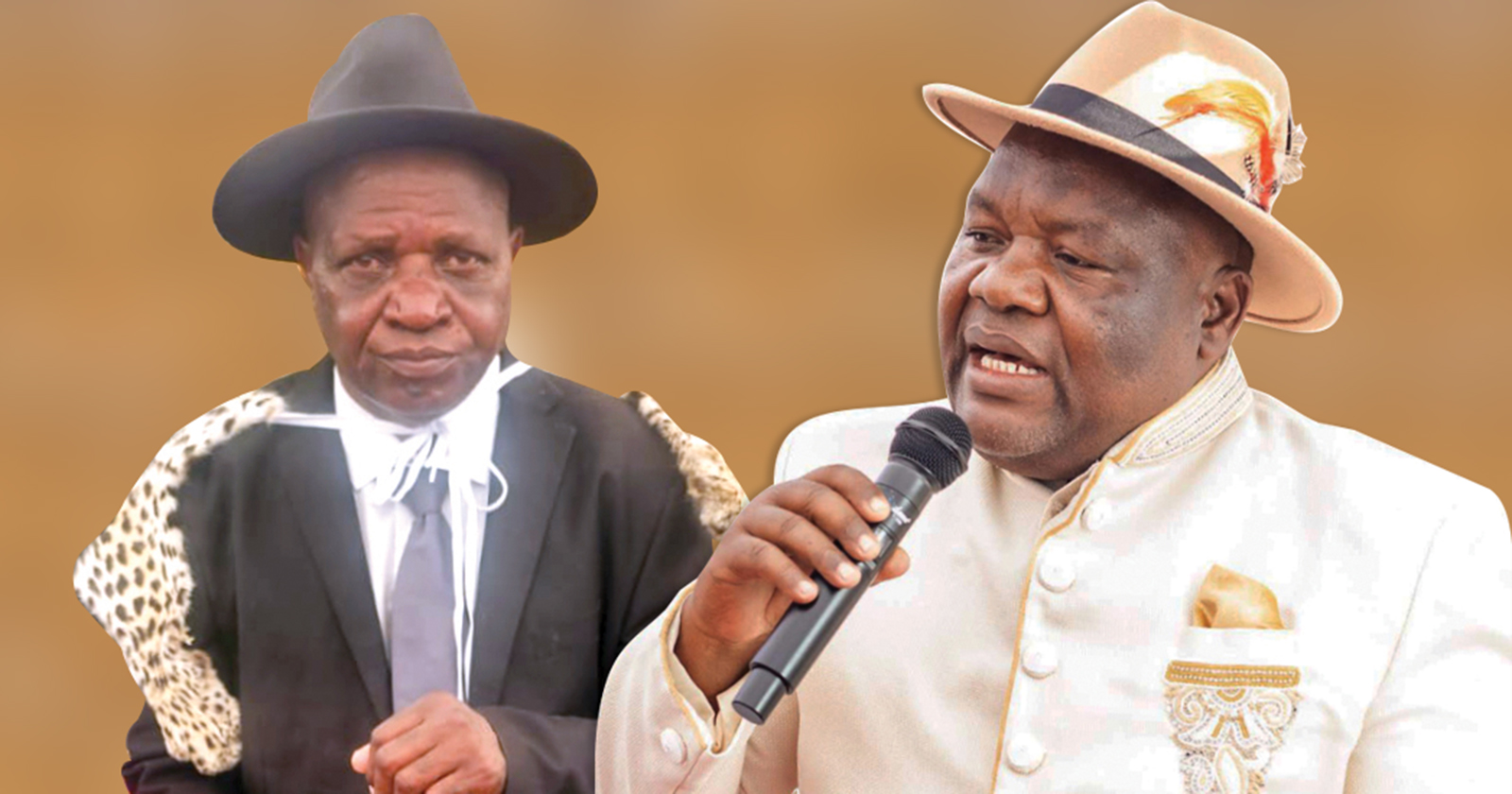
Members of the Mudimeli Royal Council, family members, and supporters of Vhamusanda Vho Radzilani Mudimeli blocked the road to Mudimeli village on Saturday (25 April) to prevent guests from attending the coronation of the new traditional leader, Vhamusanda Vho Thifhindulwi Nekuvule.
Dissatisfied royal council members and community residents were clearly unhappy about the installation of a new traditional leader in the same village where Chief Mudimeli was inaugurated in 1994.
The angry royal council members alleged that divisions within the Mphephu royal leadership were the root cause of the conflict. They claimed that factions supporting Toni Mphephu Ramabulana and Thovhele Mavis Mphephu — who is widely recognised as a senior traditional authority in the Nzhelele area, under whom many traditional leaders fall — were behind the dispute.
They further accused the group aligned with Toni Mphephu of attempting to influence control over shares in coal mining operations in the area by installing a traditional leader who would support their interests.
Police were dispatched to the area to manage the situation and engage with the protesting community members. Following discussions, the road was eventually reopened after the dissatisfied group agreed to disperse.
The spokesperson for the Mudimeli Royal Council, Ronald Mudimeli, said they were surprised to hear that Thovhele Vele Kutama had come from another area to inaugurate a traditional leader within what they described as Mphephu territory.
He said the royal council was deeply concerned and disappointed about the ongoing confusion and unrest affecting the Mudimeli traditional community.
“For many years, Mudimeli village has been a peaceful and united community. However, recent developments have introduced divisions that were previously unknown to us. It is our firm view that these tensions are not organic, but are the result of deliberate efforts by certain individuals or groups seeking to exploit emerging economic opportunities, particularly those associated with mining activities in the area,” he said.
He added that the Mudimeli Royal Council finds it troubling that there are attempts to impose multiple traditional leadership structures within the same traditional community without a clear legal or customary basis.
“This has created uncertainty, conflict, and unnecessary fragmentation within a small and historically cohesive community,” he said.
The Mudimeli Royal Council said it had welcomed the presence of mining activities with the hope that these would bring development, employment, and improved livelihoods for residents. However, it expressed concern that the situation had instead led to growing divisions, disputes over authority, and restricted access to land that communities have historically relied on for subsistence and livelihoods.
The council said the events of the past weekend had further deepened its concern, particularly the inauguration of another traditional leader in an area it said falls under the leadership of Chief Mudimeli.
It described the development as a deliberate act that undermines the authority and dignity of Chief Mudimeli, who it says has been officially recognised to lead the village.
The council also said that after learning about what it described as an ungazetted and unlawful plan to inaugurate the Nekuvule traditional leadership, it engaged with relevant authorities and was advised to consider obtaining a court interdict. It further reported the matter to Dzanani Police Station.
Equally concerning, it said, were reports regarding the role of law enforcement during the incident. It alleged that the police presence did not uphold a previous court interdict but instead allowed the inauguration to proceed.
The Mudimeli Royal Council reiterated that it has consistently supported development initiatives, including mining activities, provided that due processes are followed and that benefits reach the local community through proper mechanisms such as Social and Labour Plans.
The council called for an investigation into the recent installation of chiefs at Mudimeli village, which it says is the main cause of community unrest. It also called for urgent clarification from relevant authorities regarding the legitimacy of the events of the past weekend.
Responding to the allegations, spokesperson for the Nekuvule Royal Council, Vhomakhadzi Cecilia Phaswana Nekuvule, said she has been acting as traditional leader since 2017.
She said the Mudimeli family settled on Nekuvule land in 1965 after they were removed by the apartheid government from Mudzivhadi near Witvlag, outside Louis Trichardt. “They [the Mudimeli clan] later claimed that the land belongs to them and that they want to rule us,” she said.
She added that they would not allow others to take advantage of the situation, particularly because of the coal mining developments in the area.
Nekuvule said her forefathers were born in the area and that she has been responsible for demarcating residential stands for community members. She maintained that they are the rightful owners of the land.
She further explained that the Mudimeli group approached the High Court in Thohoyandou in April 2022 in an attempt to prevent the installation of the Nekuvule traditional leader.
“They were given a time frame by the court to provide facts supporting their claims, but they failed to submit the required documents. We then returned to court, and the court granted us the mandate to proceed with the installation of our traditional leader,” she said.
The court ordered the parties to refer the matter to the Limpopo Premier. The Premier would then need to decide on whether a commission or committee is to be appointed to investigate the dispute.
Nekuvule expressed disappointment over the actions taken by the Mudimeli Royal Council. “We are disappointed by the manner in which the so-called Mudimeli Royal Council closed the road to prevent us from inaugurating the traditional leader,” she said.