
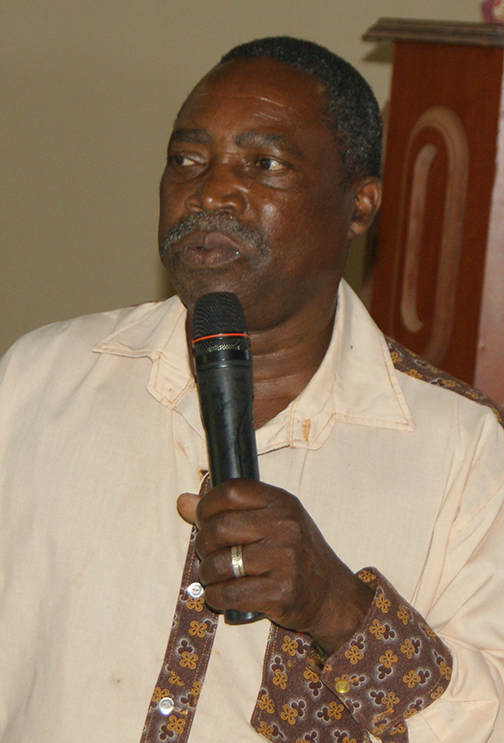
The victim-empowerment organisations Munna Ndi Nnyi and the Rinae Sengani Foundation visited the African Methodist Episcopal Church, where they engaged the congregants on issues of domestic violence.
The event was held at the church's premises at Tshikota township in Louis Trichardt last Sunday.
Dr Tshifhiwa Rankhododo welcomed and introduced the speakers, Munna Ndi Nnyi's Dr Bardwell Mufunwaini and Rinae Sengani Foundation's Rinae Sengani.
"We heard and read different speeches and stories on abuse against women and children since the beginning of the 16 Days of Activism," he said. "Women and children abuse is a serious, real problem in our communities and each one of us must vouch never to become part of the problem but of the solution."
The church was divided into two groups, the males on one side and the females on the other side, to compile the A-list of all problems that affected them adversely regarding relationships. Subsequently, the men read their points or "problems regarding women" and the women did likewise. At the end of the day, the men and women entered into an agreement to refrain from all acts of domestic abuse.
"In love, we are not called to tolerate each other's abusive behaviours, but to love each other," Mufunwaini said. "The only way to end domestic violence is to engage both sexes in dialogue that will further bring the spirit of vhuthu (humanity) among our communities."
Rinae Sengani expressed vehement criticism on women who frequent taverns and pubs even though they have no money to get beverages for themselves. "As women, we victimise ourselves in that we go to taverns without money for beverages," she said. "You get a man, a complete stranger sometimes, to buy you alcohol and food there, and go to sleep at his place. The next morning you demand money from him; if he fails to do so, you report him for rape. What kind of lifestyle is that?"
The church's representatives, Dr Andani Maiwashe and Mrs Peggy Maiwashe, thanked Mufunwaini and Sengani, saying that the church treasured their visit. "As the church, we do not divorce ourselves from the society in which we live; we are part of problem-solving in this society," Mrs Maiwashe said.