
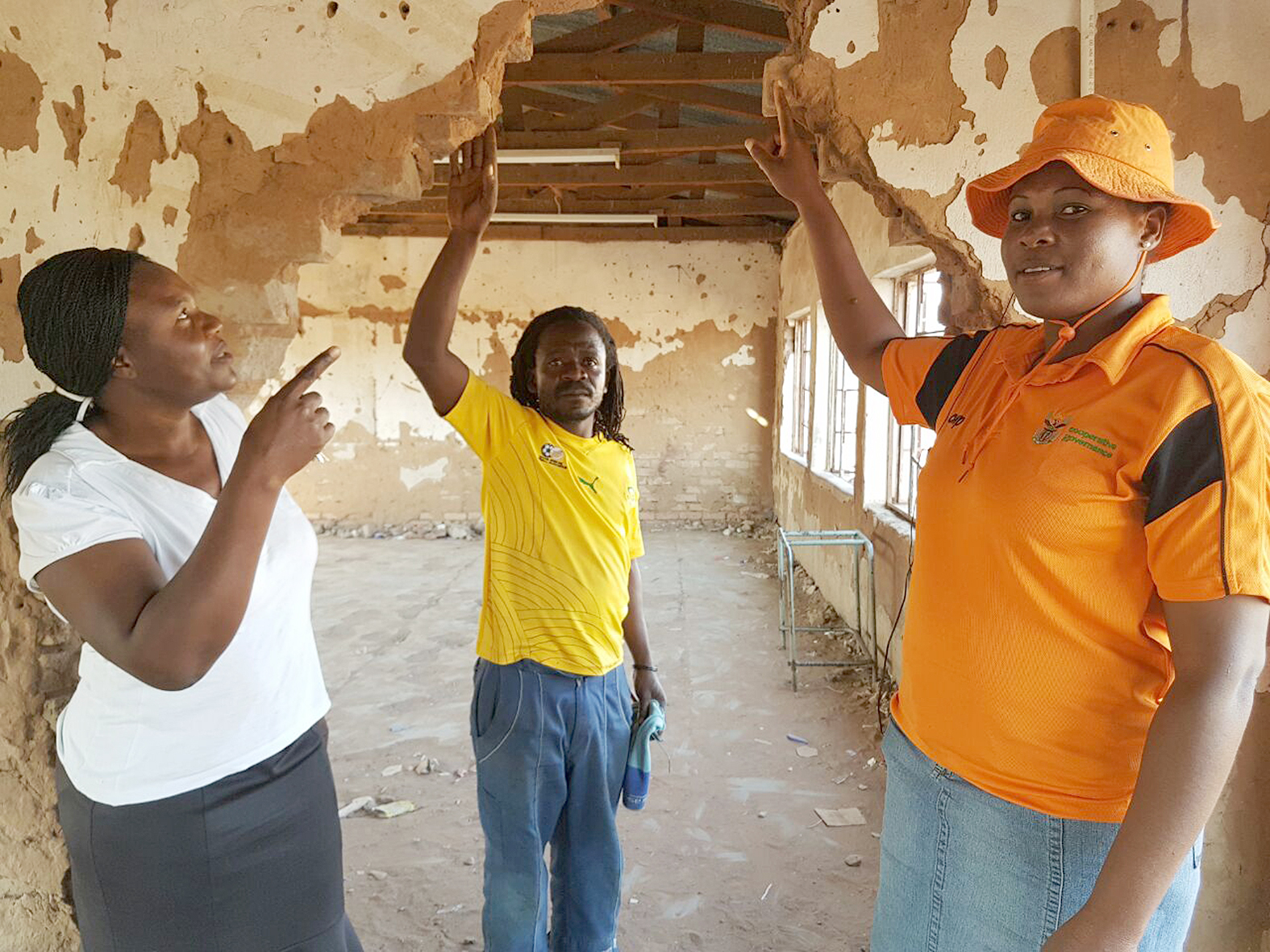
From outside, the buildings of Bale Primary School in Niani look like an ordinary old school. However, from inside, the building resembles a structure that was destroyed by war.
Besides the collapsing roof and cracking walls, the openings between the old classrooms look like caves. Some of these openings between the classrooms, which are used by senior pupils in Grade 5,6 and 7, are big enough to allow learners to walk through upright.
Concerned parents said they had been complaining to the Department of Education for years, with no success. Ms Pinky Ramphabana, an SGB member, says she had exhausted all the communication channels with the department until they decided to close the school, out of fear for the safety of their children. This school was built in 1984 by the community. "Many of us also attended here, but the school started collapsing some years ago. After failing to get the attention of the department, we decided to close the school by locking the gates on several occasions," she added.
According to her, in 2012, the department built four classrooms, but these are not enough as they are used by five grades only, R to 4. "That means, our Grade 5,6 and 7 leaners are still not safe as they are still using the same old building, which is not even fit to be called classrooms," says Ramphabana.
Ms Mapula Alongwe, a parent whose children, aged 5 and 10, are also attending the school, says she is always praying that her older child will come home safely. "I am very concerned about the safety of my children. Our children always have flu, because of the dust on the floor of these classrooms. That condition is very harmful to our children's health," says Alongwe.
Another parent, Mr Sello Sebola, appealed to the department to listen to their pleas by providing proper classrooms for their children. The school has an enrolment of 242 pupils.
Meanwhile, the spokesperson for the department, Mr Sam Makondo, says that they are aware of the infrastructure needs at Bale, "like infrastructure needs in other schools across the province. In the meantime, while we work on a permanent solution, we are busy identifying mobile classrooms that are no longer in use from nearby schools for relocation to the school."
He also mentioned that the backlogs are massive "and the department requires R20 billion rand to address school infrastructure in the province. It is in this regard that we urge communities where the department has built such facilities to look after such facilities, so that other communities can also get proper school infrastructure," says Makondo.