
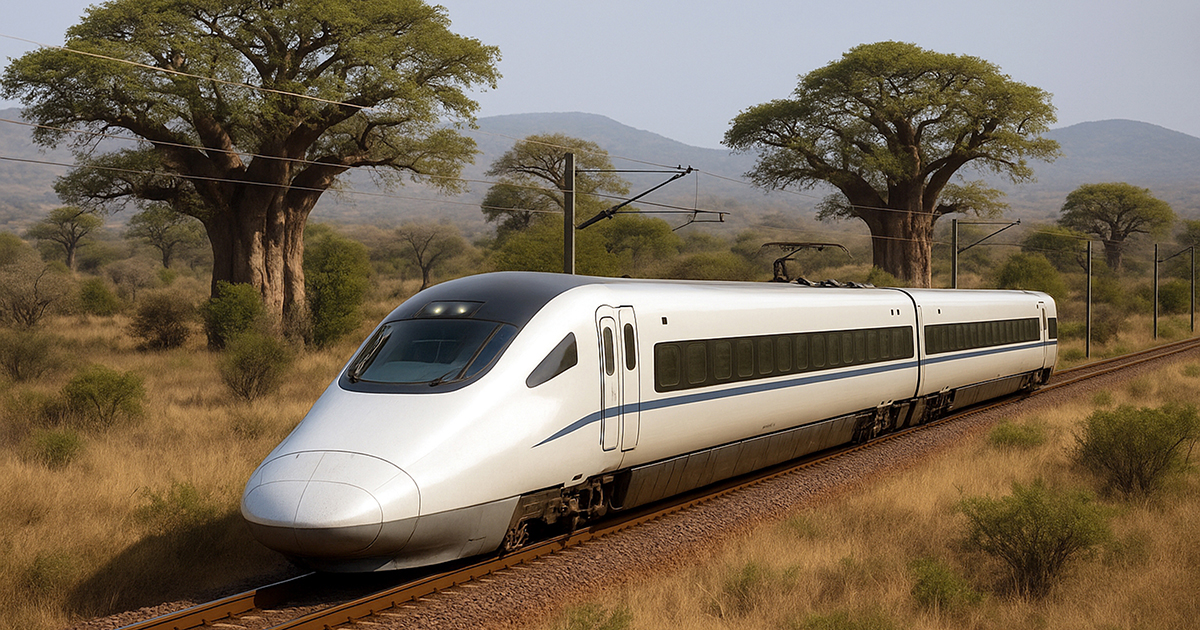
A high-speed train service linking Gauteng to the far reaches of Limpopo may be more than just a pipe dream. In a slightly optimistic scenario, construction on the 500km north–south railway line could begin in late 2026, with the first trains ferrying passengers by 2030.
The so-called "bullet train" project received widespread publicity in the past week, with several media outlets reporting on recent developments. Reports also suggest the planned line will extend beyond Polokwane, continuing all the way to Musina.
Such a service would significantly cut travel time between Limpopo towns and Gauteng. A trip between Pretoria and Polokwane is expected to take just 90 minutes - compared to two-and-a-half to three hours by car on the N1. The route is also expected to integrate with the Gautrain, making travel to OR Tambo International Airport more feasible.
Once completed, the proposed route would run from Pretoria at its southernmost point to Musina in the north, passing through Hammanskraal, Bela-Bela, Mokopane, Polokwane, and Louis Trichardt along the way.
Part of a bigger plan
President Cyril Ramaphosa highlighted plans for a bullet train to the north in his newsletter at the end of 2024. The project is included in the draft National Rail Master Plan (NRM), which serves as the core policy document for long-distance, high-speed rail travel. The NRM outlines how the Gauteng–Polokwane line will be integrated into South Africa's broader national transport strategy. Ramaphosa noted that the NRM draft is due to be finalised by the end of this year.
The plan also aims to attract private investment into rail infrastructure and details regulatory and funding frameworks. China-based companies are considered likely contenders, given their experience with such projects. Among China's many high-speed trains is the Shanghai Maglev, which has achieved a record speed of 501km/h, with an average operating speed of 251km/h.
In October last year, the premiers of Limpopo and Gauteng formally approved the project's implementation protocol. This document sets out the procedural steps, including the appointment of a joint project manager and mechanisms for oversight and governance. Both provinces have committed to consulting with the Presidency and national departments - Finance, Transport, Cooperative Governance, and Trade & Industry - to secure support and funding.
When will it start?
The project is likely to be executed in phases, with the first phase focusing on the stretch between Pretoria and Polokwane.
According to the most recent updates, feasibility studies and environmental-impact assessments are already under way. One of the early challenges will be land acquisition, with the project requiring negotiations with landowners and communities along the planned route.
The process will also involve discussions with transport stakeholders, including the taxi industry. The studies and surveys will need to ensure the project meets safety, economic and environmental standards.
Motoring website TopAuto reported last week that the project will run in parallel with Gauteng's R120 billion investment in expanding its rail network. That plan includes building new tracks and adding six more areas to the network over the next five years.
Once completed, Gautrain's total track length will almost triple - from 80km to 230km.