
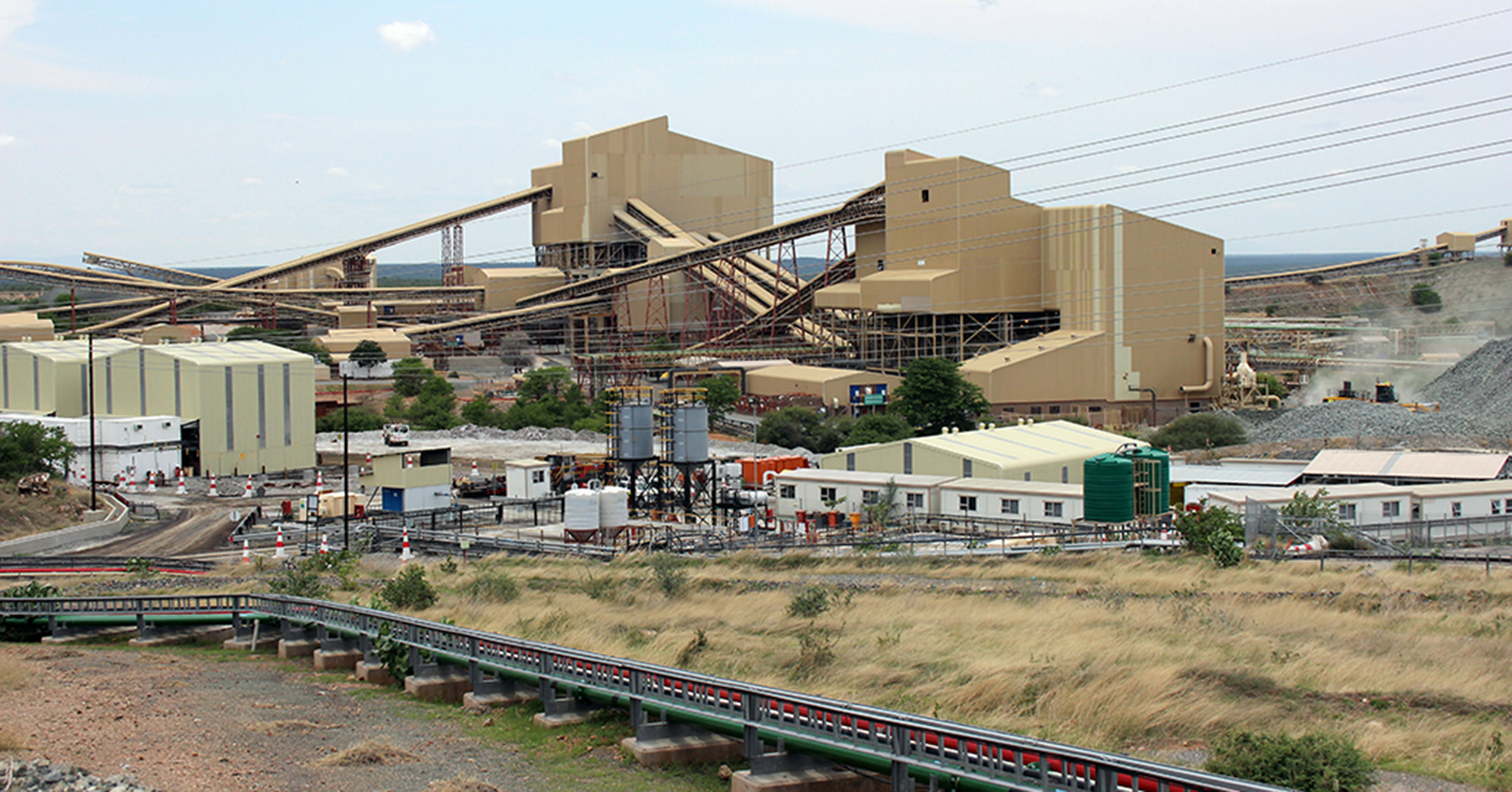
Political parties and labour bodies have reacted with alarm to De Beers' announcement of a two-year production pause at Venetia Mine, warning of the toll the move could take on workers, contractors and the wider Vhembe District economy.
Venetia, in Limpopo's Vhembe District, is South Africa's largest diamond mine by value, producing more than 40% of the country's diamonds and supporting about 4,400 employees and contractors. De Beers has said the mine will not close permanently, but that production will be paused to cut costs and rephase capital spending while global diamond markets remain weak.
On Tuesday, De Beers and De Beers Sightholder Sales South Africa (DBSSSA) issued a Section 189A notice, opening consultations that could affect 1,134 permanent employees at Venetia and a further 80 workers at DBSSSA — 1,214 jobs in total.
The National Union of Mineworkers (NUM) has vowed to fight the retrenchment plans, describing them as a devastating blow to workers, their families and the communities that depend on the mine for employment.
NUM National Health and Safety Secretary and Diamond Sector Chief Negotiator, Masibulele Naki, said the company had known about the challenges facing the diamond industry for some time and should have engaged workers before issuing the notice. He argued that workers' wages were not responsible for the company's financial difficulties, and said retrenchments should not be the first option considered to cut costs.
The union has called on De Beers to consider alternatives, including retraining and upskilling employees, temporary job preservation measures, reducing non-essential expenditure and reviewing executive and management costs. NUM also urged the Department of Mineral and Petroleum Resources and the Department of Employment and Labour to intervene to help protect the affected jobs, and said it would participate fully in the consultation process, using all available legal and collective bargaining mechanisms to defend its members. It also raised concerns that permanent workers could eventually be replaced by contractors, a trend it said is becoming increasingly common in the mining industry.
The Democratic Alliance (DA) in Limpopo said it would call for the Department of Mineral and Petroleum Resources (DMPR) and the Limpopo Department of Economic Development, Environment and Tourism (LEDET) to appear before the Legislature's LEDET Portfolio Committee to explain their respective plans for protecting workers, contractors, local businesses and communities during the production pause.
The DA said the challenges facing the diamond industry are global, and that De Beers cannot solve them alone — but warned that a temporary pause could have permanent consequences for a family that loses an income, a contractor that loses work, or a local business that loses its main customer.
The party said years of policy and regulatory uncertainty under Mineral and Petroleum Resources Minister Gwede Mantashe have made South African mining less competitive, discouraged investment and left the sector less able to withstand global shocks, and that the Minister is responsible for creating a stable, predictable and competitive mining environment that attracts investment and protects jobs.
According to the DA, the DMPR, as national mining regulator, cannot watch from the sidelines. It must assess the possible job losses and economic damage, and ensure Venetia's Social and Labour Plan continues to be implemented during the pause, with every practical alternative to job losses considered and proper support provided to affected workers, contractors, suppliers and communities.
While mining regulation is a national responsibility, the DA said the economic pain will be felt in Limpopo, and LEDET must explain what it will do to protect the regional economy and support affected businesses, families and communities through the pause.