
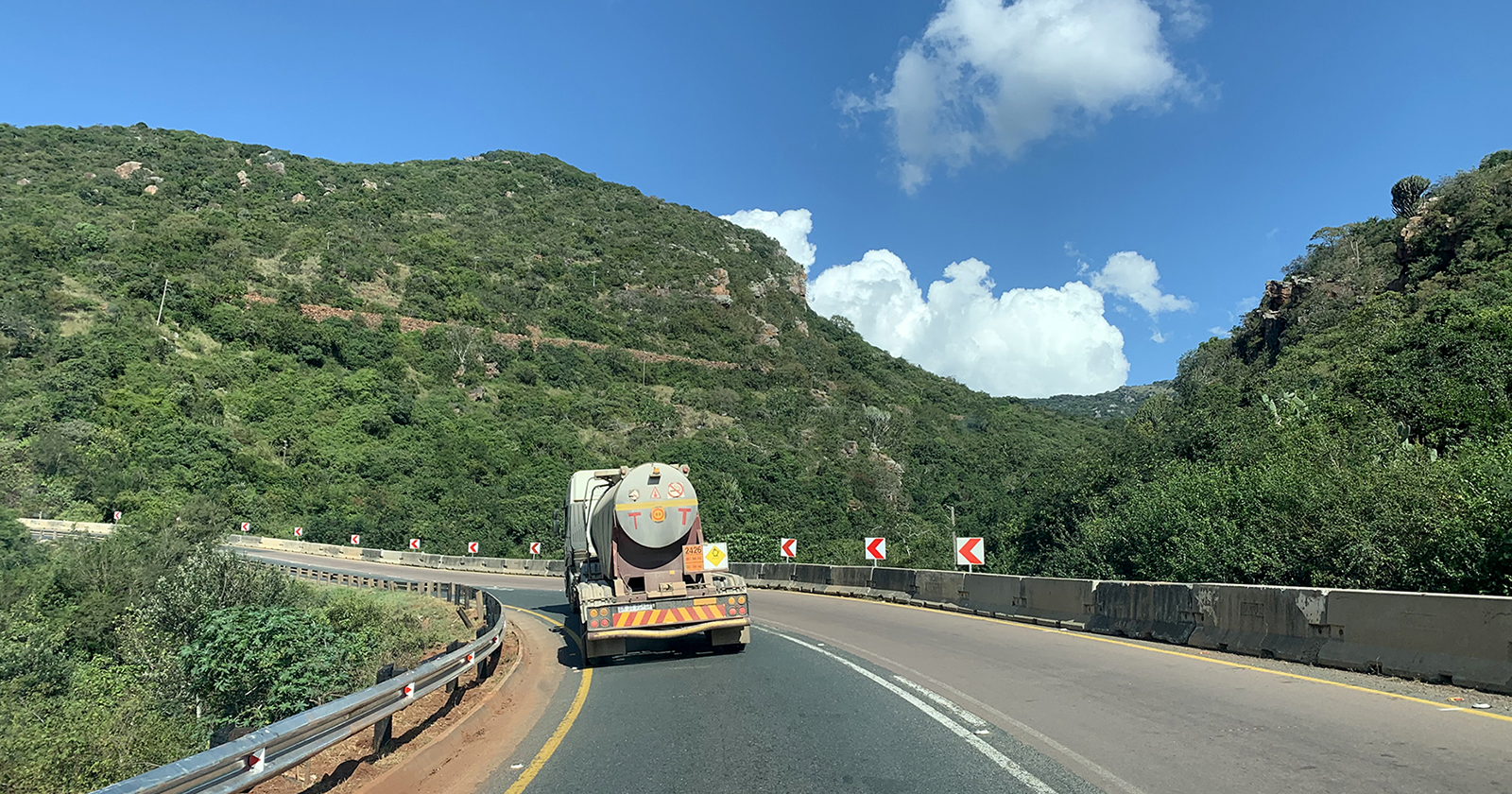
The South African National Roads Agency (SANRAL) has erected concrete barriers at the notorious Ingwe Motel hairpin turn on the N1 through the Soutpansberg mountain pass, in what it describes as a temporary measure to prevent vehicles from plunging down the embankment.
The move follows a series of fatal crashes at the site over the years, including several incidents since last year that have raised concerns about safety on this stretch of the national highway.
On 19 February this year, six people were killed when a passenger bus lost control at the 40 km/h hairpin turn and rolled down the embankment. The crash happened at the same spot where 44 people died in a devastating bus accident on 12 October last year.
The site has a long history of fatal crashes:
In March 2023, three people died at the same location.
In May 2019, 14 people were killed when another bus overturned.
In September 2005, 19 passengers in a minibus taxi died after the vehicle burst through roadside barriers and rolled down the mountain.
More recently, on 23 April this year, another person was killed when a bus overturned at the same turn.
Failed promise to make the N1 safer
Following the 12 October 2025 accident, SANRAL confirmed to the newspaper that the agency was planning a major upgrade to the N1, particularly the mountain pass section of the national road.
“SANRAL is busy with a design process to improve the geometry of the road and widen it with extra passing and climbing lanes. The design will also eliminate some of the sharp curves, including the hairpin bend near the Ingwe Hotel,” said SANRAL’s provincial head in Limpopo, Mr Madoda Mthembu, at the time.
This followed an announcement by SANRAL in 2022 that it was planning a R1.2 billion upgrade project for the N1. In March 2025, however, SANRAL said plans to upgrade the deteriorating N1 North had been suspended because of a contractual dispute, pending the outcome of an investigation.
Action mostly preventative
As the list of fatalities mounts, motorists can reasonably ask what has become of SANRAL’s promises to make the Soutpansberg mountain pass and the N1 safer.
In response to media queries, Mthembu this week provided feedback on progress made regarding the 2025 commitments to improve safety at the notorious Ingwe hairpin turn.
“SANRAL’s maintenance team has installed additional road signs and rumble strips,” said Mthembu. He added that, for the entire stretch of the N1 between Louis Trichardt and Masekwaspoort (R523 intersection), the project is progressing well into the preliminary design phase, with completion expected by mid-2027. No timeline has been provided for the implementation or construction phase.
SANRAL’s most recent visible step to improve road safety at the dangerous hairpin turn has been the erection of concrete (Jersey) barriers, installed in April. “It is a temporary measure to mitigate against vehicles plunging down the embankment,” said Mthembu.
A long-term solution?
As for a long-term engineering solution to permanently reduce fatalities at this location, Mthembu said the upgrade would address all safety concerns, including eliminating the dangerous hairpin bends.
“A proper assessment will need to be undertaken to check what the major contributing factors to these crashes are. One of the major factors is the roadworthiness of the heavy vehicles using this stretch of the N1, especially given the fact that the last three accidents involved buses which were pulling heavily loaded trailers and travelling in the early hours of the morning,” said Mthembu.
Other factors, said Mthembu, such as driver fatigue, should also be taken into consideration.
“What is worth noting is that to date none of the heavy trucks have been involved (at least recently). Therefore, it is difficult at this stage to tell whether it is simply the road terrain that needs to be blamed, or whether other factors are the cause of these crashes. SANRAL has not yet received a formal report from the Road Traffic Management Corporation (RTMC) about what the main cause of the crashes would be,” he said.
Regarding additional measures, Mthembu said law enforcement visibility would also need to be increased to identify unroadworthy vehicles.
And the rest of the N1?
Asked about the current status of the suspended R1.2 billion N1 upgrade project between Louis Trichardt and Musina, Mthembu said no final decision had yet been made, as the contractual legal matter remained unresolved. In the meantime, he said, routine maintenance activities along the N1 were continuing as usual.