
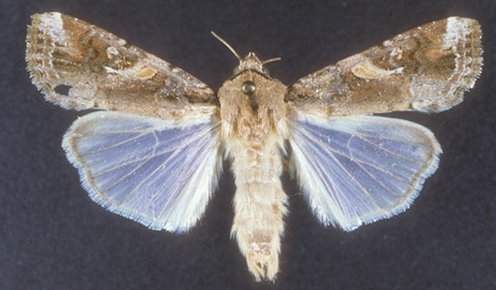
A dreaded pest, the fall armyworm, has arrived in Limpopo, much to the dismay of crop farmers and the Department of Agriculture, Forestry and Industries (DAFF). The armyworm can destroy massive quatities of crops in a matter of days and the normal pesticides are not very effective in combatting it.
The department has warned Limpopo residents about this alien creature and has stated in a press release that researchers are currently working on a plan to resolve this issue. It has been confirmed that these armyworms have already damaged maize in South Africa's Limpopo, North West and Free State provinces.
The fall armyworm was positively identified from samples collected in Limpopo. These samples were jointly collected by scientists from ARC Grain Institute and the Northwest University.
The DAFF warned that the worm poses a great danger to the livelihood of the growth and development of crops and other plantations. Armyworms primarily feed on grass, forage grasses, oats, wheat and corn. These pests attack vegetables such as beans, cabbages, onions, peas, peppers and sweet potatoes.
"As the fall armyworm is a new pest to South Africa, no pesticide was previously registered to be used against it. A process of emergency registration of agricultural chemicals is initiated for urgent registration," said Miss Bomikazi Molapo, spokesperson for the department.
Farmers as well as other individuals need to stay alert as these armyworms come in different colours from greenish-brown to black. These creatures reach a level of maturity at the length of 1½ inches. The eggs resemble globules as they are laid in rows on groups of host plants.
The presence of the pest will be notified on the International Plant Protection Convention's portal in terms of South Africa's international pest-reporting obligations. SADC member countries will also be notified and regional control measures will be discussed.
Crop producers are encouraged to report suspected detection of this pest to the department. Please report to Jan Hendrik Venter at: 012 3196384, 0723488431 or janhendrikv@daff.gov.za. "Please contact a chemical representative to advise with control options," the department said.