
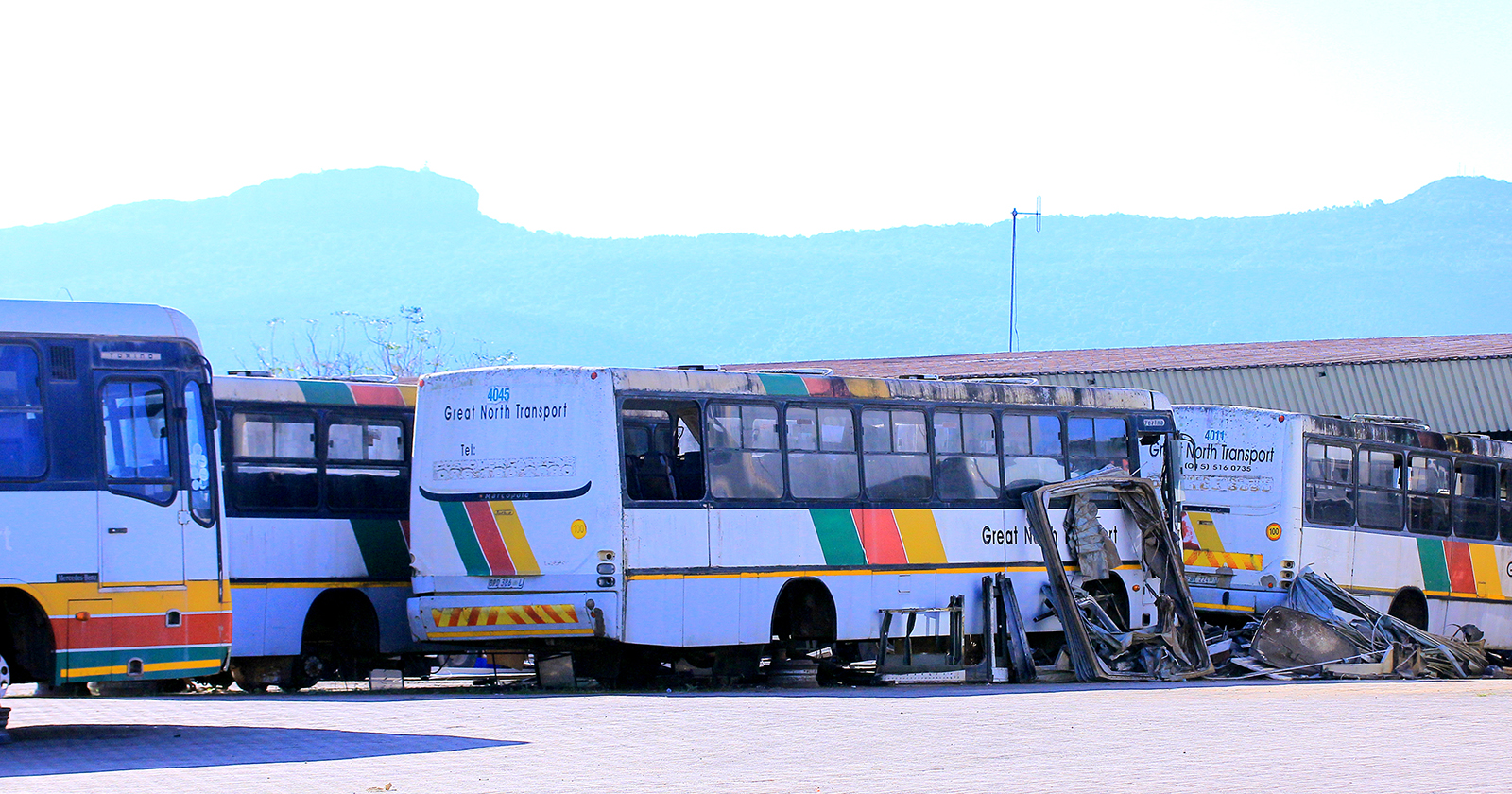
Mechanics employed to fix Great North Transport's (GNT) buses say they sit idle from 07:00 to 17:00 every day — while 53 of the state-owned company's vehicles stand broken down at its Makhado depot. These buses could have alleviated the transport problems of thousands of local commuters.
The absurdity was laid bare on Tuesday when Limpopo Premier Dr Phophi Ramathuba made a surprise visit to the facility in Louis Trichardt and heard it directly from the workers themselves.
The visit came shortly after Ramathuba tabled the Office of the Premier's 2026/27 Budget Vote, which she described as a "statement of intent" to build a capable and ethical state. She said the reason for her unannounced inspection was a growing disconnect between what official reports told her and what commuters were experiencing on the ground.
"But when you compare the reports we receive with what commuters and people who use GNT buses are saying, it is completely different," said Ramathuba.
Commuters in Makhado and surrounding areas are already experiencing GNT's crisis first-hand. Drivers say breakdowns delay passengers and affect people who depend on buses to get to work, school and town.
At the depot, Ramathuba was told that 53 buses were not operating due to mechanical problems, with officials saying 16 were in the process of being repaired. GNT's Makhado routes currently require 22 buses since the new contract started on 1 April 2025. Those buses are reportedly running daily, though one or two breakdowns are experienced on some days.
The biggest headache remains repairs — and workers say they are not being used appropriately.
"I met the workers themselves, not through their unions or leadership, but directly. They told me that every day they report for work at 07:00 and knock off at 17:00, but they have nothing to do. They sit here the whole day. These are artisans and mechanics employed to maintain these buses. They say they have the skills. They were trained by the same government. They can fix these buses, but they are not being used," said Ramathuba.
She said things were "not adding up" at GNT.
"The workers seem not to care, and they don't know that if it [GNT] closes, many people will lose jobs. Without transport, the economy won't grow," she said.
One driver told the Premier that GNT had been struggling to compete with other bus operators for years and that passengers were often left frustrated when buses broke down. "Some buses get stuck on the way and passengers arrive late for work. We cannot compete with other buses," he said.
The driver added that overcrowding had become a problem on some routes because there were not enough reliable buses on the road. Some buses were packed with passengers and leaked when it rained, making trips uncomfortable. One worker, who has been employed by GNT since 2016, remarked that the Makhado depot had become a scrapyard rather than a functioning facility.
"I want to repeat that GNT is one of the institutions we must protect as the provincial government. Through the subsidy it receives from government, bus fares should remain affordable. We should be using this entity to help fight the cost of living. But if we do not support it properly, it will collapse. I am very worried," said Ramathuba.
During her State of the Province Address earlier this year, Ramathuba said GNT was being turned around through a three-pillar strategy — leasing buses, buying new buses, and repairing the existing fleet — with a promise of 71 new buses.
"We were continuously promised that by the end of March there would be 71 new buses. We were also told that by September, GNT would have turned around and would start generating its own revenue, instead of depending on bailouts from the state … Unfortunately, we keep receiving postponements. The new buses were postponed from the end of March to the end of April, and then to the end of May. These continuous postponements are frustrating," said Ramathuba.
Her visit comes as concern grows over GNT's finances. In a statement issued on 23 April, DA provincial spokesperson Jacques Smalle said the party would ask Provincial Treasury to intervene in GNT under the Public Finance Management Act. Smalle said the entity faced a projected cash shortfall of up to R40 million and was relying on subsidies to meet basic obligations.