
"Government must always be pushed by communities before services are delivered to the people. Sometimes we break into protest; not because we love to protest, but because we understand that this is the only language the government understands when it comes to service delivery."
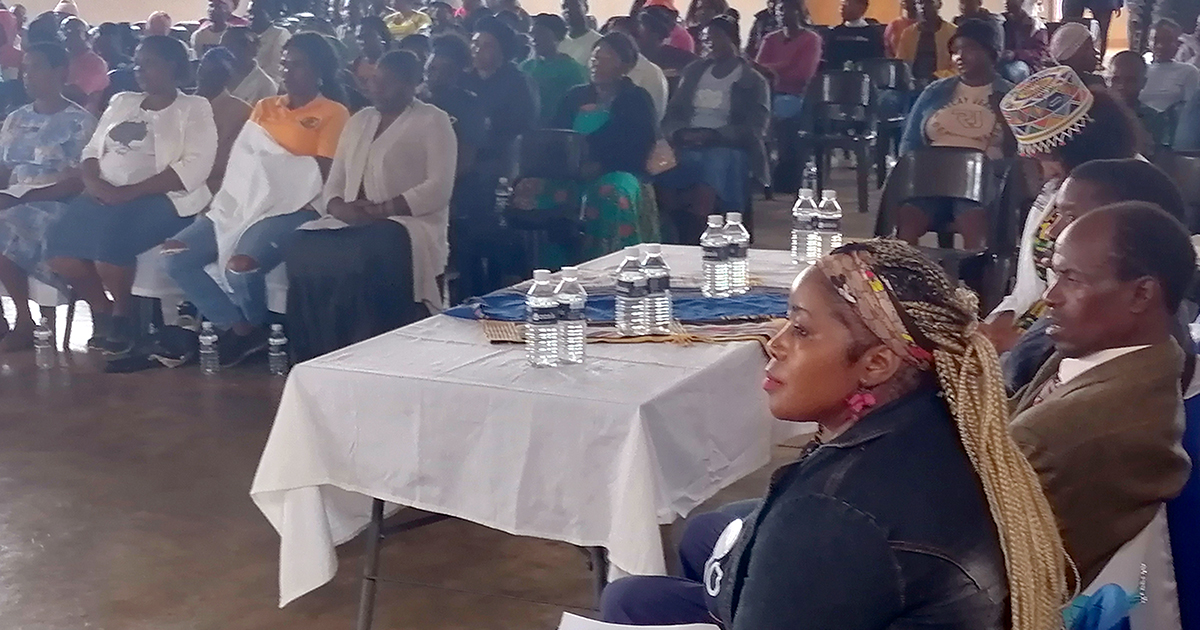
These words came from the residents of the Waterval, Bungeni, Mpheni and Magangeni areas during an event hosted by Lawyers for Human Rights' Kagisano branch, in collaboration with the Department of Sports, Arts and Culture on the last day of Human Rights Month. The function was held at Waterval Community Hall on Friday, 31 March. More than 100 people attended, including some foreigners.
Advocate Xoliswa Bam, a volunteer from the Department of Sports, Arts, and Culture, who deals with social and cohesion matters, said the government should deliver the services the communities require, but she encouraged communities in turn not to vandalise facilities that are provided to them by the government. "We feel the government should do what is to be done. We usually advise the local government to address communities' concerns," said Bam.
Limpopo Mirror spoke to some of the community members who attended the celebrations. "What we have realised is, it's not that the government is not aware of what they should be doing in our communities. The government only comes to the communities after they have protested. We have several issues that we feel the government is not doing what it is supposed to be doing, like building better footbridges and providing clean water to the communities," said Thembekile Mkhabela from the Waterval area.
Ndzalama Maswanganye from the Magangeni area complained that no clinic is available in their area, saying that residents were forced to walk nearly 10 kilometres to get to the nearest clinic. Maswanganye further pointed out that about 20 boreholes existed in their area that had been drilled several years ago, but that none of them was working.
Agnes Muuduuri from the migrant community said the police were quick to arrest undocumented foreigners whenever they reported criminal cases at police stations. "We appeal to the police to attend to our cases, instead of arresting us," said Muuduuri.
Other members of the community claimed the police took too long to attend crime scenes. The police, however, denied the claims, saying that they always attended to cases reported by members of the community quickly – whether the persons were documented or not.