
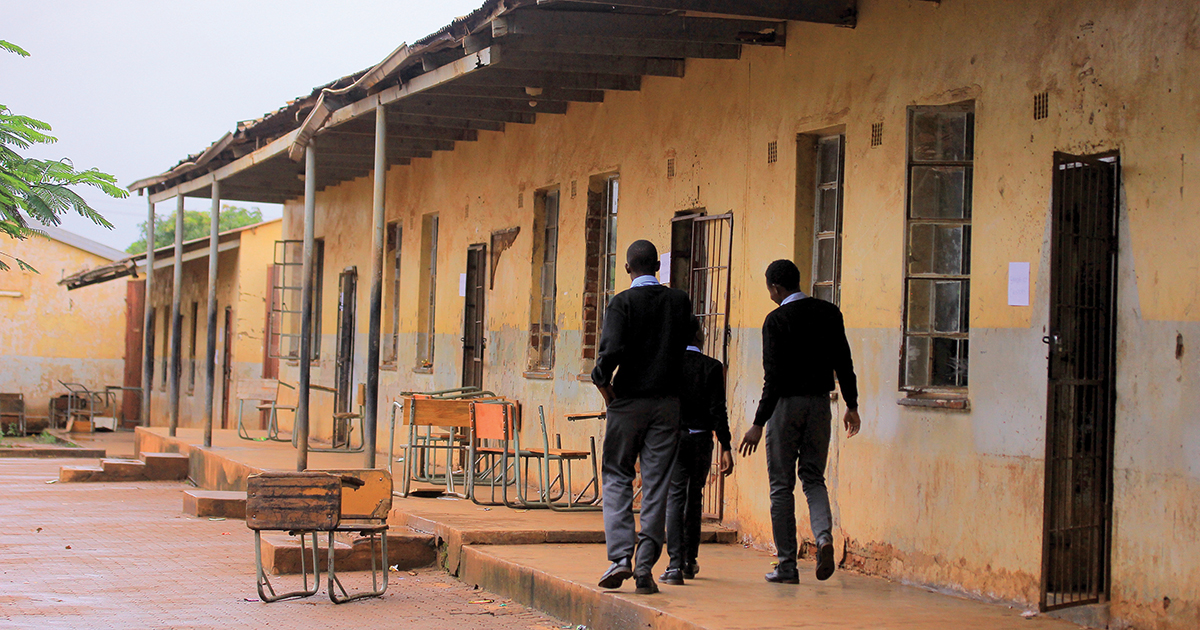
More than 2,000 learners at Lwamondo Secondary School in Thohoyandou are being taught in unsafe classrooms, most of which were built by parents in 1958 using mud bricks. Many of the school’s 20 classrooms have cracks, missing windows, and leaking roofs.
In 1968, parents began making and firing mud bricks to strengthen the structures. They initially built eight classrooms and added more over time, while other classrooms were constructed through donations from local businesspeople.
No government-built brick classrooms
The school does not have a single brick building constructed by the government. At present, Grade 8 classrooms are overcrowded, with more than 90 learners per class, while six mobile classrooms accommodate Grade 12 learners. Despite these challenges, the school achieved a 95% matric pass rate for 2025.
Permanent classrooms and administration blocks promised by the Limpopo Department of Education have yet to materialise. Grade 11 learner Ndou Khodani described the classrooms as “unbearable” and said some learners had developed sinus problems from inhaling dust from broken ceilings.
Classrooms a “death trap”
“These classrooms seem like a death trap for us. The situation is bad, and we learn while water is coming in. We learn in fear and hope the department can rebuild the school,” he said.
Members of the school governing body (SGB) say they have repeatedly raised concerns with the department, but nothing has changed. Broken desks and chairs add to the daily challenges, and overcrowding worsens the situation.
“The classrooms are a threat to our children,” said Muthupheyi Ramakuwela, deputy chairperson of the SGB. “We have been waiting for more than ten years for proper buildings. Learners cannot learn properly.”
Community efforts to fill the gap
Over the years, the local community has tried to fill the gaps left by government inaction, including fundraising and donations from parents and local businesspeople to address shortages of classrooms and furniture. Some classrooms were even built or repaired by community members themselves. Despite these efforts, the school still lacks safe and adequate learning spaces. The only properly built facilities at the school are the toilets.
The SGB is urging the department to advertise a tender for the immediate construction of the 32 classrooms and administration blocks promised years ago.
Delays due to “broader systemic constraints”
Limpopo Department of Education spokesperson Mike Maringa explained that delays in building additional classrooms were caused by “broader systemic constraints within the infrastructure programme,” including a significant provincial backlog and budgetary limitations. “These constraints have impacted the pace at which the projects could be rolled out, including at Lwamondo Secondary School,” he said. He confirmed that planning for the project, now allocated to the Independent Development Trust (IDT), is at an advanced stage and construction is scheduled for the next financial year.
Mobile classrooms as an “interim” solution
On overcrowding and mobile classrooms provided in 2020, Maringa said these were interim measures while the department undertakes long-term planning. Structural assessments have been conducted on both permanent and mobile classrooms, focusing on cracked walls, leaking roofs, and broken windows. “The required scope of work has been defined to address the identified defects and to ensure that the facilities are upgraded to meet safety and usability standards,” he said.
Furniture and safety measures
Maringa added that budgets allocated over the past five years were used for planning and preparatory work, including appointing professional service providers, conducting assessments, and developing designs to ensure projects are compliant and ready for implementation. Learner furniture will be provided as part of the construction project, and the department continues to monitor shortages in the interim.
Safety during adverse weather is also a priority. “In instances of severe weather warnings, the department works closely with the SGB and relevant stakeholders to monitor conditions and implement appropriate safety protocols,” he said.
Lwamondo listed as a priority
The department uses a structured prioritisation framework to determine which schools receive infrastructure upgrades, considering need, risk, compliance with norms, overcrowding, and the absence of basic services. “Lwamondo Secondary School has been assessed against this framework and identified as requiring additional classrooms and associated infrastructure,” said Maringa.
He outlined long-term measures to prevent delays, including professional project management, structured planning, regular condition assessments, strengthened oversight and reporting, and careful budget monitoring to ensure schools with urgent needs receive timely and sustainable infrastructure support.