
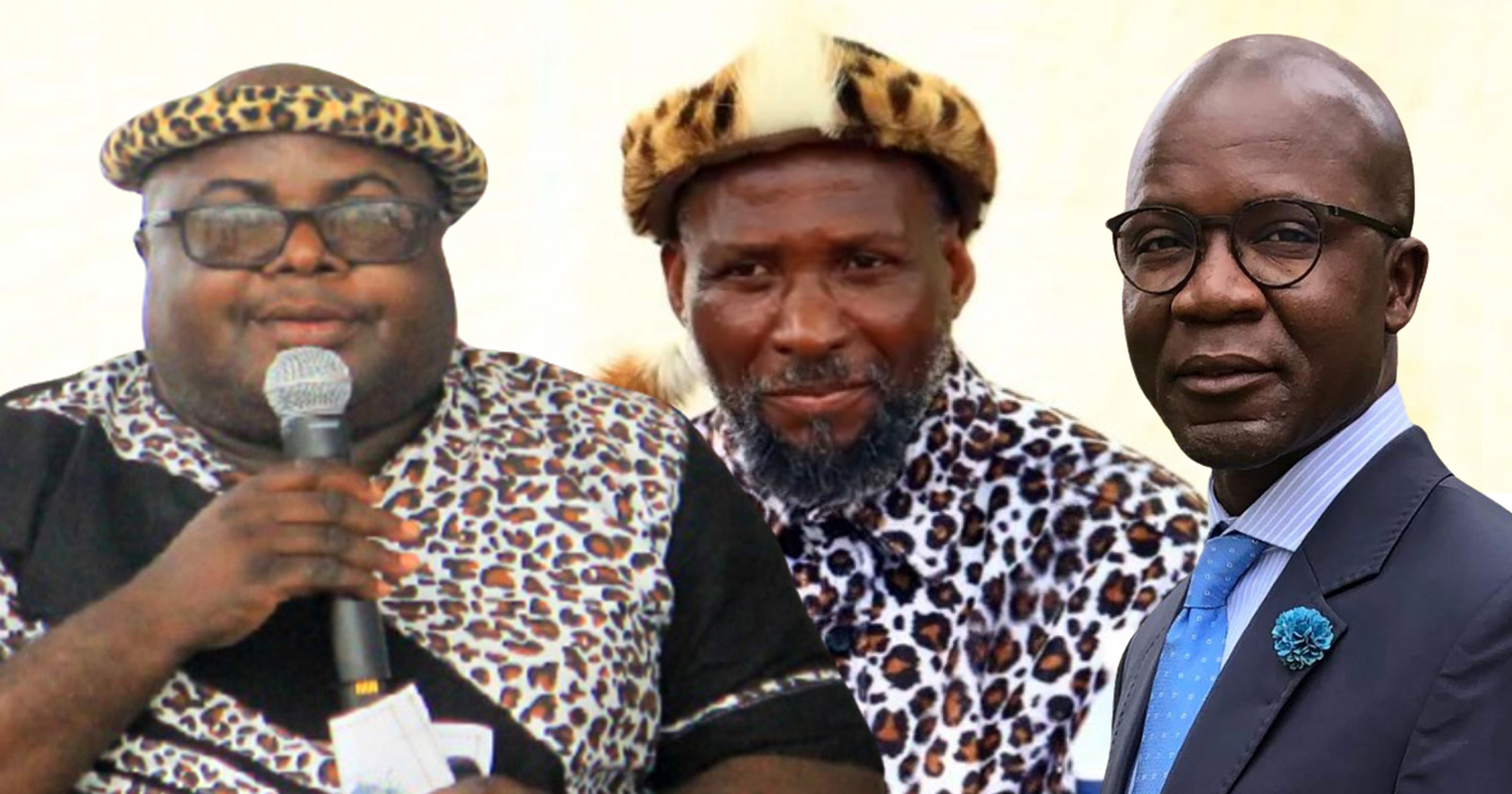
The Polokwane High Court has halted the seizure of assets worth more than R1-million in a long-running dispute over the Mkhari chieftaincy. This follows an earlier court decision that, among others, held two traditional leaders — Chief Hlekani Samuel Mukhari and Sikheto Thomas Mukhari — responsible for legal costs in a succession dispute.
The case, heard on Wednesday, 8 April, involves Risimati Wilson Mkhari, Limpopo Premier Phophi Ramathuba, the Limpopo Provincial Committee on Traditional Leadership Disputes and Claims, and the two traditional leaders.
At the centre of the dispute is Mkhari’s claim to restore senior traditional leadership to the house of N’wa-Xikundu I. (The surname appears with different spellings in the dispute, including Mkhari and Mukhari.)
The dispute was previously investigated by the Limpopo Provincial Committee on Traditional Leadership Disputes and Claims, which is mandated to assess traditional leadership disputes and make recommendations to the Premier. After considering submissions and historical evidence from all parties, the committee ruled against Mkhari’s claim, finding in favour of the existing leadership of Chief Hlekani Samuel Mukhari and Sikheto Thomas Mukhari. The Premier endorsed that decision.
Court sets aside earlier process
Risimati Mkhari did not accept the finding and took the matter to court in an effort to have it set aside.
In a January 2025 judgment, the High Court ruled in his favour, setting aside the earlier decisions by the provincial committee and the Premier. The court found that the process was procedurally unfair and the investigation flawed.
Rather than determining who the rightful leader is, the court focused on the process followed. It found that the committee failed to properly assess the evidence before it, relied on selective oral testimony, and did not verify historical records. It also found that Mkhari was not given an opportunity to respond to certain evidence gathered after the hearings, and that key aspects of his version were not properly considered. As a result, the matter was ordered to be reconsidered.
Following that ruling, the respondents were ordered to pay legal costs jointly and severally. After they apparently failed to settle the legal accounts, writs of execution were issued in March to recover more than R1-million. Four vehicles — two from each of Hosi Njhakanjhaka and Chavani — were attached, and other movable property, including fridges, a sound system and a generator, were seized from Hosi Chavani.
The respondents returned to court over the costs and obtained an order on 8 April that temporarily suspended enforcement. It halted the writs of execution and ordered that all attached movable assets be returned within 24 hours. Further papers are expected to be filed, and the matter is set down for 9 June.
Rule of law must be respected
Speaking on behalf of the Mukhari Royal Family, spokesperson Nkateko Shipalana said they respect the judgment but disagree with its findings. “The High Court has taken a decision. Although we do not agree with it, we have to respect it,” he said.
Rejecting the finding that the earlier process was flawed, he said all parties, including Mkhari, made submissions to the investigative committee and that its conclusions were based on the evidence before it. He added that the Premier would not appeal the ruling but would appoint a new ad hoc panel. “We are ready to make our submissions and provide further evidence,” he said.
Mkhari Royal Family spokesperson Themba Madale welcomed the ruling.
“We are extremely happy with the judgment. It shows that justice has prevailed,” he said. “The commission neglected crucial evidence and considered irrelevant matters. We were not given an opportunity to respond.”
Dispute and delays
Despite the High Court instructing the parties more than a year ago to restart the process, little progress has been made.
Madale said a contempt of court application against the Premier was heard on 23 March this year, with judgment reserved. He said the Premier had failed to comply with an earlier order to appoint an ad hoc panel within 60 days. “It has now been over a year. The delay is concerning,” he said.
Responding to questions, provincial government spokesperson Ndavhe Ramakuela said the court’s decision is acknowledged and will be complied with, but could not provide a timeline. “Our responsibility is to ensure that all parties reach an outcome that can be affirmed by the Office of the Premier, in line with the law,” he said.
Ramakuela said an ad hoc panel has been established and is working on its report. He added that no provincial government assets were seized.
Competing claims over succession
According to Madale, the dispute dates back 98 years to when the senior traditional leader, King Mbhosheni Mkhari, was removed by the colonial government.
According to the Mkhari version of history, the Vatsonga kingship under the Mkhari dynasty dates to the early 16th century. They are able to identify the various leaders up to Mbhoxeni, who Mkhari claims was dethroned by the colonial government around 1928, followed by Matani, Dumazi and Mafemani John Mkhari.
Risimati Mkhari maintains that he is the rightful successor to this senior line, although neither he nor his predecessor formally assumed the throne. He argues that the colonial government disrupted the line of succession by installing leaders from what he describes as the junior house of N’wa-Xikundu II, also known as Nghala.
According to his account, this house produced Munghunghu, N’wa-Panya and Michael. He said Munghunghu was installed to rule in Hlomandlwini — present-day Elim — and was succeeded by Xithlangoma Klaas, followed by Tsakani John Mkhari, who died around 2010. The current leader in Elim, Chief Hlekani Samuel Mukhari, descends from this line.
At Rivolwa, present-day Chavani village, Mkhari said N’wa-Panya was installed as a traditional leader. This line continued through Mafemani Samuel and Magezi Freddy, and is now led by Sikheto Thomas Mukhari.
Mkhari disputes the claim that Munghunghu and N’wa-Panya were descendants of Chavani, maintaining instead that they were siblings of Chavani and all sons of Njhakanjhaka. He argues that under Vatsonga customary law, the junior house cannot assume leadership where there are male heirs from the senior house. On this basis, he contends that the current leadership in both Elim and Chavani does not hold a legitimate claim to the chieftaincy.
Mukhari Royal Family’s account
According to submissions made on their behalf, the Njhaka Njhaka leadership became established in the Elim area in the mid-1800s, although earlier references are absent from some colonial records. They argue that this omission reflects marginalisation in archival documentation rather than an absence of authority.
They state that a letter dated 16 September 1872 by trader João Albasini records that Njhaka Njhaka was installed as a captain at Lebolla’s Kop. Missionary records from the 1870s also refer to an established court operating under his authority, which they argue indicates a structured and functioning leadership system.
According to this version, Njhaka Njhaka exercised recognised territorial authority and engaged with colonial officials on governance and land matters, including a complaint in 1890 concerning land at Rivolwa’s Kop. His jurisdiction is said to have extended across Waterval, Styldrift and Middelfontein, as well as the farms Welferoode, Zoekgaat and Styldrift.
They further contend that the chieftaincy’s formal recognition declined over time due to land dispossession, missionary expansion and administrative changes under colonial and apartheid systems. By 1911, Njhaka Njhaka had allegedly been excluded from official stipends, and by 1925 he was classified as an independent headman rather than a chief.
During the lifetime of Njhakakanjaka I, he became aware of the Nesengani on the Neluvhola side and deployed his son, Chawana, to guard the boundary. The area became known as Chawana; he remained there until his father’s death before returning to Elim.
Chavani’s sons included Mungungu and Jack Ngwapyanya, who was sent to oversee what is now Chavani. Ngwapyanya was succeeded by Mafermani Samuel and later Thomas Mukhari, the current chief of Chavani. Mungungu was expected to lead at Elim but, as a sangoma, was often absent; his brother Mjimana acted for him and later for his son, Xithlangoma Klaas Mukhari, until Mjimana’s death in 1960. Xitlangoma ruled until 1963 and was succeeded by John Mukhari.
They maintain that both Hlekani and Sikheto Mukhari descend from Chief Chavani through the recognised lineage and therefore hold legitimate positions under customary law.