
Somewhere in Vhembe, a child in a school uniform is calculating whether they can still afford the taxi fare. A few streets away, a young man who has been job-hunting for months is doing the same, wondering whether the fare to town — the one that gets him to interviews, labour centres and the small opportunities that exist — is still within reach.
This is what one of the biggest fuel price shocks in South African history looks like when it lands not on a graph or in a government briefing, but on the doorstep of one of the country’s most economically vulnerable districts.
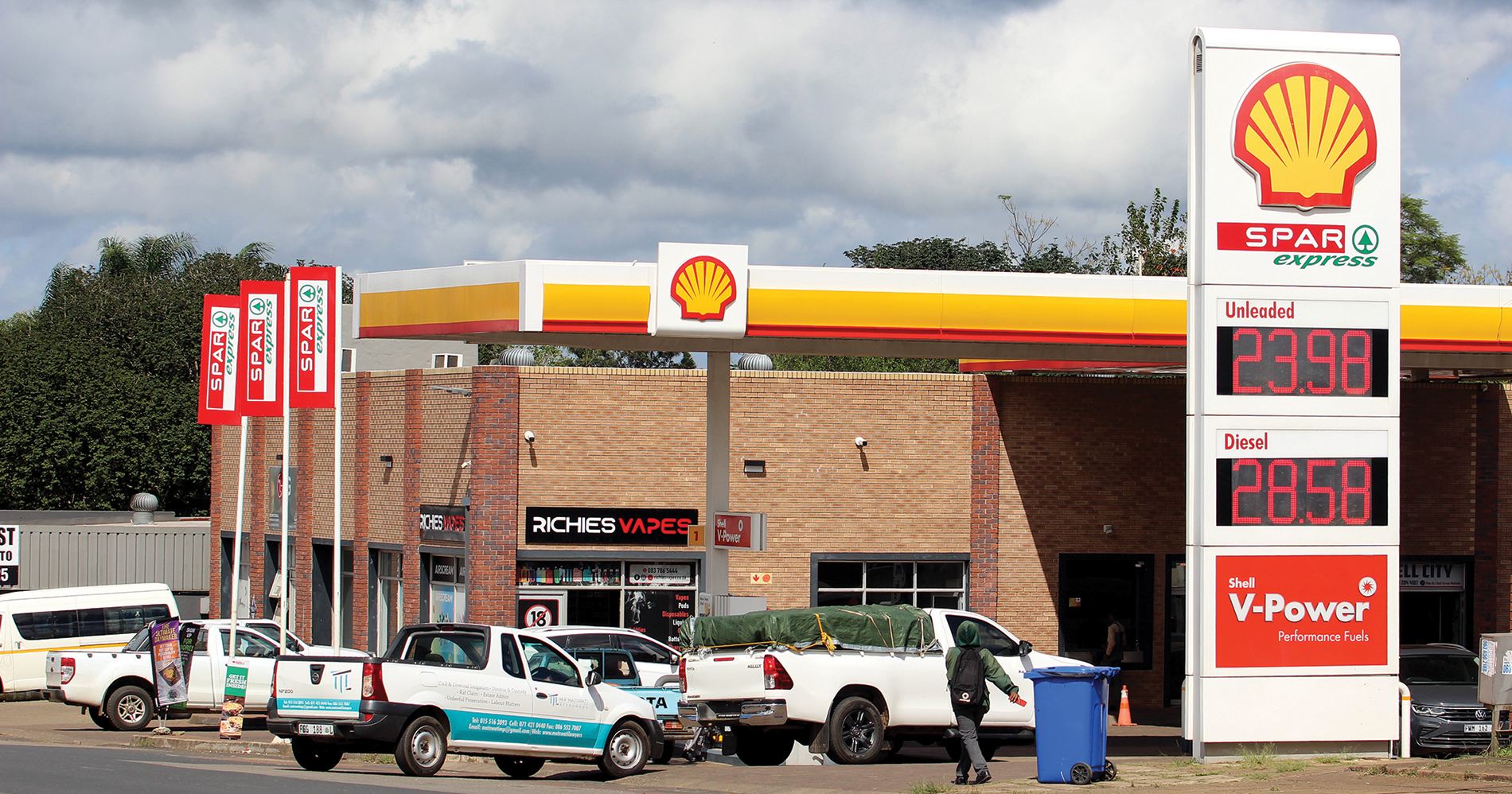
Diesel, the fuel that moves everything, is up by more than R7.37 a litre. Petrol has increased by R3.06 a litre. Paraffin has risen by R11.67 a litre.
It could have been far worse, but Finance Minister Enoch Godongwana and Mineral and Petroleum Resources Minister Gwede Mantashe announced a R3-a-litre cut in the fuel levy for April. What will happen in May is anyone’s guess, but the outlook does not appear positive.
In a district where 39% of people are unemployed, where no railway serves the freight network, and where a taxi is often the only link between a family and the outside world, those numbers are not statistics. They are a crisis.
Maungedzo Malivha knows this better than most. As chairperson of the Dzanani 1 Taxi Association, which runs routes from Siloam to Louis Trichardt via the Verwoerd Tunnels and the Witvlag road, he has spent the past weeks trying to plan for rising fuel costs. He has little choice, as taxi operators cannot absorb the increase. The association has made its first difficult decision: the school fare, currently R5 for a local trip, will double to R10 from Wednesday, 8 April.
The adult fare of R15 per local trip will remain unchanged for now, but Malivha is monitoring the situation closely. “We are going to wait for two months just to check if the petrol price will change again,” he said.
For children boarding those taxis each morning, many from households already stretched to breaking point, a doubled school fare is not a minor inconvenience. It is a question of whether they attend school at all. In a district where a matric certificate is often the only ladder out of poverty, missing school is not just a daily setback. It is a door quietly closing.
Malivha’s frustration is directed not only at fuel prices, but also at a government that has repeatedly been asked for a transport subsidy and has failed to act. “If we had the subsidy, the petrol prices would not have forced our hand,” he said.
The Elim Hlanganani local and long-distance taxi association said it is still waiting for guidance from its mother body, the South African National Taxi Council.
Mr Abie Khosa, a member of the Elim Taxi Association, said he was certain fares would rise. “The hike is affecting us very badly,” he said. The association currently charges school learners in uniform R10 per trip, and Khosa indicated that figure is also under review.
Hulisani Dabishi, spokesperson for Vavasati on the Move, a collective of six bus operators - Magwaba, Netshituni, Mulaudzi, Omega, Enos and Do-Light - said the operators are waiting for supplier quotes before making any decisions. “We want to know from our suppliers, get a quote, and then we will check. After consulting with different stakeholders, we will decide what happens next,” Dabishi said.
The immediate trigger is geopolitical. US and Israeli military strikes on Iran in late February prompted Tehran to close the Strait of Hormuz, the narrow waterway through which roughly 20% of the world’s oil flows, driving crude prices above $110 a barrel. Finance Minister Godongwana’s 2026 budget added 21 cents per litre in combined levies on the same day the hike took effect, adding further pressure.
The consequences ripple outward quickly. More than 80% of South Africa’s freight moves by road. A diesel increase of this scale effectively acts as a tax on every item transported to shop shelves — which, in Vhembe, is almost everything. Retailers are already warning of grocery price increases, with economists projecting inflation rising towards 4.5% to 5%.
A shop owner in Louis Trichardt, who sells paint and hardware, said he had been informed by suppliers that delivery costs would rise by 8%. He said he had no option but to pass the increase on to consumers.
On the same day the fuel hike took effect, Eskom’s 8.76% electricity tariff increase also came into force. The combined shock — fuel, food and electricity — is likely to erode household budgets that had little margin to begin with.
The South African Reserve Bank, which had been considering interest rate cuts in mid-2026, now faces an inflation outlook that makes relief unlikely. Labour unions and the Automobile Association have called for a suspension of fuel levies and the release of strategic reserves, but National Treasury says there is limited room to act.
At a national level, SANTACO has confirmed it is gravely concerned, with panic already disrupting daily operations — including fuel shortages, refuelling limits and allegations that some filling stations are exploiting the lighter regulation on diesel prices.
“We are acting with urgency to stabilise the situation and protect both operators and commuters,” said SANTACO president Abnar Tsebe. “We call on the government to immediately provide clear direction on fuel price expectations and to work with us on practical relief measures.”
SANTACO has stopped short of declaring a uniform national fare increase, but confirmed that individual associations may adjust fares based on operational pressures. This means commuters are likely to face a patchwork of increases depending on where they live and which association serves their route. The body says it will press government on three fronts: a commuter-focused subsidy model, temporary levy relief for public transport operators, and prioritised fuel access for the sector.