
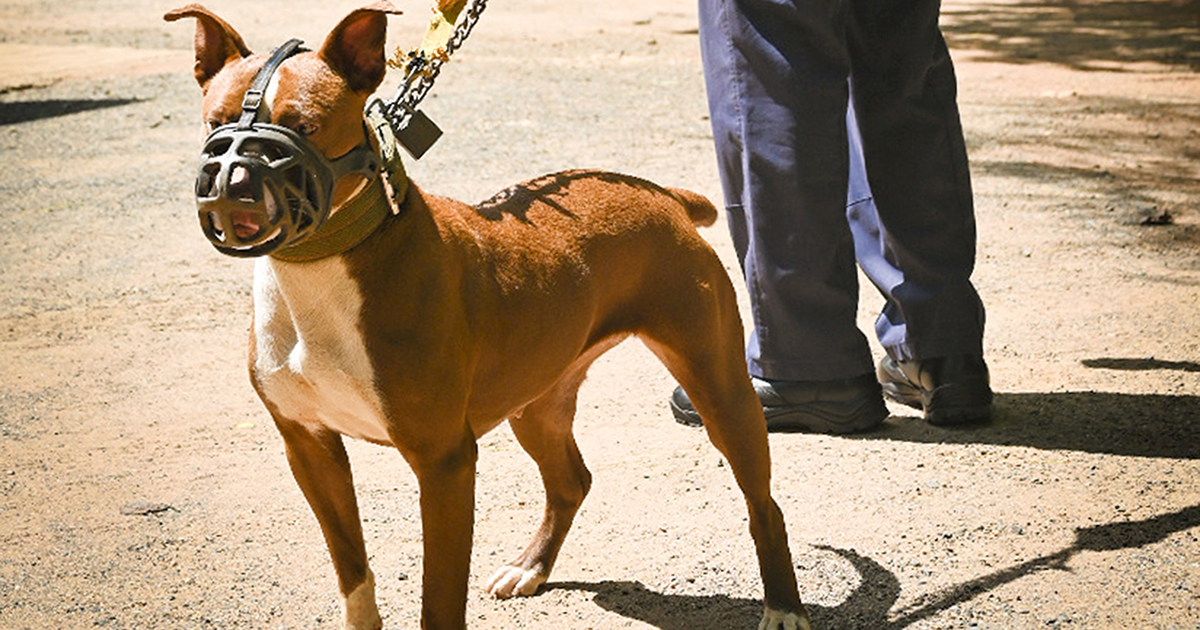
A spate of fatal American Pitbull Terrier (Pitbull) attacks across South Africa the past two weeks has caused a media frenzy and a huge public outcry, causing hundreds of Pitbull owners to surrender their dogs to the Society for the Prevention of Cruelty to Animals (SPCA). In some communities, Pitbull owners who refused to surrender their dogs were threatened and their dogs forcefully removed by angry citizens in retaliation. These dogs were then killed in the most horrific ways, including being stabbed or stoned to death, set alight and even dragged behind cars.
At the time of our going to press, five fatal dog attacks had taken place across the country the past two weeks. The most recent was a 37-year-old Eastern Cape woman who was mauled to death. In the other four attacks, four children were killed. Although the breed of some of the dogs involved in these attacks is yet to be determined, most of the victims were killed by Pitbulls.
SPCAs across the country are now faced with the aftermath of these attacks. By Tuesday this week, the Louis Trichardt SPCA alone had to put down 24 Pitbulls since the start of the attacks. In the first week following the first attack, the Bloemfontein SPCA is said to have humanely euthanised 230 Pitbulls. Due to the aggressive nature of the Pitbull "power breed", surrendered dogs are difficult to place in new homes, with home owners, especially those with children, reluctant to adopt them. This leaves the SPCA with very few options other than to humanely euthanise these surrendered dogs.
"The thing with a Pitbull, in some cultures, is that it is a status symbol. The first dog people ask for when they come to us is: 'I want a Pitbull". What happens then, maybe out of ignorance, is that these dogs are either chained up or kept in cages. This is what makes them aggressive. In some cases, even the dog owner becomes scared of their own dog," said Alicia Thomas of the Louis Trichardt SPCA.
Thomas said that Pitbulls were aggressive by nature. This aggressiveness is exacerbated by people's keeping the dogs chained up, caged up or teaching them to fight. "Pitbulls were bred to fight, but once again it comes back to how you raise your dog," said Thomas. Interestingly enough, Thomas said that Chihuahuas bit more people than Pitbulls, but because they were not a power breed, they did not inflict so much damage. "Any dog can bite. It is just the way they are raised," Thomas said.
The 24 Pitbulls that had to be put down at the local SPCA mostly came for rural areas around Elim, Waterval and even Musina. "Not all the dogs that were surrendered were aggressive. In many cases, the dog owners merely feared for their dogs' lives," said Thomas.
Sadly, the current "kill campaign" brought out the worst in human nature. In one incident, a Polokwane man advertised that people could phone him to "sort out their problems" by killing Pitbulls. "This man was reported," said Thomas. The public's vengeance is also not limited to Pitbulls, with some people targeting all large power-breed dogs. "Where we were scared of dogs being stolen for dog-fighting purposes in the past, we area now worried that dogs can be harmed or poisoned just because they are a power breed," said Thomas.
Regarding this, Thomas gave dog owners, especially Pitbull owners, a couple of tips. "If you have a Pitbull, please ensure that you are extra vigilant about your dog(s) at this time. They have always been a target of theft and dog-fighting syndicates, but now the risks are greater. They should never be at the front gate, in plain sight of the public passing by. Temperatures are running high, and until this situation is diffused, crazy things can, and will, happen," said Thomas. This warning also extends to owners of all large power-breed dogs.
For people considering a power breed as pet, especially to act as a deterrent against crime in crime-infested South Africa, Thomas urged people to do their homework around any breed that they plan on bringing into their life and home. "Taking in an animal is a lifetime responsibility, and the mix must be right for all. Let's not set dogs up for failure, but let's also have a clear understanding of the traits of each breed. Should you need advice in this regard, please contact us," said Thomas.
As for the current situation, Thomas believes the worst is yet to come and the issue is taking a severe emotional toll on SPCA members, especially having to put down perfectly healthy animals in direct conflict with the SPCA's mandate to protect all animals. "We do not want to discourage people from surrendering their animals, but this [situation] is difficult. Apart from the emotional toll, it also has a cost implication. Euthanasia is not cheap. But in the end, these dogs are still better off being humanely euthanised by us, rather than being tortured to death by community members … The only ones at fault here are humans. It is not the dogs' fault," said Thomas.
People wanting help or needing more information on how to surrender their dogs are urged to phone inspector Lawrence Khodobo at Tel 082 965 5151. No one will be turned away.