
By Bernard Chiguvare
Many South Africans wonder why so many of us Zimbabweans came to be settled in their country, and wonder why we do not simply return to our homeland.
This is my story – about my rural homestead in Zimbabwe that I felt forced to leave. I would like to go back and spend the rest of my life there, but the matter is not that simple.
From the early 1960s, I lived in Buhera District in Manicaland Province. I have a deep bond with this place, even though the soil is very poor for farming today.
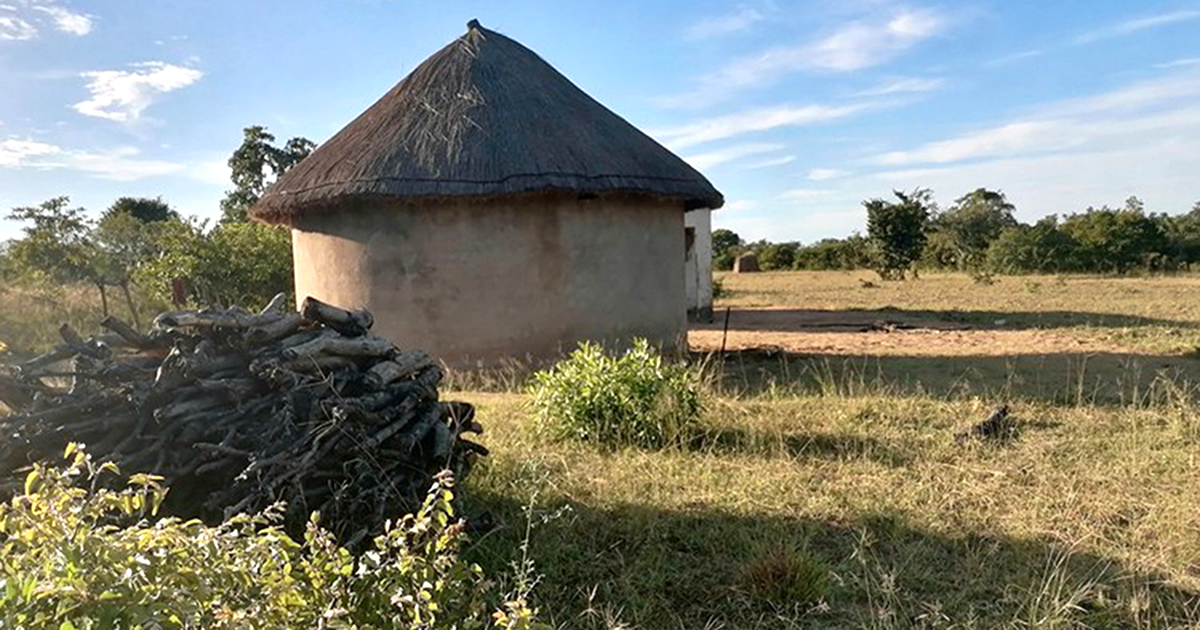
In 1987, I got married. My uncle allocated me three hectares to build a family homestead. I was earning a salary that allowed me to build a three-bedroom house and a small rondavel immediately. Though my wish was to build a better home, I had limited resources.
We used to grow groundnuts and maize for our own consumption.
Then, around 1998, I became employed by the Zimbabwean Public Service Commission within the Department of Home Affairs, and I relocated my family to Harare, because I was working there. Later, I was transferred to Masvingo District.
During these years, I used to employ someone to look after my home and the animals. I made sure that our family returned to our rural home every holiday.
In 2006, during the Zimbabwe economic meltdown, four of my six children were at boarding school. My salary had become tiny when converted to the South African rand or US dollar. I could not even afford my accommodation. My resources were so strained that I had to let go of the person looking after my rural home. I still used to visit regularly, but I noticed the house was being burgled and vandalised.
The situation was difficult. Should I leave my home to be vandalised, so that I could just focus on my children's education? I decided this was the best I could do, and I had to all but abandon my rural home.
But what soon became apparent was that if I did not make a plan by the end of 2006, my children were going to be forced to drop out of school.
I sought advice from a friend, a teacher, who used to buy shoes from Bata Shoe Company in Zimbabwe to sell in South Africa. I tried to join him, but this did not work out for me.
By 2007, I had noticed that a number of my friends had left for South Africa. My wife also went to Cape Town and was selling various things, such as brooms. I asked myself, "Should I, too, leave Zimbabwe for South Africa?" I had worked for nine years in the Department of Home Affairs. What work could I look for in South Africa? I simply did not know. My salary had become worthless, so I left my job. In March 2007, I left for South Africa.
But always at the back of my mind was my rural and true home, where I wished to retire one day. I love the place – the environment and its biodiversity. It has enough space for gardening and a bit of crop farming. I used to keep 10 head of cattle, but three were stolen and the others I had to sell.
By 2010, my home had been completely vandalised. I have no idea who had done it, but they not only stole everything – our clothes, the three-piece lounge suite, the kitchen utensils – they also made off with the window frames, the panes and the doors. This was distressing, but I had to remain steadfast, concentrating on the education of my children.
I eventually found someone to look after the place again, but when he visited his family during the Christmas holiday, he never returned. I have been told he was seeking work at a mine about 60km east of my home. Once again, no one was staying at the house.
In November last year, I returned to find that the roof of the rondavel and the house had caved in. I have, however, started to renovate the place, and I plan to extend it.
In 2009, the South African government introduced the Dispensation of Zimbabwean Permit, which became the Zimbabwean Special Permit (ZSP) in 2014 and the Zimbabwe Exemption Permit (ZEP) in 2017. Then the announcement was made that the ZEP would expire in June this year.
For all these years, I could manage to support my family by working legally in South Africa. If the ZEP ends, I will have to return to Zimbabwe and live at my rural home.
I love my home and wish to stay there, but right now I am not sure how I will manage to do so financially.
(Published by GroundUp. Bernard Chiguvare is a freelance reporter who publishes often with Limpopo Mirror and GroundUp).