
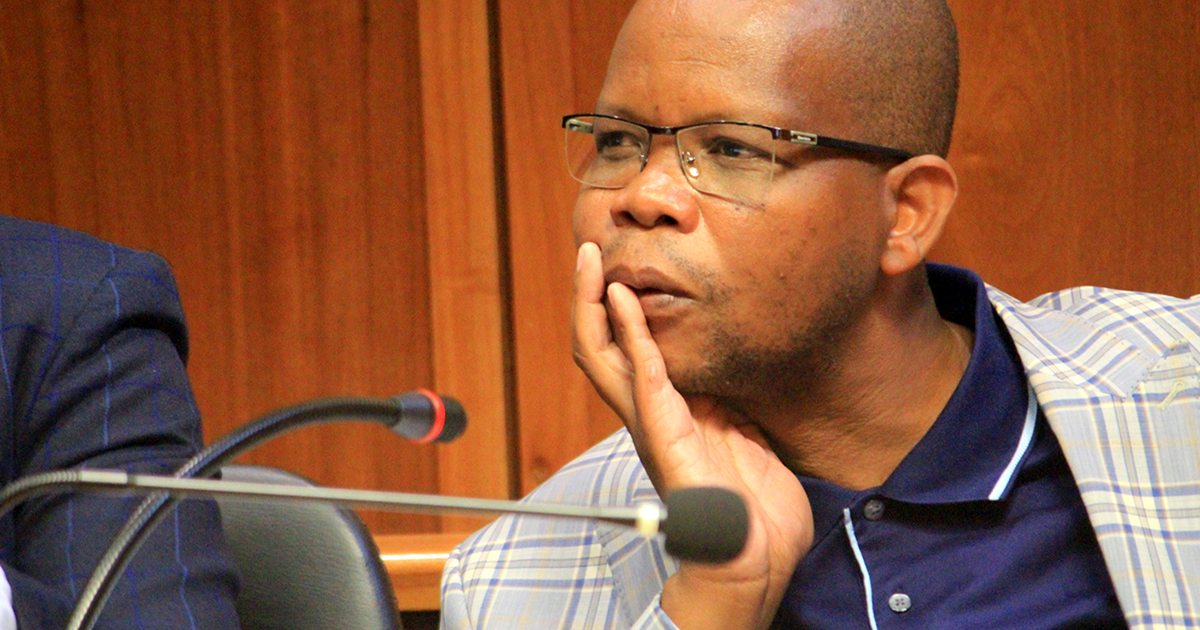
Prince Toni Mphephu Ramabulana told the Limpopo High Court that allowing a woman to ascend the Vhavenda throne would lead to the collapse of long-standing cultural traditions.
Testifying in a heated legal battle over the kingship last week, Ramabulana insisted that Vhavenda customs strictly prohibit female leadership.
He is being challenged by his niece, Princess Masindi Mphephu, who argues that her exclusion from the royal succession was based solely on her gender – an act she contends violates her constitutional rights. Her argument was supported by the Constitutional Court, which ruled in her favour in 2016, finding that her exclusion from the royal succession was discriminatory. The ruling prompted a review of the processes that led to Toni's appointment as king more than two decades ago.
"Princess Masindi Mphephu doesn't qualify to take up the Vhavenda kingship throne because she is a woman. That is not discrimination against women – it's simply in accordance with Mphephu Ramabulana customs," Ramabulana told the court.
He argued that the survival of key Vhavenda cultural practices depends on male leadership. "If a woman succeeds, the kingship throne will collapse," he said. "Rituals and practices such as dzekiso, u luvhedza, and u ṱanula will also die."
During cross-examination, Princess Masindi's legal counsel, Adv Alan Dodson, questioned Ramabulana on the criteria for succession, noting that gender was not explicitly mentioned in submissions to the Nhlapo Commission on Traditional Leadership Disputes.
"We submitted that to the commission a long time ago," said Ramabulana. "I'm not certain now, but I believe we did mention it. Maybe we did not submit that specific point. It was a long time ago."
Ramabulana maintained that women were expected to perform certain rituals in order to qualify for the Mphephu chieftaincy, suggesting that Princess Masindi had not met these customary obligations. He added that disputes over traditional leadership – or muvhango – were a normal part of Venda culture.
Advocate Dodson pointed out that some members of the royal family opposed Ramabulana's appointment and believed Masindi's rights had been violated.
"In Tshivenda, the chieftaincy is something worth fighting for," said Ramabulana. "Even David Mphephu and Thompson Muvhango became driving forces behind supporting me."
Ramabulana also testified that the interim royal committee, led by Charles Mphephu, had appointed him as chief – not acting chief – in 1998, following the death of Chief Tshimangadzo Dimbanyika Mphephu.
Dodson argued, however, that Ramabulana had only been appointed as acting chief because Princess Masindi was still too young to assume the role. "They appointed you as acting chief two weeks after Dimbanyika's passing because they recognised Masindi's entitlement to the throne," Dodson said.
Ramabulana denied this. "I was appointed as chief. I don't know about this 'acting' appointment. I have not seen any document that says so."
Dodson further argued that excluding Princess Masindi from the throne based on gender amounted to discrimination, which Ramabulana denied. Dodson also cited a submission stating that the ndumi (royal adviser) could never ascend to the throne, calling it taboo. Ramabulana disagreed, saying such decisions depended on the seniority of the royal house.
He acknowledged that the legal battle had strained his relationship with Princess Masindi. "Since she challenged me for the throne, we have lost our bond," he said, adding that he had raised her from the age of six after her father's death in a car crash in 1997.
The court case was postponed to the last week of July, with a date yet to be confirmed.