
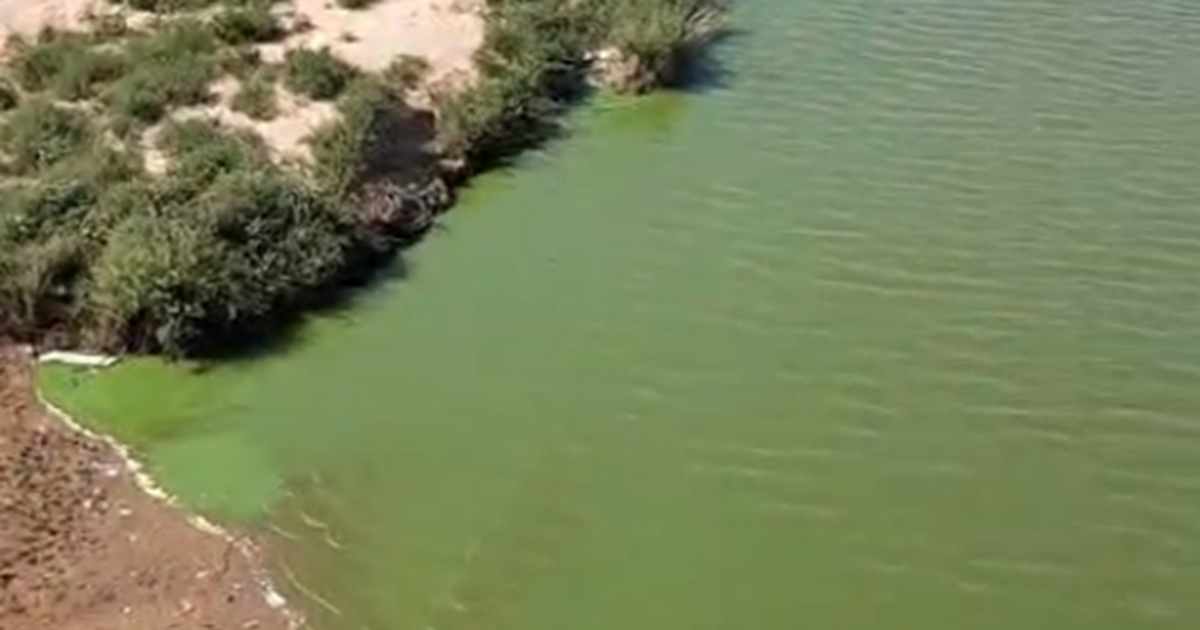
The Vhembe District Municipality (VDM) has confirmed that the tests done on the water quality of the Limpopo River last week came back negative. This follows fears that a possible large-scale pollution event had caused the river to turn almost bright green overnight.
A voice note that began circulating in Musina last weekend added to the panic. In the recording, the speaker—who does not identify himself or say where he is from—warns residents not to drink municipal water or water from the river. "We suspect that there may be pollution from a mine upstream in Zimbabwe," the message states, among other things. The person also attached photos of the green water to the message.
On Monday, 14 July, the VDM responded by warning residents not to use the water in the Limpopo River, and on 15 July confirmed that samples had been taken to check the quality of the water. In the meantime, some farmers along the river also took samples for testing. It was also speculated that the river's green colour was not due to a major pollution event caused by a mine, but rather water from the heavily polluted Hartbeespoort Dam, which flows into the Limpopo River via the Crocodile River.
On Sunday, 20 July, the VDM issued a statement that the tests done on the water came back negative. "The greenish colour inside the river was caused by algae. However, the testing of water quality will continue to be conducted on a weekly basis to determine any contamination in the near future," the VDM stated.
But what exactly did the VDM test for?
VDM spokesperson Mr Moses Shibambu stated on Tuesday that they had tested for physical parameters, including pH, turbidity and electrical conductivity. As for chemical parameters, they had tested for iron, fluoride, chloride, TDS, manganese and sulphate. Microbial tests included looking for E.coli, total coliform and free chlorine.
"We tested at seven sampling points," said Shibambu.
At the time of our going to press, the newspaper was waiting for feedback from some of the farmers along the river who had tested the water to see if their results matched those of the VDM.