
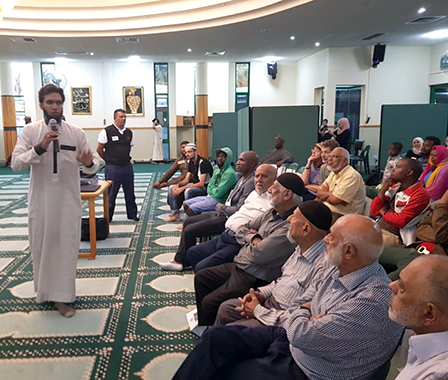
On Friday night (24 April) the Islamic holy month of Ramadan started. This is a period during which Muslims from across the world take part in fasting and activities in devotion to their religion. This year, however, doing so is more of a challenge because of the Covid-19 lockdown regulations.
Louis Trichardt boasts a very established Muslim community that has been here for over a century. The land on which the mosque in the centre of town was built, was purchased in 1928. The local Indian community, however, started collecting funds to build a mosque as far back as the early 1920s. Initially, a prayer room was built where the Muslim community could gather for their daily prayers. For construction work to commence took a few more decades and only in 1956 was the first proper mosque consecrated.
In March 1999, a second mosque was completed in Eltivillas, namely the Masjid Al Noor mosque. For many decades, the two mosques served as the main gathering places for Muslim devotees. A third mosque was built a few years ago in 7th Street, Eltivillas.
At all three mosques the Ramadan celebrations will be quite different this year, as the Covid-19 lockdown restrictions completely changed the way religion is being practiced.
According to Mr Idris Sheikh, an active member of the local Muslim community, the aspect they will probably miss most this year is the communion with fellow worshippers. The month of Ramadan is a time of spiritual reflection, prayer, doing good deeds and spending time with friends and family. Because of the restrictions, gatherings are not allowed, and prayer meetings do not take place at any of the town's mosques.
In Louis Trichardt and Eltivillas, many of the Muslims are tuning in to the Bilal broadcasts. This is done from one of the mosques and allows devotees to, among other things, hear the recital of the Holy Quran. Muslim families can have these receivers and microphones installed in their homes, which makes staying in touch a lot easier. The main taraweh prayer, combined with the previous night's prayers, is broadcast.
For people such as Idris who currently do not have such receivers installed, silent prayers at home are perfectly acceptable. "Praying in congregation is highly rewarded by the Almighty, but Islam allows indoor prayers in circumstances such as what we are now experiencing," says Idris.
An important practice during the month of Ramadan is fasting, but this also means that the activities in a Muslim household start very early. Many of the women get up at about 03:30 to start preparing the first meal, called suhoor. The morning prayer session starts at about 05:15.
For the rest of the day, no food or drink is consumed. The fasting continues until the sun sets, which is around 17:45, when a meal called iftar is served. The exact time when fasting ends is governed by the mosque administrators. The last night prayer starts at about 19:00, but all prayers normally ends at 20:00.
Food preparation may be more of a challenge this year, because of the lockdown regulations. Only Halaal meat may be used, but no local suppliers exist in town. The nearest Halaal butchery is in Nirvana, in Polokwane. Halaal chicken is more readily available and most Muslim families have stocked up on other necessities before Ramadaan started.
Idris mentions that many of the Indian families are currently under severe financial stress because of the lockdown. Trade in many sectors such as the hardware industry, electronic goods, cellphones and accessories has stopped completely, which means that many of the families are sitting at home without any income.
The Muslim congregations try and maintain contact with their members and use platforms such as WhatsApp groups. The social media groups allow them to respond to needs and to communicate important information.
Fasting is only one of the five pillars of Islam. The other pillars are faith, prayer, charity and making the pilgrimage to the holy city of Makkah/Mecca. Several local people made plans to visit Mecca this year for what is known as the Hajj. The plans, however, had to be cancelled this year as Saudi-Arabia suspended all visits to Mecca.
Ramadan will continue until roughly the 24th of May. It ends when the first sign of the new moon is spotted. The end of Ramadan is marked by a special festival, called Eid al-Fitr - the Festival of the Breaking of the Fast.