
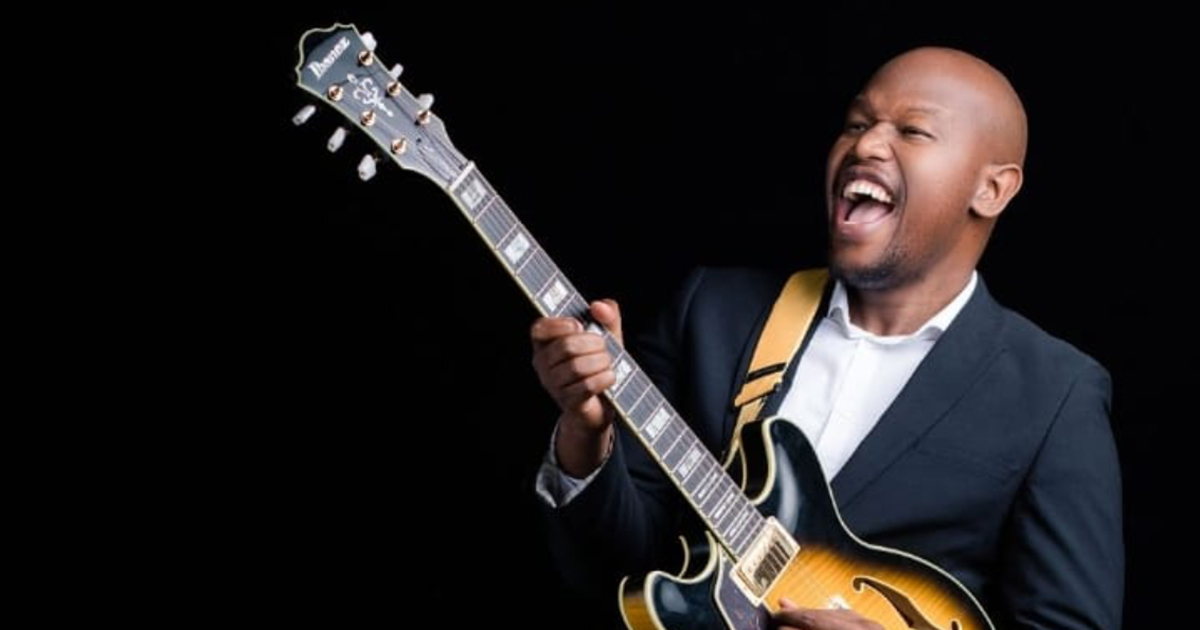
L'wei Netshivhale has built his music on the foundation of Tshivenda traditions, fused with the language of jazz. His sound has established him as one of the leading cultural ambassadors from Venda, with a body of work that is spiritual, rooted and innovative.
"It starts with knowing who I am and where I would like Luvenḓa, my mother tongue, to shine among all cultures without losing its authenticity," Netshivhale said. "I have chosen to be an ambassador of Tshivenda throughout, and that is why I always try to deliver a well-balanced project to my followers."
The guitar remains central to his craft. For Netshivhale, it is not just an instrument but a partner in storytelling. "I fell in love with guitar singing and playing, and it fits in with my assignment of laying down Tshivenda melodies in my songs. As my primary instrument, my guitar blends naturally with my singing, producing well-structured music," he said.
Although earlier works such as Mudzimu Washu and Lwenzhe lwa shango set a spiritual tone, he believes his vision has remained consistent. "I am still in the same class of visualisation, spiritualism, and peace-and-harmony-driven elements in all my compositions," he said.
His new project deepens that vision. Songs such as Ene Muṋe carry gospel influences, while stripped-down arrangements allow traditional sounds such as mbila, nanga dza tshikona, ngoma and tshigubu to take centre stage. "The Creator remains the only God who knows our different situations," he said.
Netshivhale insists that the spiritual essence of his music gives it reach beyond Tshivenda-speaking audiences. "My way of composing speaks to emotions and answers the questions within me. It touches hearts across the world, even for those who do not understand Tshivenda," he said.
The artist is set to perform at this year's Joy of Jazz festival, where he promises a full band and a live performance built around Tshivenda identity. "Beautiful music. Tshivenda. Everything live," he said.
Preparing for such stages requires him to remain grounded. "By being myself, focusing on presenting what God has given me to present to the world," he said.
Translating indigenous traditions such as malende and tshikona into sounds that resonate with younger, urban listeners has been one of his challenges. He credits his formal training in music theory with helping him interpret traditional forms into modern expressions.
Netshivhale has collected awards in both gospel and jazz. Recognition, he says, is not the ultimate goal, but it is encouragement. "Being recognised gives courage. It fuels one's energy to do more," he said.
Looking ahead, Netshivhale plans to expand his reach to international audiences while strengthening his role at home. "I want to go out to the world, presenting my work to broader industries, working with international artists, and learning new musical elements, especially Tshivenda. At the same time, I want to mentor young people, especially back at home," he said.