
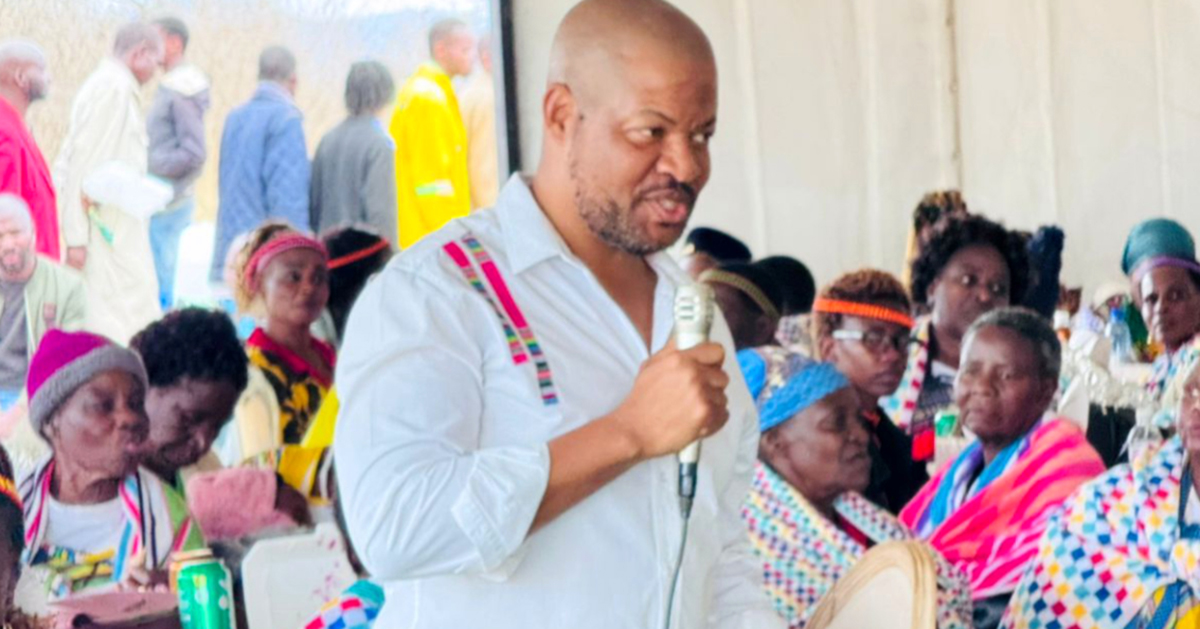
One of the Vhembe region's most significant battles, which took place 160 years ago at Magoro Hill, was commemorated last Friday. The battle saw more than 300 villagers killed and many taken as indentured labourers.
Friday's event was attended by around 400 guests, including representatives from various cultural, religious and linguistic communities. A special plaque was unveiled, describing part of what happened during the battle.
Sigwavhulimu Magoro, one of the organisers, urged people not to forget historical events such as the battle at Magoro Hill. "We would like this to be an annual event to also remember and honour the lives lost," he said.
In attendance was Portia Tsanwani from the Commission for the Rights of Cultural, Religious and Linguistic Communities (CRL). "As CRL, we are encouraging the Magoro family to take care of the graves and to honour their culture," said Tsanwani.
What happened at Magoro Hill?
The Magoro Hill massacre, as many present referred to it, occurred not far from where the Middle Letaba Dam now stands. Historic documents describe Magoro village as the capital of the Venda chiefdom, south of the Little Letaba River.
Tensions rose after the establishment of Schoemansdal in 1848 by Trekkers moving northwards. Following the formal establishment of the South African Republic (ZAR) in 1852 through the Sand River Convention, new laws and taxes were introduced. Trekker authorities divided local African communities under labour-providing and tributary chiefs. "Opgaaf" (tribute) had to be paid in cattle, ivory, leopard skins, iron hoes or copper rods.
The collection of tribute in the eastern and southern Soutpansberg was entrusted to João Albasini, appointed local superintendent of African chiefdoms in 1858. Albasini, a colourful character, became known as the 'white chief of the Magwamba' and commanded his own army of Tsonga warriors, many of whom had fled Mozambique's Gaza Ngoni kingdom under Soshangane.
Chief Magoro supported Makhado, the paramount chief of western Venda, who was in conflict with the Schoemansdal community. He also refused to pay the opgaaf.
A brutal massacre
When the Trekker commando, comprising about 60 men, reached the hill on 8 August, it had already been surrounded by around 1,000 Tsonga warriors, cutting off the Venda from the nearby river.
Negotiations over the opgaaf and the surrender of guns failed. The chief's son and one of the two councillors who accompanied him to the laager were put to death. The hill was eventually captured on Sunday, 13 August 1865.
More than 300 inhabitants of Magoro Hill lost their lives. The returning commando also seized more than 200 cattle, several young women, and 120 children. They were taken to Albasini's farm, where the women were distributed among the Tsonga militia and the children were divided among the burghers to serve as indentured apprentices.
Although slavery in the Cape Colony officially ended on 1 December 1834 with the full implementation of the British Slavery Abolition Act of 1833, it persisted for many years in northern regions under different guises, including the "inboekstelsel," a system of forced labour that maintained the racial social hierarchy. Hundreds of African children were captured in military campaigns, including the Magoro Hill assault.