
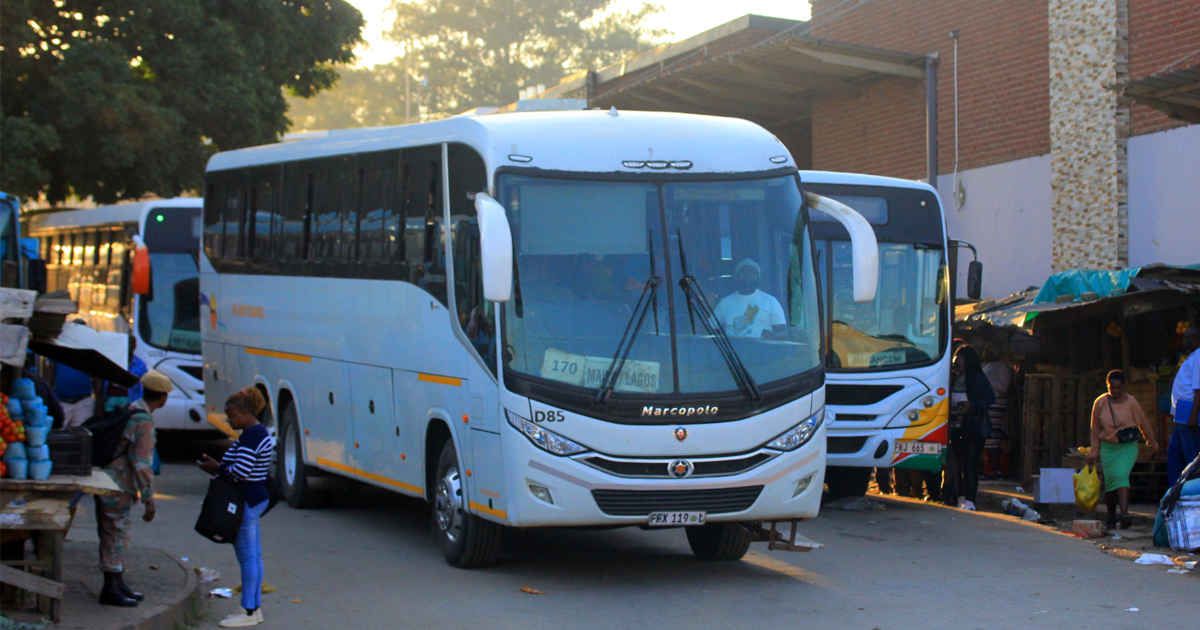
More than a year after it was launched to improve public transport, the Makhado Bus Service is still failing thousands of commuters in the Vhembe District.
The service, introduced in early 2024 by the Limpopo Department of Transport and Community Safety (DTCS), was meant to address long-standing issues such as delays, breakdowns and overcrowding. However, passengers say it appears to be doing the opposite.
Makhado Bus Service was created through a contract system that merged six operators into a single special purpose vehicle (SPV). These operators include Great North Transport (GNT), Mabidi Transport, R Phadziri and Brothers, G Phadziri and Sons, Do Light Transport, and Mabirimisa.
According to the DTCS, the SPV model enables operators to share resources and respond more effectively to service problems. It is funded through the Public Transport Operations Grant (PTOG), with R900 million allocated for subsidised bus services across Limpopo in the 2025/26 financial year.
The aim was to streamline operations and improve reliability, but many passengers say little has changed.
Ndivhuwo Muzhambi from Nzhelele, who uses Mabirimisa and Enos buses, said commuters were still struggling. "Sometimes we wake up early because there's a shortage of buses, and other times the buses don't come at all, which makes things worse," he said.
A regular GNT bus commuter from Elim, who asked not to be named, said they were still waiting to see if the situation improved. "We are forced to stand the whole way, which is exhausting, especially after work. When buses are late or unavailable, we have to hitchhike, which is not safe," she said.
In the Sinthumule-Kutama area, commuters who rely on Phadziri and GNT buses reported similar problems. "Sometimes the bus breaks down on the way. We have to wait until it's fixed or until another one comes, which often makes us late for work," said one commuter, who wished to remain anonymous. "We also end up hiking, even though we've already bought tickets. The buses are overcrowded and in poor condition. Some even have broken windows," she said.
Davis Khosa, a member of a local bus forum that raises commuter concerns with the GNT depot in Makhado, told Limpopo Mirror that breakdowns remained common. "Many buses still leak when it rains. The condition of GNT buses is just not up to standard," he said.
In response to ongoing complaints, GNT spokesperson Leo Gama said the changes aligned with the National Land Transport Act. "Makhado Bus Service is not planning any fare increases at this stage. Stakeholder engagements are ongoing and led by the SPV team," he said.
The Democratic Alliance (DA) has called for a formal investigation into GNT's management and contracting practices. On 20 May, DA Limpopo spokesperson Jacques Smalle said the party had written to the provincial portfolio committee, requesting an urgent meeting with GNT's board and management.
Smalle said the leasing and outsourcing of routes needed to be scrutinised to ensure transparency and accountability. "GNT nearly collapsed due to corrupt and malfeasant governance. We cannot afford another round of inefficiency and mismanagement," he said.
He also raised concerns that outsourcing was making GNT staff — including drivers and maintenance workers — redundant, and questioned the rationale behind such decisions.
Limpopo Department of Roads and Transport spokesperson Tidimalo Chuene said the model introduced last year was guided by Section 41(1)(b) of the National Land Transport Act, which allows the department to negotiate directly with operators that have viable business structures.
"Combining smaller contracts into one SPV strengthens its financial position, making it easier to invest in key assets and build operational capacity," said Chuene. The model includes strict performance targets and key performance indicators to monitor service delivery.
She acknowledged that GNT passengers had long faced issues. "However, GNT Makhado no longer operates alone. If one operator struggles, others in the SPV can step in. Any challenges will now be the responsibility of Makhado Bus Service as a whole," she said.
Chuene added that the new routes — some in previously unserved areas — were developed in consultation with municipalities and operators. She said district municipalities such as Vhembe and Capricorn were responsible for developing their own integrated transport plans and were receiving support from the national department, although timelines for implementation remained unclear.
All operators, including Makhado Bus Service and Vavasati On the Move, have been given from April to June to monitor operations and report issues. "We are holding post-contracting engagements, and commuter representatives are taking part to ensure their concerns are heard," said Chuene.