
The Makhado Municipality lost 12% of its electricity revenue in the last financial year because of non-technical issues such as theft, fraud, metering errors, and other administrative problems. This resulted in a loss of R45.8 million, a significant increase from the R32.75 million lost the previous year. The situation appears to be worsening, with the mid-year report, released a few weeks ago, showing that average distribution losses have risen to 16%.
The loss of revenue from electricity sales is one of the issues flagged by the Auditor-General (AG) in her report on the 2023/24 annual financial statements. Another major concern is the municipality's inability to complete key infrastructure projects, including the installation of high-mast lights, the Tshivhuyuni Sports Facility, and the Dzanani Taxi Ranks.
However, the AG's report is not overly critical of how the municipality's finances are being managed. Makhado received an unqualified audit opinion, with an emphasis on certain matters. While not yet a clean audit, it is a significant improvement, compared to most Limpopo-based municipalities.
The AG also noted that the municipality's finance department cooperated well with auditors. "Material misstatements of expenditure and disclosure items identified by the auditors in the submitted financial statements were subsequently corrected, resulting in the financial statements' receiving an unqualified audit opinion," said the AG, Ms Tsakani Maluleke.
Millions Lost in Stolen Electricity
The AG prominently highlighted the fact that nearly R46 million was lost last year from illegal connections and meter tampering by consumers. The situation is deteriorating as non-technical losses amounted to R32.73 million the previous year.
Makhado Municipality spokesperson Mr Mpho Rathanda responded to questions last week, stating that various operational strategies had been implemented to curb these losses. He explained that the electrical department was working to reduce both technical and non-technical losses.
"Technical losses occur due to the inherent resistance in power lines, transformers, and other system components," he said. To minimise these losses, the municipality needs to upgrade infrastructure, replace aging equipment, and increase the number of feeders, such as at the Mara split.
However, the bigger challenge lies in non-technical losses. To address this, the municipality plans to continue replacing traditional electricity meters with smart meters to improve accuracy and detect theft or tampering.
Rathanda said that site inspections would be increased to identify unauthorised connections. "We are conducting regular audits of both technical and commercial losses, focusing on identifying and eliminating sources of inefficiency and theft," he added.
Irrecoverable Debts
The financial statements indicate that consumer debtors increased from R374.08 million in 2022/23 to R408.89 million last year. Of this amount, R41.6 million has been classified by the AG as irrecoverable debt.
The municipality has also struggled to collect revenue from traffic fines. In 2022/23, total income from traffic fines was R13.96 million, which increased to R16.51 million the following year. However, the municipality has had to make provision for R3.05 million in impaired traffic fines.
Another risk highlighted by the AG is what she described as "an uncertainty relating to the future outcome of litigations." The Makhado Municipality is a defendant in several lawsuits, but no provision has been made for these liabilities in the financial statements.
Management's provisional estimate of the total potential liability is R273.9 million (2023: R270.6 million). "The actual amount could be lower or higher than the provisional estimate, depending on the determination of the merits of each case," the report states.
Many Unfinished Projects
One of the AG's functions is to assess whether municipalities deliver on their commitments. Municipalities set objectives, and the AG evaluates their progress in achieving these goals.
According to the AG's report, Makhado spent 61% of its budget and achieved 67% of its targets for basic service delivery. The report highlights 15 incomplete projects. Because of space constraints, only three are discussed here.
The municipality's latest Integrated Development Plan (IDP) states that it has 34 high-mast lights installed across various wards, with an additional 2,629 needed to clear the backlog. In the 2022/23 budget, R15 million was allocated for high-mast lights in several villages, increasing to R16 million in the following year's budget. However, the AG's report indicates that no such lights were installed.
Responding to questions, municipal spokesperson Mpho Rathanda said that 37 high-mast lights would be installed. "We are currently in the process of appointing contractors," he said.
Another incomplete project flagged by the AG is the long-overdue Dzanani Taxi Rank and Market Stalls. The project was supposed to be 40% complete by June 2024, but the AG's report shows it at just 23% completion. Initially, R7 million was allocated for the construction of the taxi rank and market stalls, which later increased to R13.12 million in the 2024/25 budget. According to the annual report, delays were caused by community members demanding subcontracting opportunities.
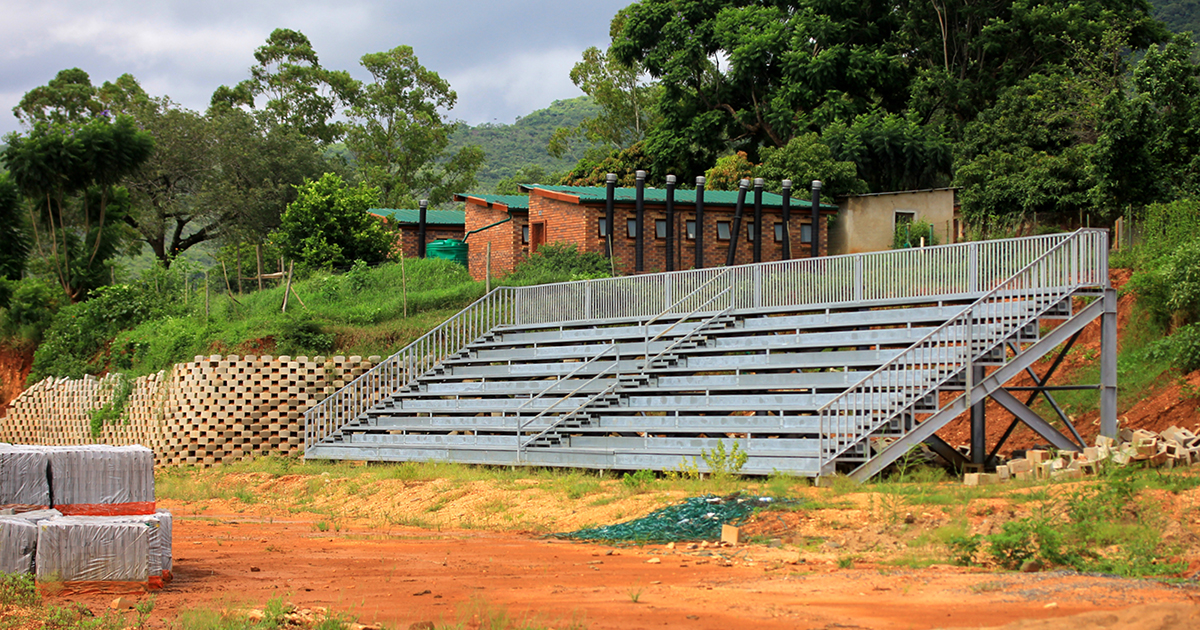
The Tshivhuyuni Sports Facility, another of the municipality's embarrassments, was also listed as incomplete, with only 52% of the project finished. The municipality cancelled the contract in January this year, Rathanda said.
Gombameni Risk and Event Management secured the R17 million contract to build the facility, with work starting in August 2023. What was meant to be a six-month project has dragged on for years, with the contractor missing multiple deadlines.
Internal Control Deficiencies
Although the AG's overall assessment of the municipality was fairly positive, she noted that internal financial controls remained a problem.
"The accounting officer did not implement adequate internal controls to ensure the preparation of accurate financial statements as material misstatements were identified," she stated. She also found that the accounting officer had not adequately reviewed or monitored compliance with applicable laws and regulations.