
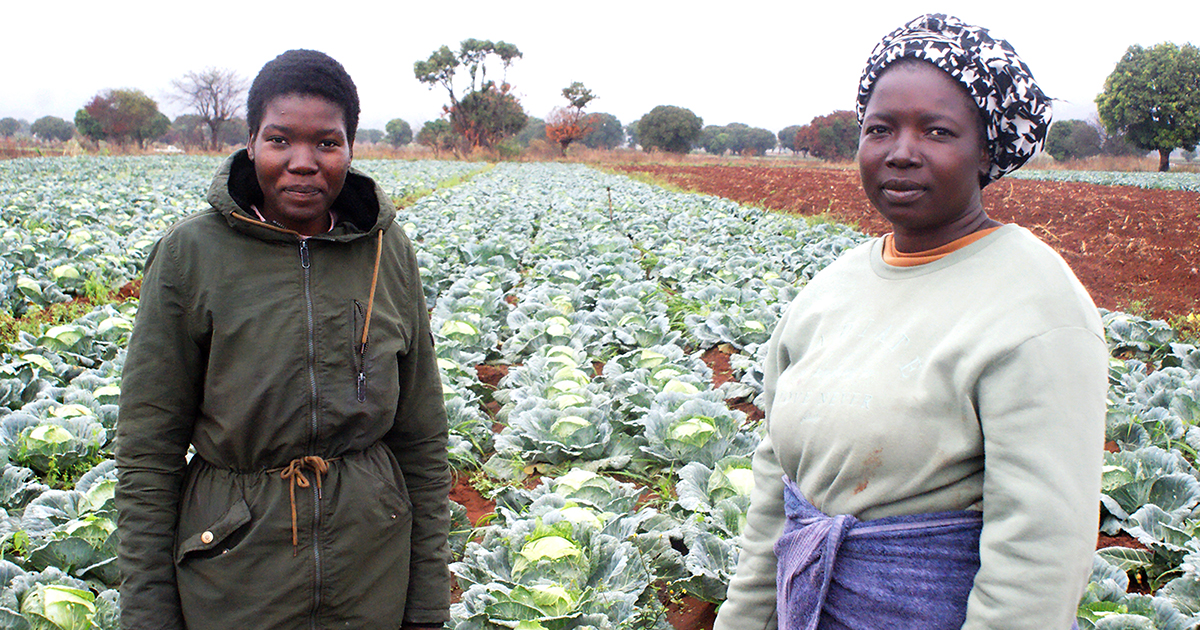
Thirty-eight-year-old Rabelani Mamagwa, from Mianzwi village in the Matangari area, has transformed the small plot she inherited from her late grandmother into a food basket for local communities.
Mamagwa said she started working in the fields with her grandmother, the late Ms Martha Rangwedi, when she was still very young. When her father passed away in 2007, she had to look for work to support the family. "I worked for a very short period before I realised that the money that I was earning was not enough to feed my family, so I resigned and went back to farming," she said.
Even though she never had any formal farming or agricultural education or funding, she managed to turn her two-hectare inheritance into her livelihood.
Mamagwa recalled how, growing up in this farming community, she always wanted to become a nurse, but her dream was shattered when her parents told her that they did not have the money to pay for her tertiary education. "When I started, many people thought I was just wasting time and stated I would not last long in farming. Most girls my age preferred to do office work, but I prefer to do the dirty work."
She said she always encouraged young people, especially girls, to take farming seriously. "Farming is an interesting career. You work at your own pace, on your own time. It was a bit hard for me when I started, but now, no one can convince me to leave farming. I live, dream, and eat farming," she said.
Depending on the season, Mamagwa plants different kinds of vegetables, mealies, and tobacco. Through farming, she supports her family of eight and also sends her siblings to school. Two of them are studying at tertiary institutions.
"There are many business opportunities in this country. The sooner we realise that money comes from the soil, the better," she retorted.
When asked about the kind of challenges she faced currently, she said that water was a real problem. "We don't have water in the area and depend on rainwater and water from the canal. Also, transportation to take my products to bigger markets in and around Limpopo is a challenge," she said.