
The Vhavenda kingship dispute, involving Princess Masindi Mphephu's challenge to Prince Toni Mphephu-Ramabulana's claim to the throne, has exposed divisions within the royal family and raised important questions about customary law. These issues came to light during court proceedings at the High Court in Polokwane from Monday, 13 January, to Thursday, 16 January.
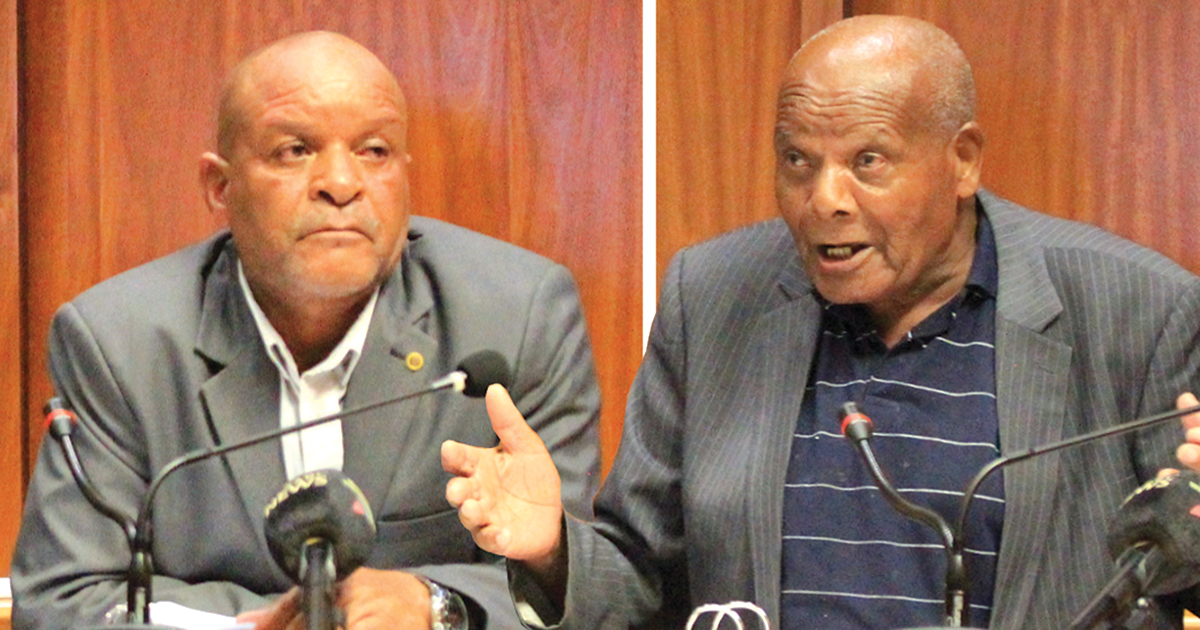
One of the Vhavenda's most senior traditional leaders, David "Vho-Japan" Mphephu, was the 10th witness to testify in the case. During cross-examination, it became evident that there are inconsistencies in how customary law is applied. Similar concerns also arose during the testimony of another senior traditional leader, Thovhele Vele Kutama.
The court was presented with central issues in the case, such as the legitimacy of marriages, the performance of rituals, and the criteria for determining rightful heirs.
Princess Masindi's legal team must convince the court that she is a legitimate heir, with a key part of their argument being to prove that she was born to a "dzekiso wife." A dzekiso wife is chosen by the uncles and the makhadzi (a senior female advisor) to bear the heir. The failure to perform rituals or produce an heir can disqualify a lineage.
The court was also told that candidates for kingship must be from a royal family, have no criminal record, and display good and proper behaviour.
During cross-examination, Advocate Allan Dodson, representing Princess Masindi, argued that Prince Toni Mphephu-Ramabulana's appointment was questionable, given allegations of his involvement in the VBS Mutual Bank scandal.
Cultural expert Professor Pfarelo Matshidze testified last year that Princess Masindi's birth before her father's coronation does not disqualify her from ascending to the throne. Dodson maintained that Masindi, the late King Mphephu's daughter, meets all traditional requirements for kingship.
He challenged Vho-Japan, who had agreed initially that a criminal record disqualified one from the kingship, but Vho-Japan then defended Toni, asserting that "he had committed no wrongdoing and is not a suspect in the VBS saga." He also claimed that Masindi's mother had failed to perform the necessary rituals and was not the dzekiso wife, thereby disqualifying Masindi. "We are not denying that she went to school or has good behaviour, but the issue is the lack of rituals and her mother's status," he said.
Dodson argued that while both candidates hailed from royal lineages, additional requirements disqualified Toni but not Masindi. Vho-Japan countered, stating that Toni qualified because his mother was a royal wife.
Advocate Shonisani Ravele, representing Toni, argued that Masindi's father, the late King Tshimangadzo Dimbanyika Mphephu, was a prince at the time of her birth and not yet a king. Thovhele Vele Kutama testified that the responsibility for selecting a successor lies with the uncles and the dzikhadzi. "Even I cannot choose a successor among my children because the kingship belongs to the family," he said.
The case has been postponed to June this year, with the exact date yet to be confirmed.