
Conservation
News of another mass poisoning of vultures along the Kruger National Park fence near Punda Maria has conservationists fuming. The horrific discovery was made by park rangers patrolling the fence on 11 August.
A buffalo carcass, killed by snaring and then laced with highly toxic poison, was used to kill the animals. A total of 108 vultures died after feeding on the carcass. The species killed included 104 critically endangered white-backed vultures, one critically endangered white-headed vulture, two vulnerable Cape vultures and one endangered lappet-faced vulture.
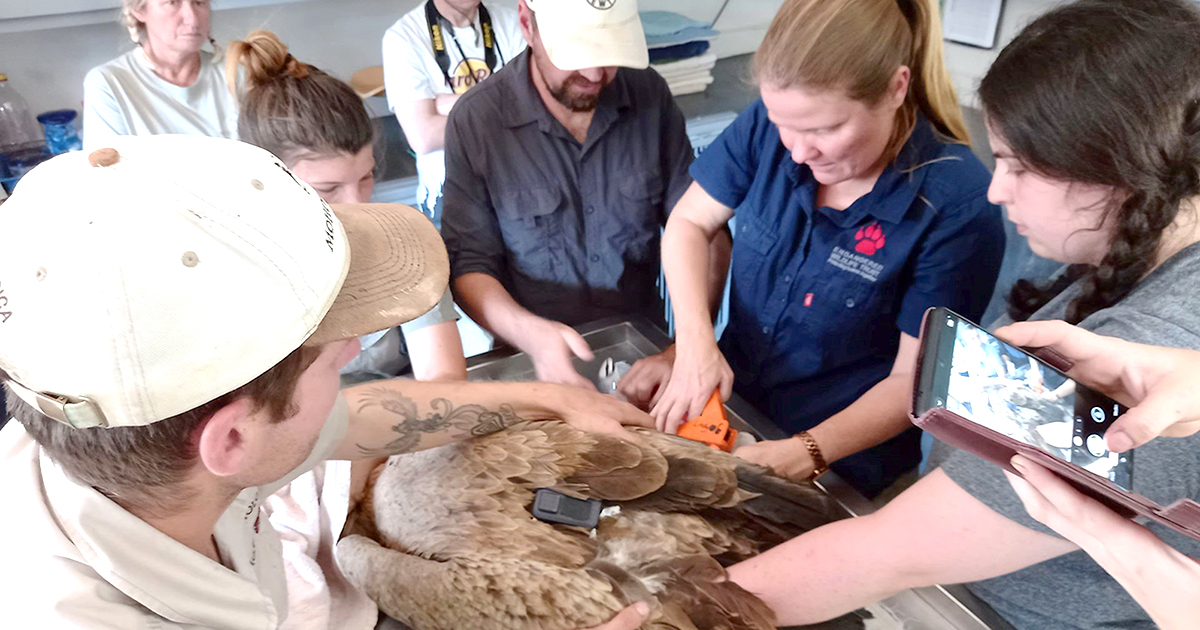
With the assistance of the Endangered Wildlife Trust (EWT), 24 vultures were found still alive and rushed to the Shingwedzi and Moholoholo Rehabilitation Centre for treatment. Following the incident, Yolan Friedman, CEO of the EWT, expressed her concern that "given the critical status of vultures globally, poisonings at this scale place the species at increasing risk of extinction". Acting CEO of SANParks Hapiloe Sello also stated that "this reprehensible act once again highlights the ever-present danger of poisoning by unscrupulous people. We cannot afford to let our guard down, and we call on law-enforcement agencies outside the park to move swiftly to arrest the perpetrators".
The scene has been cordoned off for further investigation and the carcasses have been burned to ensure that no further poisonings occur. Initial indications are that some of the carcasses were harvested for their body parts. SANParks also confirmed that the matter has been referred to the SAPS for investigation.
The EWT gave feedback on the incident the past week in a media statement. The organisation states that this mass poisoning is a devastating blow to the country's vulture populations. "Two of the surviving African white-backed vultures had recovered well enough for release on 18 August 2022, after being fitted with GPS tracking units, so that we can monitor their progress," says the EWT.
According to the EWT, the demand for animal body parts to feed the illegal wildlife trade has led to thousands of vultures' being poisoned across Africa, which has devastated populations and is driving them rapidly towards extinction. "Scavenging mammals, including lions, hyenas, and leopards, are also severely affected by poisoning. Over the last 10 years, there has been a steady increase in wildlife poisoning across the Lowveld and the Great Limpopo Transfrontier Conservation Area (GLTCA)," says the EWT.
"The Greater Kruger, including the associated private nature reserves and the Great Limpopo Transfrontier landscape, is an important, vulture-rich landscape and currently a hotspot for wildlife poisoning, with at least six new incidents recorded in the southern half of the Greater Kruger since February 2020. In all of these cases, vultures were the most heavily affected by poisoning, with approximately 600 vultures from five threatened species killed in the Greater Kruger since January 2019, predominantly in the northern section of the Kruger National Park," says the EWT.
The current scale and rate of vulture losses to poisoning are frightening and the EWT warned that it could lead to the local extinction of vultures in this region within the next four years. "It is important to note that many incidents are not detected or reported as they occur in vast wilderness landscapes. Because of this, we suspect our records are under-reporting the severity of the threat," the EWT says.
According to the EWT, the current population estimates for white-backed vultures in southern Africa are around 7 350 mature individuals, and based on the last aerial surveys done in 2014, there are around 900 breeding pairs (and approximately 2 400 birds) in the Kruger National Park. "This event has thus led to the loss of approximately 5% of the region's vultures. The populations affected in the latest incident will take some time to recover, particularly as it is the peak of vulture breeding season, and it is estimated that for every breeding adult lost, one chick is lost too," says the EWT.
The EWT has been working with SANParks to improve the management and response to these devastating poisoning events across the Kruger National Park since 2019. The EWT's Wildlife Poisoning Response training has trained more than 400 rangers to identify, detect, and deal with these events effectively by containing the crime scene and sampling carcasses for investigative purposes. Rangers are also trained in methods to save as many surviving birds as possible and decontaminate the scene to prevent further poisoning of animals or people. The EWT also works closely with the Moholoholo Wildlife Rehabilitation Centre to facilitate the rapid rescue and treatment of vultures that survive these incidents. The rangers and EWT staff swiftly administer first aid to vultures on site, then safely transport survivors to the rehabilitation centre. Here they receive around-the-clock intensive care to ensure that they are stabilised, the toxins are eliminated, and the birds are fit and healthy before release. Over 2020-2022 alone, the EWT and Moholoholo Wildlife Rehabilitation Centre rescued 75 threatened vultures that survived poisoning incidents in the Kruger, of which 67 have been successfully rehabilitated and released back into the wild to have a second chance to thrive and breed.
In conclusion, Mr Ike Phaahla, KNP spokesperson, says that the park appreciates the speed with which their rangers and the EWT responded to the scene and managed to save some of the animals. "We are also following up on the investigations with the SAPS because we would like to see the perpetrators facing the full might of the law," Phaahla says.