
By Bernard Chiguvare & Andries van Zyl
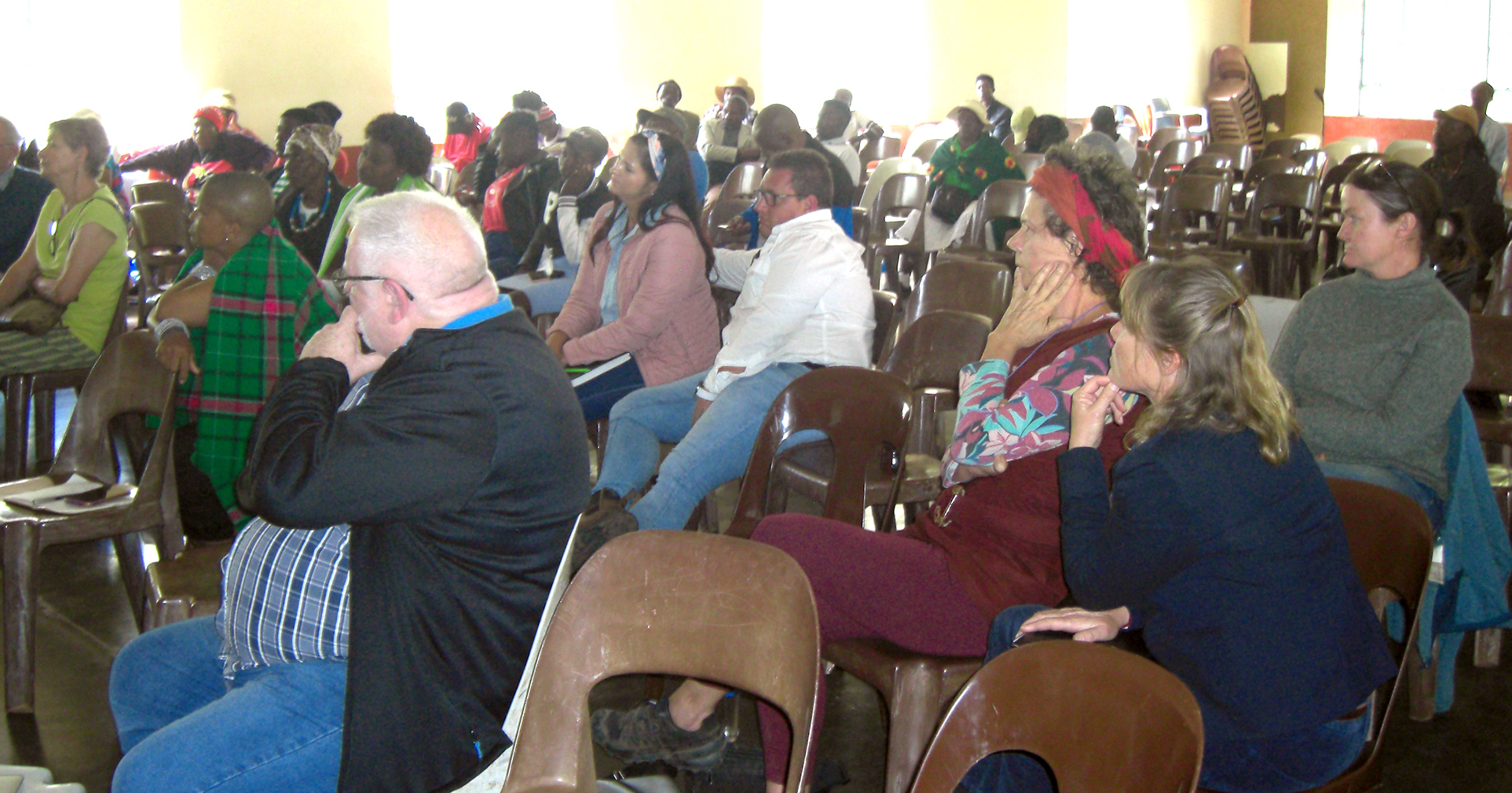
The public-participation meeting held on 17 July at the Makhado Show Grounds in Louis Trichardt regarding a proposed ferrochrome smelter within the Musina-Makhado Special Economic Zone (MMSEZ) has left many attendees feeling frustrated and with more questions than answers. Numerous environmental groups have now joined a chorus of objections.
The meeting, convened by the Kinetic Development Group Limited (KDGL) and Gudani Consulting, aimed to provide stakeholders with an overview of the project, potential issues and concerns, findings from the Environmental Impact Assessment (EIA), and an opportunity for comment and input.
The proposed ferroalloys smelter, to be constructed by KDGL on the farms Van Der Bijl 528 MS and Dreyer 526 MS within the MMSEZ, is planned for an initial annual output of 125,000 tons, using two electric furnaces. This first phase is set to expand significantly, with an additional seven units added over five years to ramp-up full production to 1,000,000 tons per year. The smelter will produce high-carbon ferrochrome.
Community voices express alarm and dissatisfaction
During the meeting, community members voiced strong opposition and concerns.
Mupo Makaulule Mphatheleni, a Vhembe District resident, expressed profound frustration, questioning why the smelter was not being established in Sekhukhune, where the mineral to be smelted is reportedly already mined, instead of burdening Vhembe's already strained resources, especially water. Mphatheleni also highlighted the limited representation of Vhembe residents at the meeting and warned that the smelter threatens local biodiversity. She raised cultural and spiritual concerns regarding the relocation of graves and destruction of sacred places and trees, stating, "Development should not destroy heritage".
Dr Sarah Venter echoed these concerns, questioning the true beneficiaries of the project and seeking clarity on local employment figures and required qualifications. She further emphasised the critical issue of cumulative environmental impacts, including water and air pollution, and their potential contribution to climate change.
KDGL and Gudani Consulting asserted that all potential impacts had been assessed and comprehensive management measures identified to mitigate harm, believing that a balance between environmental, social, and economic interests would be maintained. They recommended environmental authorisation for the smelter for a 30-year period. However, residents were largely dissatisfied with the responses, demanding clear answers and another public-participation meeting.
Formal objections highlight critical deficiencies
Formal comments and objections on the Draft Environmental Impact Assessment Report (dEIAR) were submitted on 14 August 2025 by All Rise Attorneys for Climate and Environmental Justice, acting on behalf of Living Limpopo, The Herd Reserve, and the Centre for Applied Legal Studies, who represent affected communities and environmental conservation interests. These objections identify "deep technical and legal defects" across various assessment areas, underscoring fundamental flaws that "individually and collectively warrant that the dEIAR, inclusive of specialist reports, be revised and circulated for a further round of I&AP comment".
Key issues raised by these Vhembe Biosphere-aligned entities and their legal representatives include water scarcity, inadequate power supply, ecological harm, and job creation.
Water scarcity, pollution, and depletion
Environmental groups once again warned that the region is experiencing "extreme water stress", with a 42% reduction in mean annual precipitation from 1979 to 2024. They said that the project proposed massive groundwater abstraction of 12,757,440 cubic metres annually, despite the aquifer system's being classified as a "Sole Aquifer System".
The aquifer requires "Strictly Non-Degradation Protection" because of its General Quality Measure (GQM) Index of 12, which prohibits any activities introducing cumulative pollution. On the typical 0–100 scale used for the GQM Index, 100 is excellent and 12 being very poor.
However, environmentalists warn, the proposed smelter operations, including slag containing hexavalent chromium and process effluents with heavy metals, are "fundamentally incompatible" with this protection standard. They argue that the dEIAR assessment critically fails to conduct cumulative impact assessments across the broader MMSEZ, ignoring demands from other projects and existing municipal needs.
The projected groundwater drawdown of 4-9 meters would significantly affect domestic and livestock boreholes, particularly impacting the vulnerable Mopane community. According to the environmental groups, the only proposed solution involves vague references to potential water supply from Zimbabwe, without detailed feasibility or impact analysis.
Power supply inadequacy
The Vhembe Biosphere-aligned entities also addressed the issue of availability of electricity again. They say that the dEIAR reveals a "power-supply deficit that renders the project fundamentally unviable". According to environmentalist, the ferrochrome smelter requires 80 MW for Phase 1 operations (125,000 tons per annum) and 640 MW at full production (1,000,000 tons per annum). However, the environmentalists pointed out, only 5 MW is available from Eskom for year one, representing a 94% shortfall (a 75 MW deficit). This technical impossibility, they say, makes the project a "stranded investment" incapable of delivering claimed economic benefits.
Irreversible ecological harm
The issue of ecological harm was highlighted once more. The 893-hectare development footprint lies within the Vhembe Biosphere Reserve's transitional zone and serves as an ecological support area. It contains several nationally protected tree species (baobab, marula, shepherd's tree) that would be destroyed or relocated. The site establishment will require extensive indigenous vegetation clearance, destroying natural terrestrial carbon sinks and releasing carbon stocks.
According the All Rise document, the site supports an estimated 80 mammal species, including red-data and protected species (e.g., aardvark, brown hyaena, African civet, steenbok, ground pangolin, and leopard), whose habitat and movement corridors would be fragmented. The avifaunal diversity is alarming, with 28 red-listed bird species potentially in the area, including the critically endangered African white-backed vulture and other endangered raptors. The reptilian fauna include vulnerable and endemic species such as Muller's velvet gecko and the Soutpansberg worm lizard, whose habitats would be obliterated.
Regarding this, environmental groups warned that the project would create an "ecological dead zone" and contribute to the "systematic transformation of an entire regional landscape from functioning savanna ecosystem to industrial wasteland" without a proper cumulative assessment for the entire MMSEZ.
Job creation and foreign labour dependencies
Environmental groups also question the promise of job creation by the project developers. They pointed out that the feasibility study specifies a "manpower quota human" being 235 for the ferrochrome plant operations, which is considered "remarkably low" for a 125,300 tons/year production facility, suggesting significant automation and/or reliance on foreign technical expertise.
The socio-economic impact assessment acknowledges that "60% of executive positions are to be filled from the local labour market while the remaining 40% of positions are to be filled from the Chinese labour market". This extends to professional and ordinary staff positions, with an overall MMSEZ employment structure suggesting approximately 11.35% of all employment opportunities would be occupied by Chinese workers. This structure indicates substantial foreign management control, limiting local employment, skills transfer, and developmental benefits for South African communities.
The formal comments conclude that the dEIAR "contains internal contradictions that create legal and technical barriers to approval" and that the project violates NEMA's principle that "the environment is held in public trust for the people". Given these fundamental contradictions and the flagrant misrepresentation of impacts, the submission calls for the dEIAR and specialist reports to be revised and recirculated for a further round of public comment, or for the project's authorisation to be refused.