
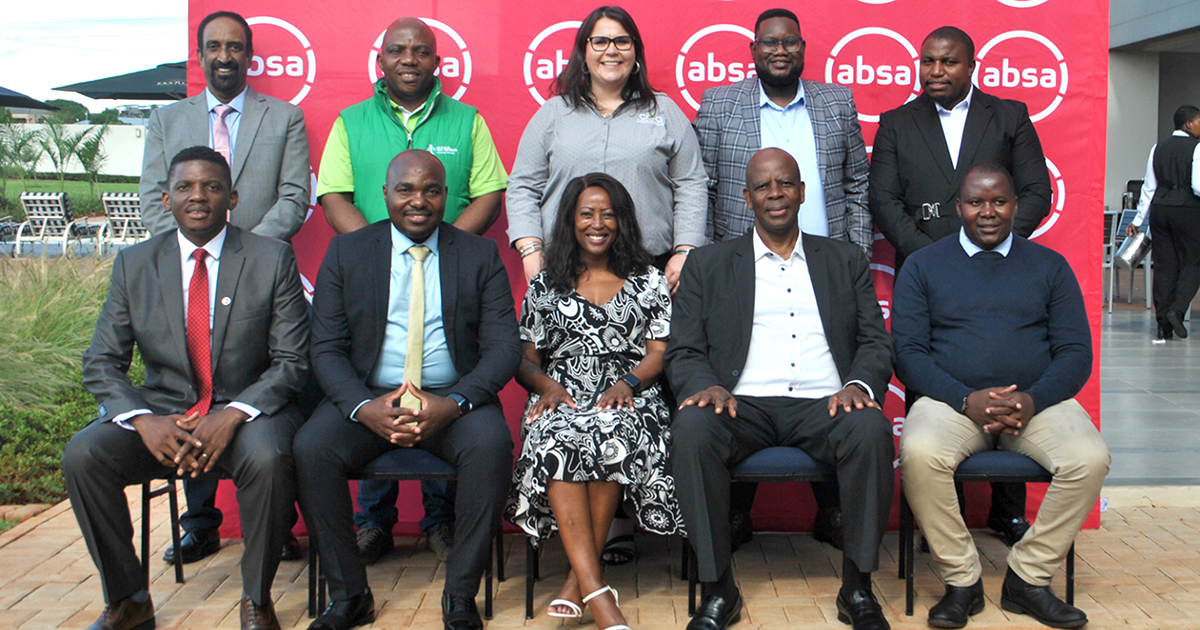
Representatives from more than 300 micro, small, and medium enterprises (MSMEs) from in and around the Vhembe region attended the Absa South African Chamber of Commerce and Industry (SACCI) Township Economy Development Conference and Tour, held at the Premier Hotel in Thohoyandou last Thursday (13 March).
The theme of the conference was "Fostering Growth in Regional Economies," and its aim was to create networking opportunities and open doors for entrepreneurs.
On Friday, the representatives visited two Thohoyandou-based entrepreneurs to discuss how they had overcome obstacles to build successful businesses.
Delivering the keynote address on Thursday, Mojalefa Mohoto, chief director for enterprise development at the Department of Small Business Development, said the summit, planned by SACCI and Absa, "couldn't have come at a more opportune time for us as government, given the urgent need to focus resources on uplifting township and rural businesses."
"Townships, however, are complex and have diverse markets, with a wide spectrum of consumers and income levels, as well as MSMEs of different types and sizes—ranging from informal traders and small-scale manufacturers to service providers and tech start-ups. There is also a strong linkage between townships and rural areas in terms of the movement of people, goods, and services, as well as economic and social interdependence," he said.
Mohoto said that in pursuit of this initiative, the Department of Small Business Development (DSBD) had facilitated national and provincial policy dialogues, enabling robust discussions with affected stakeholders in townships and rural areas. One of these dialogues took place in Thohoyandou in October 2024.
According to Mohoto, stakeholders outlined the challenges and proposed policy solutions specifically for Limpopo, which have been incorporated into draft policies. "Through partnerships, we can support and develop small enterprises and advance economic recovery, growth, and job creation. Together, we can build a sustainable and competitive township and rural economy that fosters inclusive economic growth and sustainable livelihoods," he said.
He added that coordinated efforts by role players would help mitigate competing interests and duplication of efforts. More importantly, coordination would "inspire increased investments and a multiplier effect that allows role players to leverage existing interventions."
Lebogang Manama, Absa's area manager for SME relations banking, said MSMEs were "not just the backbone of the economy; they are the lifeblood that pulses through the veins of communities, bringing innovation, opportunity, and prosperity."
"Our commitment to nurturing this vital sector is unwavering, and our involvement in this meeting is a testament to that dedication," he said.
Manama added that MSMEs were key contributors to economic and social development and that Absa needed to be part of an ecosystem that invested in their sustainability and growth.
"Our commitment is reflected in our substantial investment in this sector. In 2024 alone, we allocated R4.3 billion to support MSMEs, tailoring our efforts to the unique needs of each enterprise to ensure they not only survive but thrive. We take pride in investing in the growth of MSMEs. Our commitment to MSMEs extends beyond financial support—it is about building a community that nurtures success and fosters sustainable growth," he said.
He added that Absa played a significant role in empowering individuals and communities, consistent with the company's strategic imperative of providing innovative solutions to stimulate economic growth and job creation. "Our participation in this conference reflects our deep commitment to the development and sustainability of the MSME sector, ultimately fostering an environment that promotes lasting economic growth," he said.
Dakalo Raphunga (24), winner of the SMME Business Pitch Competition and founder of Instant Eats in Biaba township, Nzhelele, said his delivery service was designed to bring convenience and accessibility to communities in Ekasi by delivering food, groceries, and medication.
Raphunga said Instant Eats was founded in 2022 "with a vision to bridge the gap between local entrepreneurs and customers. It also provides an easy-to-use platform that connects people to their favourite stores with just a few clicks."
Instant Eats now directly employs eight people and supports five indirect staff members and partners, offering customers an efficient, affordable, and reliable food delivery experience.