
It took more than six years, but a local non-profit organisation's efforts to establish a transparent, criteria-based process for appointing acting judges have finally paid off. On 12 June, new guidelines were published in the Government Gazette and will come into effect on 1 July.
The new regulations require that factors such as racial and gender demographics be considered before an acting judge is appointed. They also prescribe that candidates should generally have a minimum of 12 years' experience as an advocate, attorney, magistrate or law lecturer.
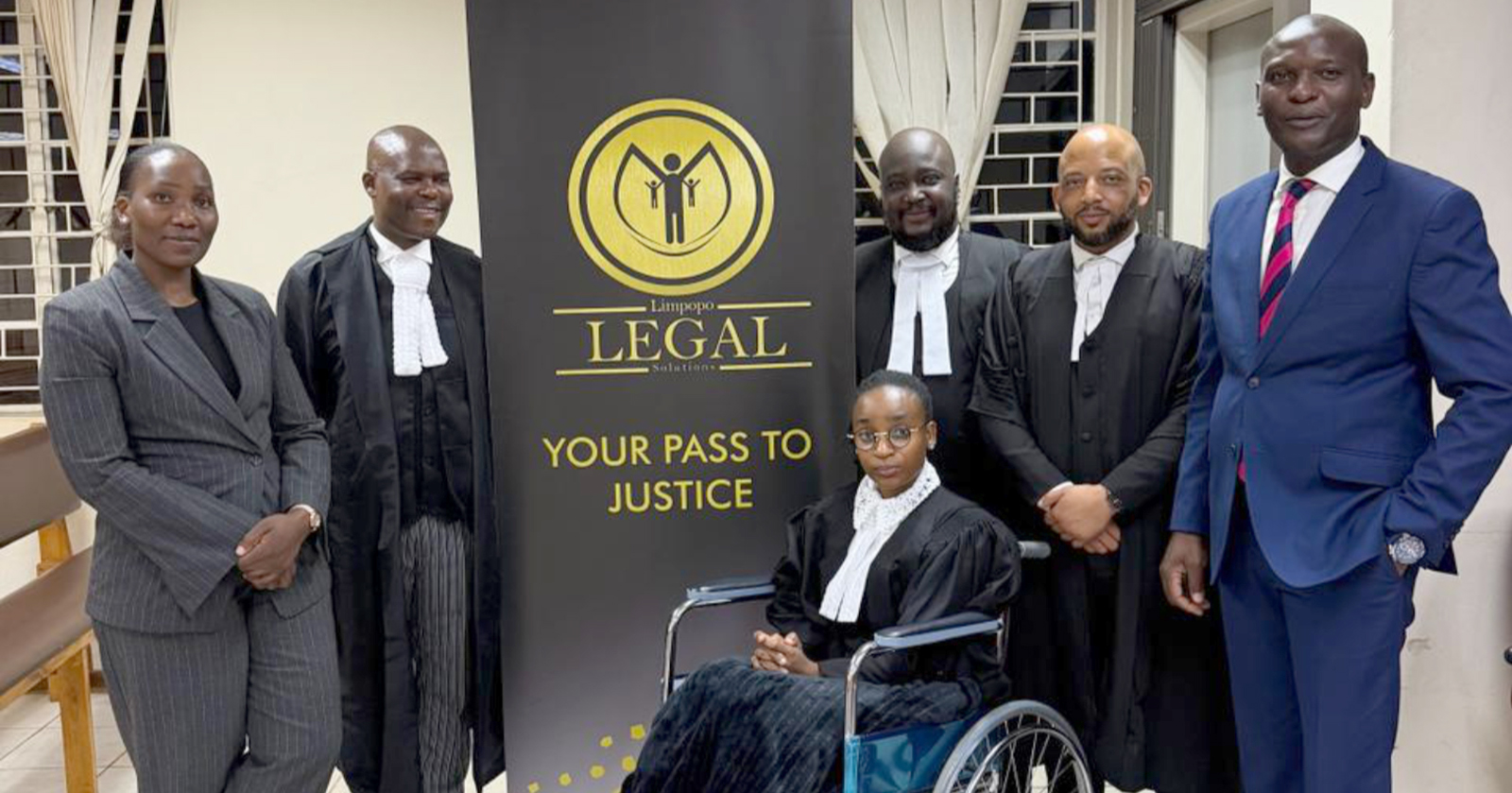
For Limpopo Legal Solutions (LLS), it is a particularly significant victory. Although the Government Gazette makes no mention of the organisation's involvement, it laid the groundwork for the changes.
No Tsonga-Shangaan or Venda-speaking judges
In 2020, LLS filed papers in the Limpopo High Court seeking to compel changes to the manner in which acting judges were appointed. It argued that the existing process conflicted with the Constitution, which imposes obligations of transparency, accountability and lawful administrative action.
While the appointment of permanent judges was a transparent, publicly advertised process, with candidate interviews open to the media and public comment invited, the appointment of acting judges operated in what the organisation described in its founding affidavit as “a clandestine fashion”.
It noted that every division of the High Court had at least two acting judges at any given time, yet no publicly known criteria or process governed their selection.
LLS also raised a specific concern about the Limpopo Division, arguing that the absence of a transparent process had resulted in the systematic exclusion of Tsonga-Shangaan legal practitioners from acting appointments.
At the time of the application, all eight permanent judges in the division were either Sepedi-speaking or from Ndebele-, English- or Afrikaans-speaking backgrounds, with no Tsonga-Shangaan- or Venda-speaking permanent judges. The organisation further argued that acting appointments reflected the same exclusionary pattern.
LLS wrote to Judge President E M Makgoba in May 2020 raising these concerns, but received no response. The matter was then taken to court.
On 27 October 2020, Judge M G Phatudi upheld the core of the application, ordering the minister to develop the required framework in consultation with the Judicial Service Commission. He also ordered the Minister of Justice and Correctional Services to publish guidelines for appointing acting judges within 18 months.
A long road to change
The 18-month period expired in about April 2022, but LLS did not pursue further legal action, recognising that the legislative process would take longer than originally envisaged.
Addressing the Black Lawyers Association's AGM on 30 May 2026, Minister Mmamoloko Kubayi acknowledged that the guidelines were the product of "a draft document" that "started years ago", and that "the matter has been going back and forth without conclusion and implementation."
Kubayi said she had concluded the mandatory consultation process and that the guidelines would be gazetted during June 2026 – a commitment she has now fulfilled, with the publication appearing about two and a half weeks later.
The acting judges guidelines were not published in isolation. They form part of a broader justice system reform programme linked to court rationalisation, dating back to a committee established in June 2021 by then minister Ronald Lamola and chaired by retired Deputy Chief Justice Dikgang Moseneke to overhaul the geographic and jurisdictional structure of South Africa's High Courts.
The revised guidelines will take effect on 1 July alongside new court jurisdiction changes and a planned 20% increase in judicial posts.
Substance of the guidelines
The published framework directly addresses several of the transparency concerns LLS raised in its 2020 founding affidavit — concerns echoed independently over the years by black legal practitioners, including the Black Lawyers Association. Among the key provisions are:
* Requests for acting appointments must state clearly the circumstances justifying the appointment (vacancy, leave, illness and similar circumstances), be submitted within prescribed time frames, and include a breakdown of the racial and gender composition of the requesting court.
* Candidates must generally have a minimum of 12 years' experience as an advocate, attorney, magistrate or law lecturer and be in good standing with the Legal Practice Council.
* The minister must consider the judiciary's need to reflect South Africa's racial and gender demographics, alongside a candidate's demonstrable commitment to transformation, including mentoring junior practitioners, particularly women and those from disadvantaged backgrounds.
* Acting judges may not serve more than four consecutive court terms, except in exceptional circumstances that are separately motivated.
LLS Secretary General Tsundzuka Kevin Maluleke welcomed the publication of the regulations.
“We commend the Ministry of Justice and Constitutional Development for implementing the long outstanding guidelines,” he said.
Maluleke described the publication as a historic moment for the organisation, which has been at the forefront of efforts to promote transparency in the appointment of acting judges to the various divisions of the High Court for many years.