
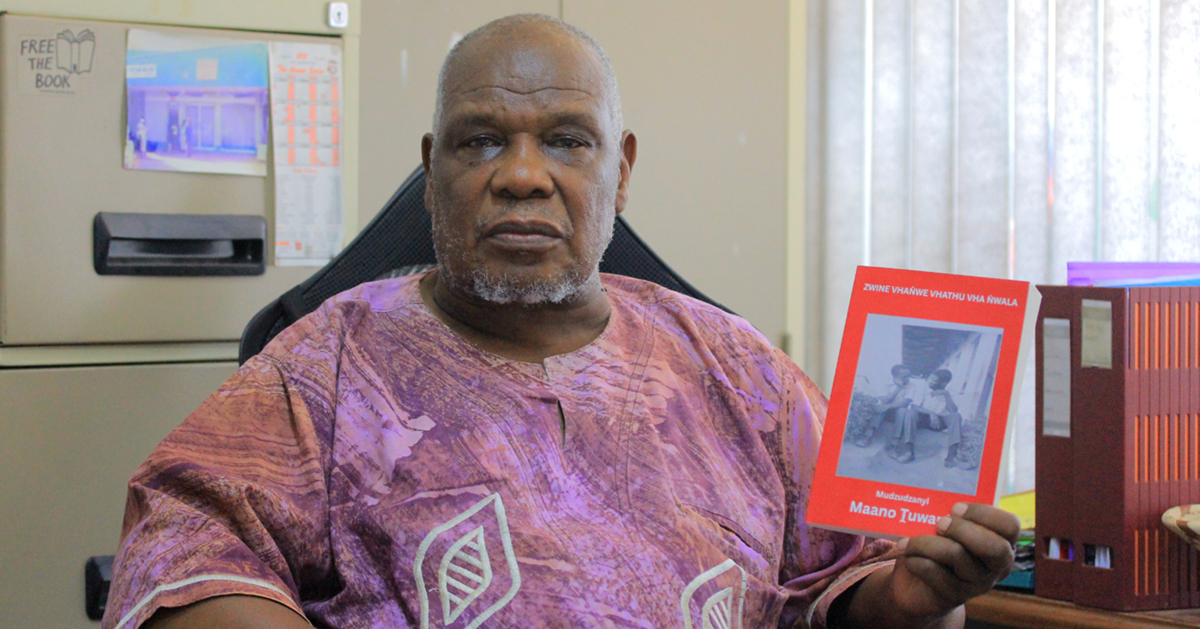
A new anthology, Zwine Vhaṋwe Vhathu Vha Nwala (What other people write), has revived forgotten Tshivenda short stories and poems written by high school students more than 50 years ago. Compiled and edited by author and researcher Maano Ţuwani from Mangwele in Nzhelele, the book was published three weeks ago.
The anthology features work by 11 contributors, of whom only four — Joseph Magodi, Bonndo Makhera, Ndwakhulu Ramantswana and Tuwani himself — are still alive. All are from the Vhembe district. It was co-published by Guyo Buguni and Vhakololo Press.
Tuwani said he had discovered the writings while conducting research at the Limpopo Provincial Archives and later at the National Library of South Africa. He came across stories and poems written by his contemporaries during their school years. "When I read them, I realised that many were of high quality and deserved to be published," he said.
Contributor Bondo Makhera recalled how his passion for writing began at Mphephu High School in 1967. "Our Tshivenda teacher, the late Lawrence Ramavhoya, made literature come alive. He would dramatise the scenes in the books we read, and that inspired me to start writing short stories for WAMBA magazine," Makhera said.
WAMBA magazine, founded in the 1950s, promoted writing in African languages. Makhera's stories were published there alongside work in English and Afrikaans. The anthology's stories reflect student life of the era, including hostel experiences, discipline and social challenges such as alcohol abuse, gender-based violence and family conflict.
According to Ţuwani, most of the writers stopped writing after high school because publishing opportunities were limited, following WAMBA's closure in the mid-1970s. Only one contributor continued publishing, producing poetry in English for magazines such as Donga, The Classic and Staffrider.
"These stories are unique because they were written by young people about their own experiences," Tuwani said. "They capture the real voices of the youth at that time. WAMBA helped build a strong reading culture in schools, a culture that has since declined. Today very little is being written in African languages outside school textbooks."