
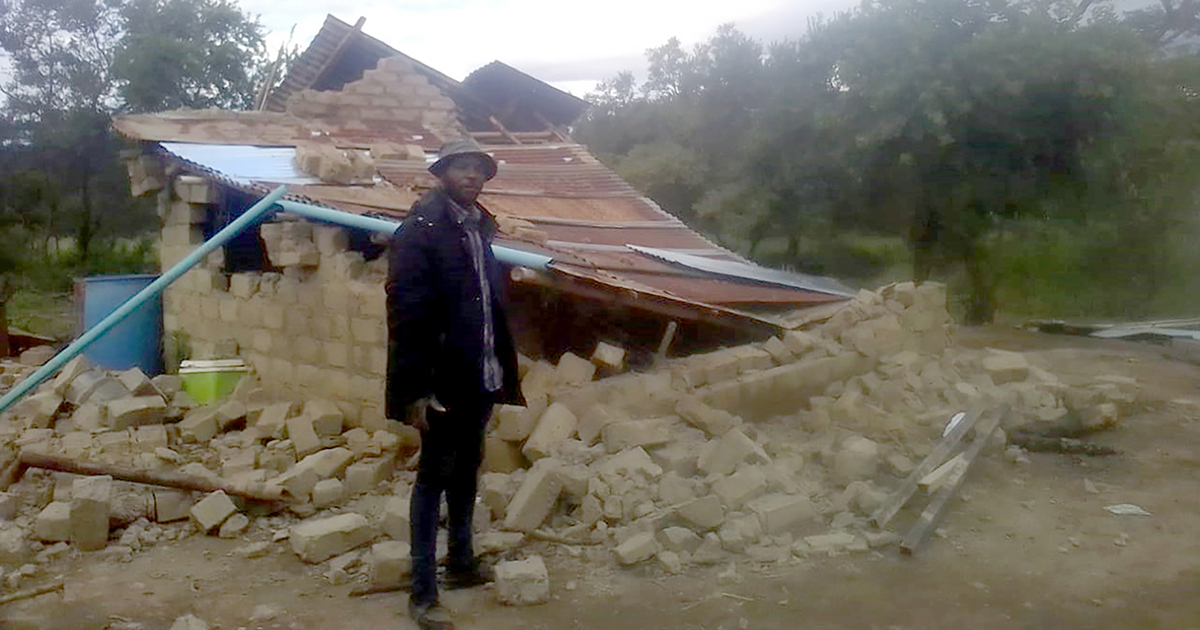
A recent dispute about a demolished house has revealed a much bigger conflict that has been simmering for some years. The issue concerns land ownership and who has the right to issue permission-to-occupy (PTO) certificates.
In April this year, Limpopo Mirror reported about the plight of Mr Russell Ratombo, from an area described as Komati village near Vleifontein. Mr Ratombo's house was demolished, presumably for being built without obtaining the necessary authorisation. Ratombo claimed to have bought the stand in 2007 from a woman residing in Nzhelele and paid her R7,000.
The person accused of being behind the demolishing of the house is the seemingly self-appointed "headman," Patrick Sambo. In an interview shortly after the incident, Sambo said that he was the person responsible for demarcating sites and issuing PTOs. He said Ratombo could not produce a PTO and could not provide the contact information or details of the woman he claimed to have bought the stand from.
Sambo, however, denied that he was personally responsible for demolishing Ratombo's house, attributing the action to community members frustrated with rising crime levels in the area.
After the article appeared in Limpopo Mirror on 19 April, Ratombo visited the newspaper's offices and produced a PTO issued by the Nthabalala Tribal Council. It indicates that the area where he built his house is in Muananzhele Phase II, which falls under the Nthabalala traditional authority.
When contacted, Vhamusanda Vho Samuel Maduwa, chairperson of the Nthabalala Tribal Council, blamed the conflict on Patrick Sambo. He said that they had taken legal action in a bid to halt Sambo's unauthorised land demarcation. Maduwa warned against the fraudulent collection of funds by Sambo's group, saying that he falsely claimed ownership of land that belonged to the Nthabalala clan.
Maduwa added that the village where Sambo claimed to be a headman was registered with the Limpopo Department of Cooperative Governance, Human Settlements, and Traditional Affairs (CoGHSTA) under the name of Muananzhele Phase II. He disputed claims by Sambo that the area is registered as Komati village with the Makhado Municipality.
The seemingly illegal demarcation of stands is continuing, according to Maduwa. "After we warned them, the illegal occupants of the land were busy erecting fences and building their houses. These people were told to stop all activities in the area, but they are busy disregarding our plea," he said. He warned that the Nthabalala Tribal Council would fight against any illegal occupation of their ancestral land.
In response, Patrick Sambo said that the land had belonged to his forefathers. He accused the Nthabalala Tribal Council of being the illegal occupiers of the land. "For the record, the area known as Nthabalala village is an area which belongs to the Sambo since time immemorial before the apartheid government took it away from us and gave it to the farmers. We are looking at various other options to regain control of our stolen land in order to restore peace and stability, where people will live together in harmony without any disturbances from people who are so obsessed with power," he said.
Sambo claimed that they had not invaded the land. "We only came back to the place of our ancestors. This place is marked with lots of evidence from the time of our ancestors who first lived here on this land," he said.
Sambo also accused the Nthabalala Tribal Council of being an "apartheid creation." He questioned the land-restitution process. "Did they visit this place and check for the evidence which shows that this is the place of our ancestors?" he asked.
The Makhado Municipality's documentation makes no reference of a Komati village, where Sambo claims to be the headman. The maps of the area show only Muananzhele village, which is next to Maila and Vleifontein.
A spokesperson for CoGHSTA, Mr Mbulaheni Mamidza, said that according to their records, the land had been claimed by the Nthabalala Tribal Council. They do not have a Komati village on record.
In history books, mention is made of the Nthabalala clan who lived in the area. One of the most respected books on the history of the Vhavenda is "The Copper Miners of Musina," first published in 1940. The researchers state that: "Makhado had many elder brothers because the chiefs of old had a way of marrying many wives. These brothers he sent away in all directions, placing them in charge of areas that had been given them by their father. Nthabalala was given the country of Vari (around Fort Edward) which belonged to his mother Maemu."
Even maps dating from the 1860s, compiled by Joao Albasini, indicate that the area is occupied by the Nthabalalas. When the Swiss missionaries arrived in the region in the 1870s, they also encountered and mentioned the Nthabalala clan in their reports.