
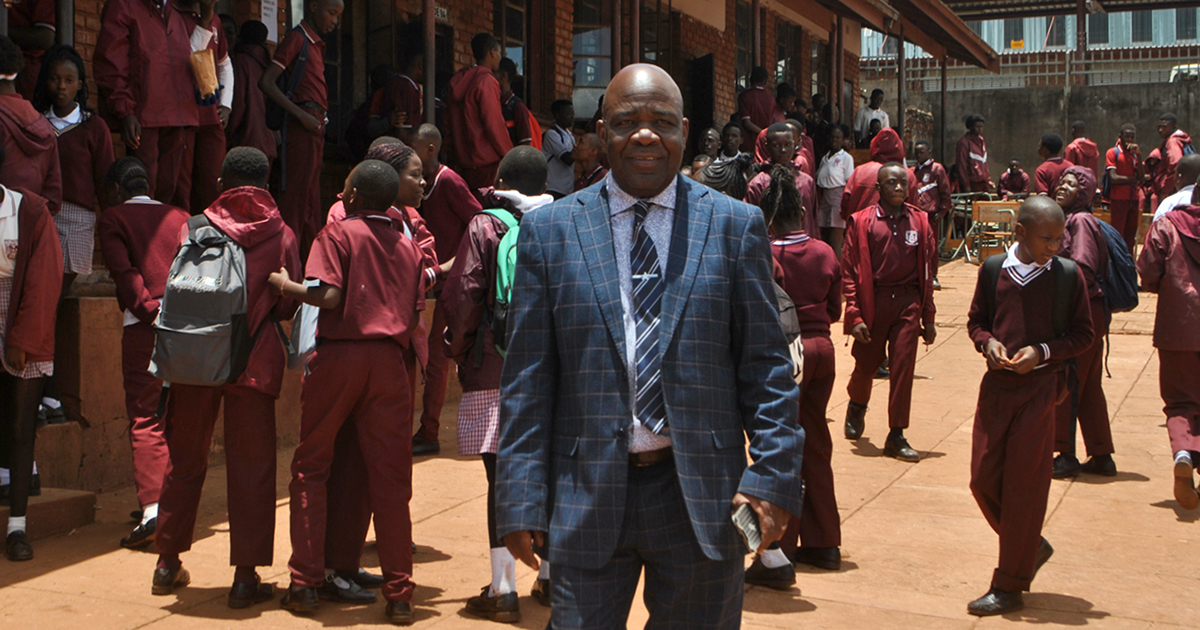
From being described as a "dysfunctional" school a few years ago, Nthetsheleseni Secondary School has transformed into one of the jewels of the region, achieving a 99.1% matric pass rate last year, with 53 learners qualifying to study at university. This transformation, however, was no easy feat and required the hard work of a new principal, dedicated staff, and supportive parents.
When Mr David Mammburu was appointed principal of the school near Sibasa, the outlook was grim. The school had only 380 learners, and the matric pass rate was around 50%. Parents were transferring their children to other schools, doubting that the situation could be turned around.
"I arrived at this school in 2017, after previously serving as the principal of Tshifhatani Primary School in Tshidimbini village," Mammburu recalls. His first challenge was to improve the infrastructure as the classrooms were old and dilapidated. Addressing these shortcomings was no easy task, but the Department of Education assisted by providing six mobile classrooms.
"When I arrived, I introduced morning and afternoon lessons. I also focused on discipline at the school, ensuring no learners were allowed to loiter during school hours," said Mammburu.
He also sought to involve the local community and encourage their participation in the school. "I visited the traditional leader of Tshivhulani village, along with community structures, and emphasised that education is a shared responsibility among educators, learners, and parents," he said.
The hard work and discipline paid off, and the school now boasts 1,200 learners, from Grade 8 to Grade 12. Last year, 108 learners wrote the matric exams, with only one failing.
"With these excellent matric results, we received accolades from local traditional leaders, parents, and the Department of Education," said Mammburu. He believes the school's success will inspire other schools to work hard and instil discipline among their learners.
However, the work is far from over as the school's infrastructure remains a significant challenge. The buildings are old, and the roofs leak, making it difficult to conduct classes during the rainy season. "We need a state-of-the-art school where teaching and learning can thrive. We still require an administration block and a proper computer centre equipped with wi-fi," said Mammburu.