
By Maanda Bele and Thembi Siaga
Families in the Vhembe district are taking hospitals to court over alleged botched medical care — and taxpayers could end up footing a bill of R6 billion.
That staggering sum represents what the Limpopo Department of Health could be forced to pay out in damages in the Vhembe district alone. The total for the province is R13 billion across 211 legal cases, with claims mentioning Tshilidzini Hospital accounting for around R2 billion.
On 20 January, the department appointed a Provincial Medico-Legal Committee to review these cases, strengthen governance, and reduce the risk of additional lawsuits.
Provincial spokesperson Neil Shikwambana said the R13 billion figure covers cases “counted from over 10 years” and that the department is still working to confirm the exact current total. “Payments run into millions of rand, which obviously have a ripple effect on the delivery of services,” he said.
The most common claims involve birth complications, including babies born with cerebral palsy due to oxygen deprivation during delivery - among the most expensive cases because courts calculate the full lifetime cost of care, therapy, and lost earnings for the affected child.
Botched pregnancies?
Limpopo Mirror previously reported on several of these negligence claims.
In early 2023, Dzulani Trecia Mudau (34) learned she was pregnant. On 30 July, a routine check-up at Tshilidzini Hospital in Tshisaulu revealed extremely high blood pressure. An emergency C-section was performed at seven months, saving the baby, but Dzulani later suffered a stroke that left her paralysed. Six days after giving birth, she developed a rectovaginal fistula - an abnormal opening between the bowel and vagina. She was discharged in September 2023 without a proper treatment plan and, despite follow-up care at Polokwane Hospital confirming the fistula, returned home still in a critical condition.
She is now completely dependent on caregivers and cannot move, speak, or care for herself. Her family alleges gross negligence, citing ignored complaints, delayed treatment, and poor postnatal care. The department has acknowledged the complaint but has not yet outlined a course of action.
Patients turned away
There were also numerous other cases that were reported to the newspaper, but which didn’t make the headlines.
Fhulufhelo Charles Siaga (33) was injured in a car accident in February 2024. After initial treatment at Siloam Hospital, he was referred to Mankweng Hospital for specialist care, where he says he was turned away due to a lack of beds and waited more than a week without meaningful treatment. His right eye deteriorated, and he has since lost functional vision in it.
“I believe the hospital failed me,” Siaga said. “They did not take responsibility for my condition.”
“We cannot help you”
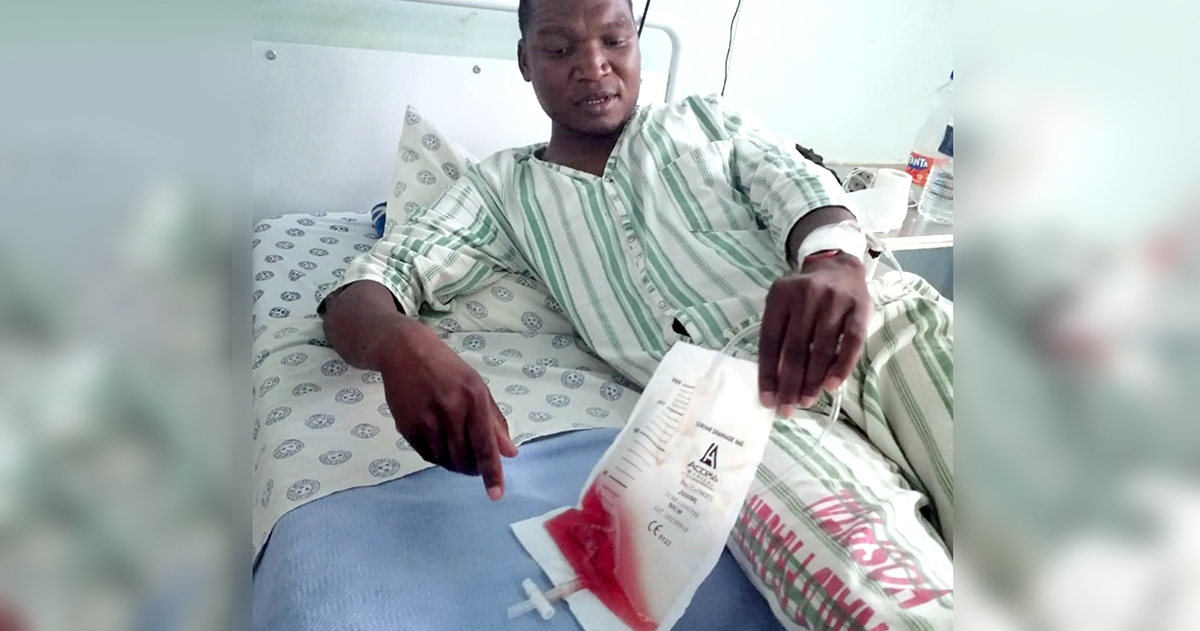
Moses Makatu, from Ha-Makatu in Nzhelele, was admitted to hospital on 24 November 2024 after being struck by a car. He was vomiting and passing blood in his urine. After a catheter was inserted, his genital area became swollen and his urine flow blocked. He says the doctor on duty declined to consult a specialist and sent him home.
“When the doctor checked me, I told him I was in severe pain and asked why a specialist had not been consulted … He told me he could not assist me and sent me home,” said Makatu.
His condition has since worsened. “I still experience pain and sometimes pass blood … I am no longer able to return to work at the mine because of my health ... I am hoping that the Department of Health will investigate my case and provide me with the compensation I deserve,” he said.
A new broom?
The newly appointed committee is chaired by the CEO of Mankweng Hospital and includes senior managers from major regional facilities. When asked about potential conflicts of interest, Shikwambana said recusals could be used where necessary, adding: “This is not a clandestine group. The department has been transparent on all matters relating to medico-legal and contingency liabilities in general.”
Asked how many health professionals had faced disciplinary action or referrals to bodies such as the Health Professions Council of South Africa in the past five years, Shikwambana said professional bodies are better placed to respond, but that outcomes of departmental investigations are always communicated to affected parties.
The committee will review case files, advise on preventing future claims, and strengthen oversight of clinical care. Members will serve three-year terms.
Some worrying figures
A lawyer handling medical claims, who asked not to be named for professional reasons, said there seems to be a huge problem in the healthcare sector.
“Internal measures should be taken to prevent this, because the medical staff's negligence not only cripples the department's financial coffers but also adversely affects the lives of those that are permanently scarred and damaged by something that could have been avoided,” he said. Money that could be used to improve the health system, he added, will now go towards compensating those affected by the alleged negligence.