
The Public Servants Association (PSA) welcomed the not-guilty verdict of five union members last week after a lengthy disciplinary hearing process where, according to the PSA, the Limpopo Department of Agriculture and Rural Development tried to use the union members as scapegoats for inefficiency, potential corruption, and abuse of power in the department.
The disciplinary action followed an incident at the Mara Research Station in 2020 when the department informed the standing committee on public accounts (Scopa) that the members were behind the loss of 103 cattle at the research station. They also charged the former farm manager with eight counts of misconduct related to, among others, contravention of the procedure manual, gross dereliction of duty, gross dishonesty, and misrepresentation.
Up until a few years ago, the Mara Research Station boasted a proud and illustrious history spanning almost nine decades, with the station being considered the home of the indigenous Bonsmara cattle breed. The history of the Mara Research Station dates back to 1934, when the then Department of Agriculture purchased several farms about 55km west of Louis Trichardt for the establishment of an agricultural research station. Among the young researchers at the station was Professor Jan Bonsma. He started research on cross-breeding the Afrikaner-, Shorthorn and Hereford cattle breeds and in 1953 announced that he had bred a functional and effective new cattle breed, called the Bonsmara. The name is made up of his surname and Mara as the name of the research station.
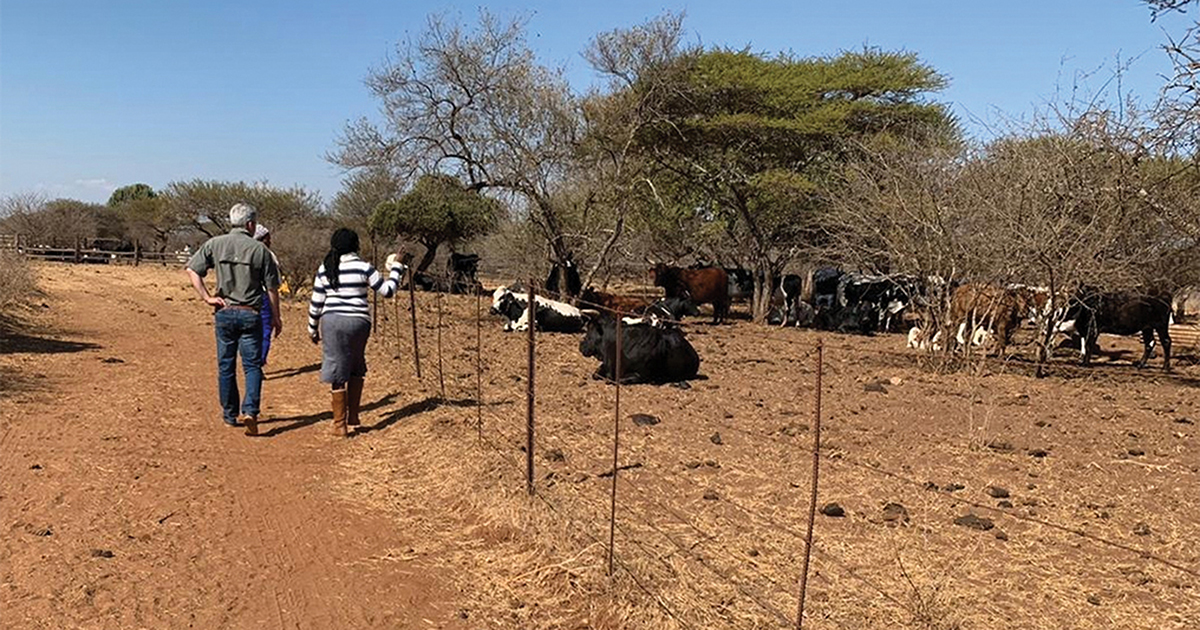
The issue of the lost cattle brought the deteriorating conditions and this research facility to the fore. It also prompted an oversight visit by the Democratic Alliance's then provincial spokesperson for agriculture, Mr Jacques Smalle. Following his visit, he described the living conditions of staff as "shocking" and contributed the ease with which cattle were disappearing from the farm to the lack of a proper fence. He was also disappointed to point out that the laboratory at the station had not been functioning for at least 10 years now.
In a press release issued by the PSA last week, they stated that the department had failed dismally to prove the alleged misconduct. "After failing to prove that the farm manager was accountable for the alleged loss of 103 cattle, the department changed its focus to five employees who were accused to have failed to ensure that the animals were properly marked, thereby contravening section 7(1)(b) of the Animal Identification Act, 2002 and contravention of the Public Finance Management Act," the statement read.
The PSA represented the employees and contended from the outset that the department had abused the disciplinary process by charging these five employees for the same allegations of misconduct as the former farm manager. "The former farm manager was appointed as custodian of the department's biological asset register and was therefore accountable in terms of Public Service prescripts. The five employees had been falsely implicated, and their names slandered in the media, following the Scopa hearings earlier this year. This caused them undue stress, embarrassment, and uncertainty. The presiding officer of the hearing found that the Department had failed to prove that the members were guilty of misconduct," the PSA said.
The PSA said it was informed by the members that although the department had reported the loss of 103 cattle to Mara Police Station, most of the cattle had been found after an intensive search by employees of the Mara Research Station. "The department, however, chose to still proceed with charging these employees, pursuing a hopeless case, and disregarding their emotional well-being as they subjected them to undue distress," the PSA said.