
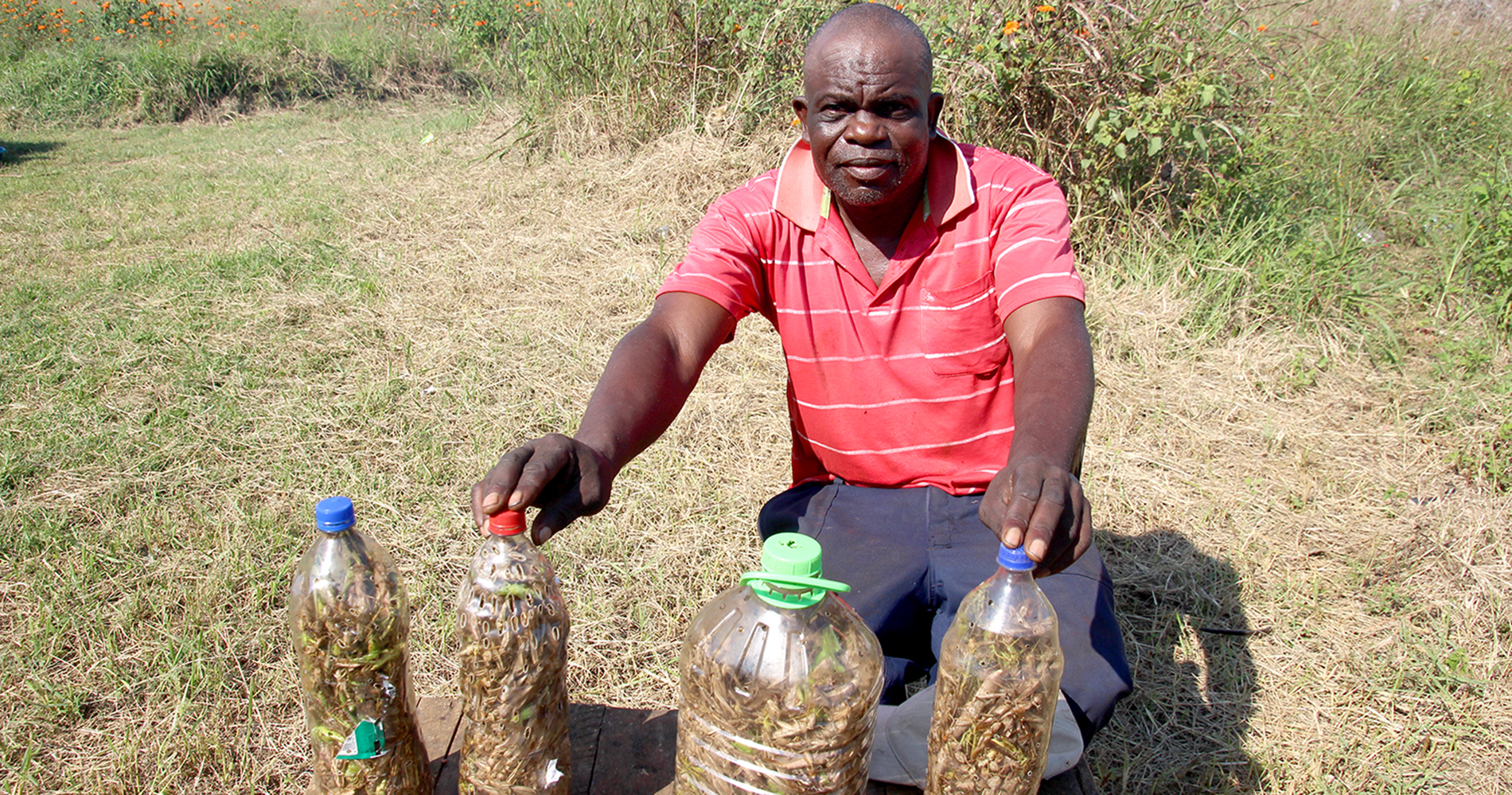
Heavy rains that fell two weeks ago brought widespread damage, but also an unexpected opportunity for some residents in the Makhado municipal area. Swarms of locusts that arrived with the rain are now providing a temporary source of income for unemployed people who are catching and selling them.
Groups of men and women head to nearby bushes each day, especially around the D959 farms along the road to Madombidzha, in search of locusts and grasshoppers. They hope to earn enough money to buy basic household items and food.
Samuel Muenda from Tshiozwi, who is unemployed, said he is currently able to provide meals for his family through the income he earns from selling locusts. He said they use lights to harvest the insects at night.
“Locusts are good for building our bodies,” he said.
Muenda said people should look for ways to earn an honest living instead of relying on others.
“We have to think outside the box and find ways to make a living. Locusts and grasshoppers are seasonal, so when they are not available, I do piece jobs,” he said.
He added that some people initially thought he was not serious.
“But when customers started coming to my home to buy the insects, they saw that this is real. I am happy that I can put food on the table without asking others for help,” he said.
Timmy Mukwevho from Tshikwani said he can collect about 20 litres of fresh locusts on a good day.
“This is enough for my family,” he said.
He described locusts as both tasty and healthy, adding that they contain little fat. He said he catches them at night using a torch or early in the morning when they are less active.
“There is a danger of snakes at night, but I keep going because this is my main source of income,” he said.
Mukwevho said he can fill a five-litre container each day. He stores the insects in a deep freezer, where they can last for several days. He also removes the wings and dries them for customers who prefer them that way.
“We sell a two-litre container of locusts for R100,” he said.