
By Thembi Siaga and Bernard Chiguvare
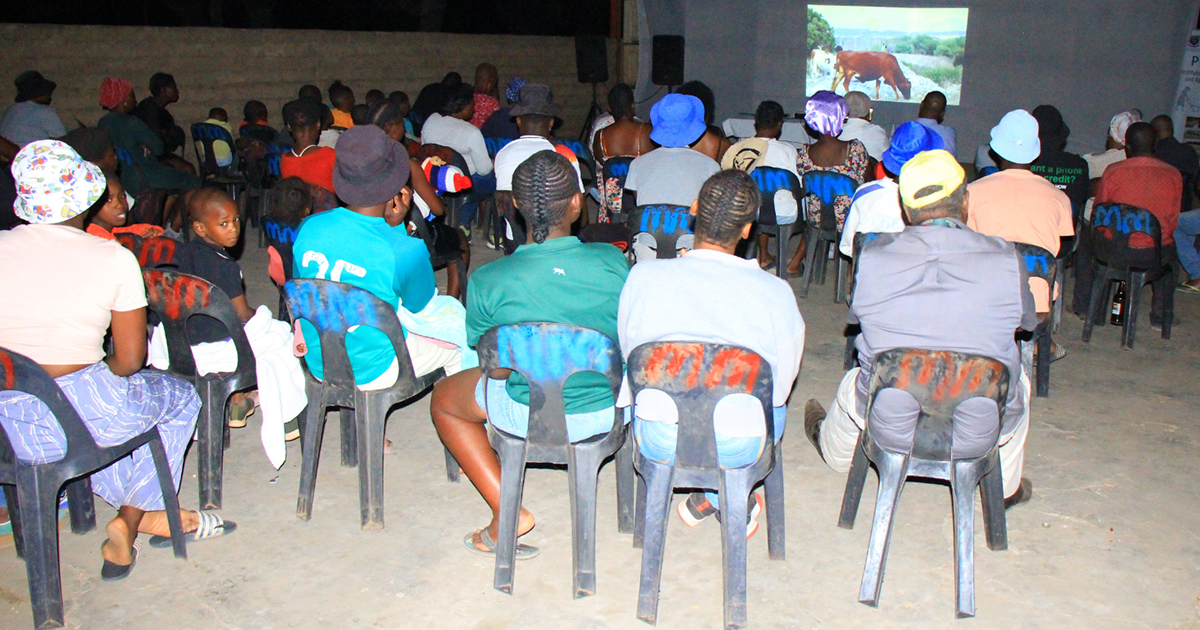
More than 100 residents, from children to elders, gathered at the Den Staat farm in the Mapungubwe National Park on Saturday, 6 September, to watch the research documentary Indalo Yethu: Our livelihoods. Our nature. Our heritage. The film explores the human cost of conservation in South Africa's UNESCO World Heritage Sites, including Mapungubwe, iSimangaliso Wetland Park and the Cape Floristic Region.
While these areas are celebrated for biodiversity and tourism, they have also displaced communities that cared for the land for generations. The documentary was produced by Professor Moenieba Isaacs of the University of the Western Cape's Institute for Poverty, Land and Agrarian Studies (PLAAS). It highlights how residents draw on ancestral knowledge to safeguard their homes, livelihoods and cultural practices, despite mounting pressures.
"We feel much better after watching the documentary, as it shows we are not the only community suffering," said Sofia Sematla. "Our area lacks security because of big wildlife, including elephants and wild cats, roaming freely."
Community patriarch Rakgolo Sematla said his grandfather had guided archaeologists in the 1930s during the excavation of Mapungubwe Hill, which had uncovered the golden rhino and other artefacts. Following a successful land claim, Sematla and members of the Machete Communal Property Association returned to the Den Staat farm, where they now live in old hunting lodges.
But life is difficult. Wildlife often tramples fences and crops, making farming nearly impossible. Seasonal workers such as MaJane Mokwena turn to fishing in the Limpopo River to feed their families, but face the dangers of wild animals and conservation rules that forbid them from selling their catch.
PLAAS researcher Maud Sebelebele, who is based at Den Staat, said: "It's not only a confluence of rivers but a confluence of bloodlines. Identity here is rooted in the landscape, not just the sovereignty of the country."
The park, at the confluence of the Limpopo and Shashe river, has a layered history. Established as a botanical reserve in the 1920s, it later reverted to farmland under apartheid before being declared a national park in 1995. It is sacred to local communities, but residents say tourism and conservation often override their rights. People need rangers to escort them to safety within the park.
"The park is the one giving us a problem because we can't govern ourselves," said Rakgolo. "When we have to take traditional beer to the aquifers to appease our ancestors, we first have to ask for permission. That is hurtful."
Sebelebele said the screening helped residents see their struggles as part of wider governance issues. PLAAS's "slow methodology" involves living with communities to understand their challenges better and shape protective policies. At Den Staat, the organisation has installed satellite Wi-Fi to meet urgent needs and build trust. It also plans counter-mapping exercises with residents in the Mapungubwe Cultural Landscape to co-design a handbook documenting local stories and supporting community-driven eco-tourism.