
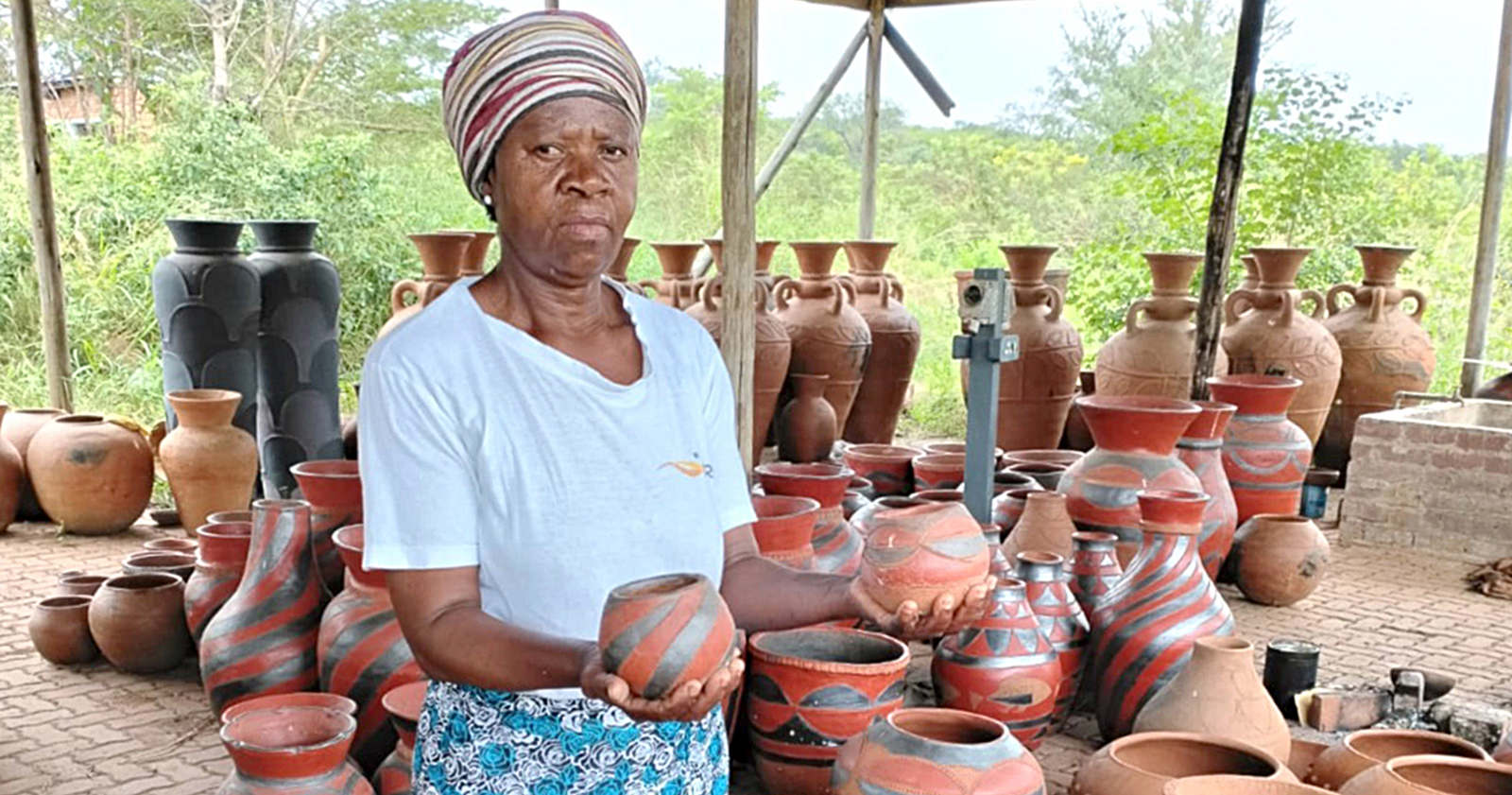
Ms Setina Selapyane, of Mukondeni village just outside Elim, has found solace in making clay pots. Not only does this trade allow her to be creative, but it also enables her to earn a living at a time when poverty is rife, especially in rural areas.
Taking matters into her own hands, Selapyane taught herself the skill until she became the accomplished clay pot maker she is today.
“How could I sit around and watch my children live in poverty? We are all gifted in some way or another, but some people are just too lazy to use their brains to make ends meet,” she says.
Setina explains how she unexpectedly found herself in the clay-pot business.
“I initially thought of buying flowerpots to sell, but I did not have the money to start. It quickly came to mind that I could make my own flowerpots to sell, and that is where my clay business originated.”
She now makes flowerpots, bowls, containers and many other items. The trick, she says, is knowing where to source the clay and how to prepare it. She collects the clay from the bush several kilometres from her home and carries it on her head, as she has no other means of transporting it. Using traditional methods, she begins the slow process of kneading the clay, coiling it into pots and shaping it.
“After making the desired products, I collect firewood and cow dung from the bush to heat the clay products. I heat them for the whole night in a special hole that I dug at my home. I then wait for them to cool down before doing the final touches with paint,” she explains.
Although this process may sound simple, Selapyane says it requires a great deal of patience. The industry itself, she adds, comes with many challenges.
“This is an informal business that does not guarantee any income. I sometimes go for two months without a single customer,” she says.
She hopes to find support in marketing her products so that people across the country can get to know her work.