
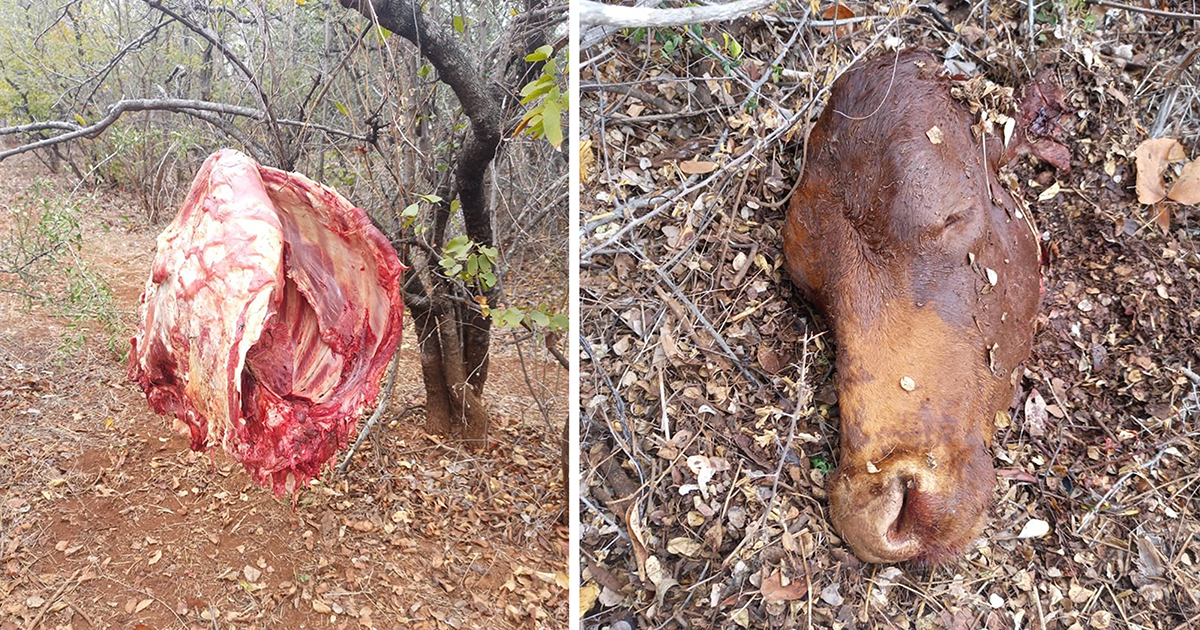
Stock theft is on the increase in the Niani area, so much so that many hard-hit farmers are considering leaving the sector altogether.
The worried local farmers are from areas such as Gumbu, Bennde Mutele, Mutele A and B, Tshiilamusi, Masisi, Tshenzhelani, Tshotshokho and Mukununde, to mention but a few.
One of the farmers, Mr Ambrose Madou from Muswodi Tshisimani, says they have been losing their goats, cattle and even sheep to thugs who poach, slaughter and sell the livestock. He himself has lost 29 goats. "Stock theft is a daily occurrence. Then you are met with the challenge of reporting it and opening a case. I am one of those who have reported my stock theft at the Muswodi satellite police station. All traces of my 29 goats will be lost while the police are investigating."
He says his lofty ambitions of becoming a top stock farmer have been dealt a severe blow by people who are hell-bent on stealing and mutilating animals. "On 3 October this year, a man was found loading 17 goats. The police were called and are questioning the suspect and waiting for the owner to come and identify the goats. The problem is becoming serious," he said.
Another farmer, Mr Patson Masindi, has lost 14 goats and is equally frustrated. "Stock theft is rife. We know some of the people who are stealing our livestock. We catch them and take them to the police, and then the police just let them go again," he said.
"We are really worried about this problem around Niani. We are fully aware that livestock farming is the main agricultural activity in this area, and we have intensified the fight against stock theft, but it is still shocking how many cattle, sheep and goats are being stolen. I love farming, but at this rate, one could be forced out of the trade. I have worked very hard to be where I am today, but these thieves are busy destroying my dreams," he said angrily.
Limpopo police spokesperson Brig Motlafela Mojapelo said: "As part of intensifying the fight against crime in various districts, we conduct, among others, integrated and stabilization operations or interventions, as well as proactive and collaborative approaches. This is done to ensure that we engage and hear from the farmers themselves about the challenges they encounter. We may indicate that approaches may be different from one district to another, depending on the crime being addressed."