
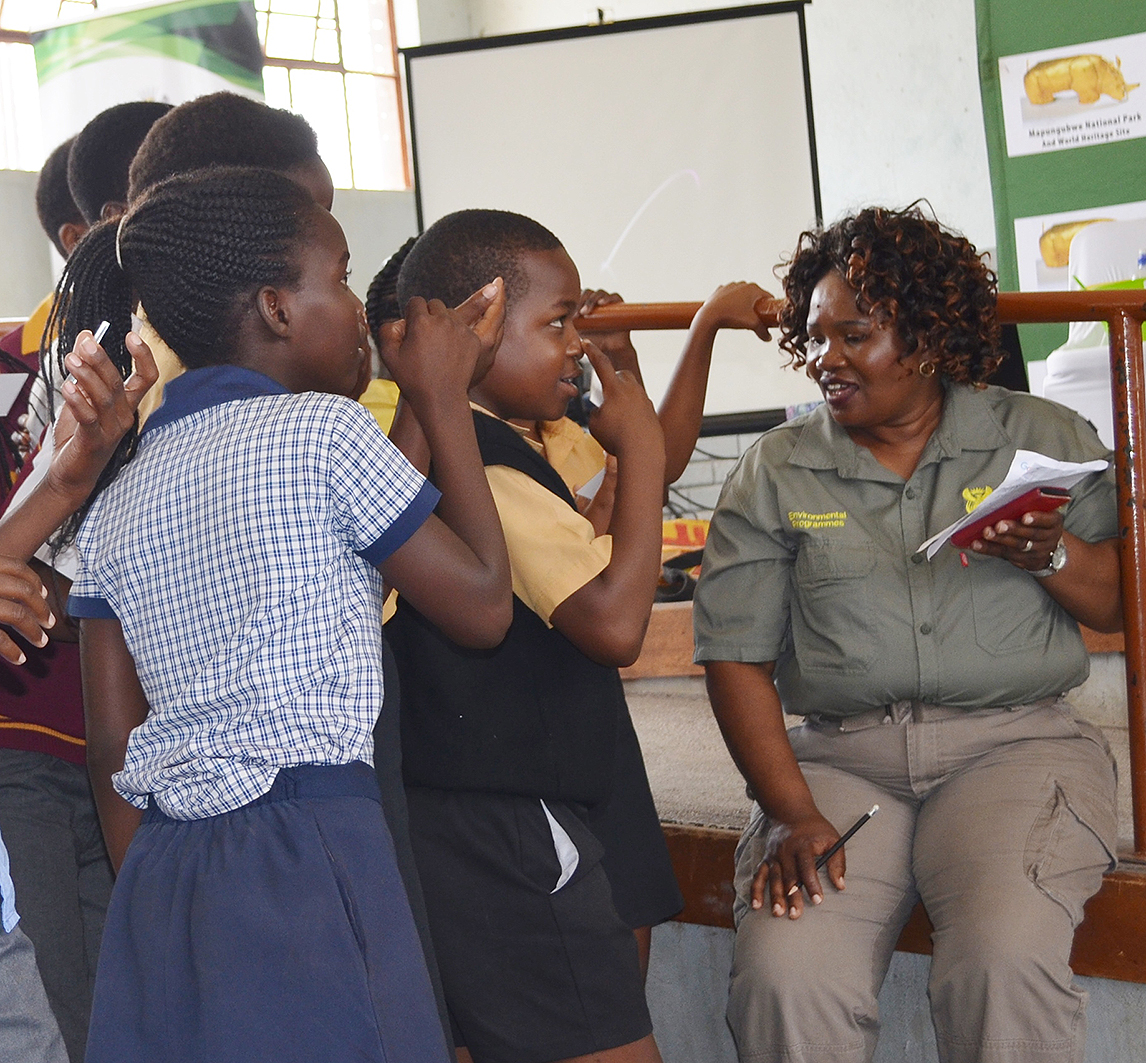
Ms Judy van Schalkwyk from the Eco-Schools programme said wetlands worked as sponges that harvested water from the rain and stored it for use by both people and animals.
She was addressing guests and pupils during the World Wetlands Day (WWD) celebration at Nancefield Community Hall, Musina, last Tuesday.
She said that Wetlands Day had been introduced in 1971 to help raise public awareness about the importance and value of wetlands. This year, the WWD is celebrated under the theme "Wetlands for a sustainable urban future". The theme has been selected to highlight the important role of urban wetlands in making urban areas liveable – hence the event took place in the urban areas of Musina.
Van Schalkwyk said wetlands reduced flooding, replenished drinking water, filtered waste and were a source of livelihoods. "Despite the valuable services provided by wetlands, it has been found that they are the most threatened ecosystems globally. South Africa is a water-scarce country, and the water in many streams is polluted. In this regard, wetlands play a vital role by removing toxic substances and sediment from water, while also improving downstream water quality and the overall health of communities."
Ms Collin Silima from the Department of Environmental Affairs pleaded with community members to take good care of the wetlands. She said wetlands could reduce the severity of droughts and floods by regulating stream flow. "They also help to purify water and provide habitat for different plants and animals. Besides these indirect benefits to society, wetlands provide many direct benefits in the form of resources, such as fibre for making crafts as well as recreational opportunities. However, lack of community awareness on the value and benefits of wetlands often leads to their transformation by humans."
Silima said wetlands were vital for human survival. "Wetlands also purify water by acting as natural filters and trapping pollutants, which include heavy metals and disease-causing bacteria and viruses. They support our agricultural activities by providing a source of water for irrigation and livestock and for domestic consumption."
Cllr Prince Sakala from Musina Municipality thanked the organizers of the event for their role in preserving wetlands. "It is appropriate that we use this occasion to re-affirm our collective commitment to preserve our wetlands and re-dedicate ourselves to bringing all South Africans on board to contribute to this important task. We all know that partnerships and community involvement will be critical in sustaining our wetlands. Let's work together to secure and preserve our wetlands for the future generations," he said.
The event was a joint effort by South African National Parks, Working for Wetlands, Musina Municipality, Eco-Schools, the Department of Environmental Affairs, People Caring for the Earth and the Department of Education.