
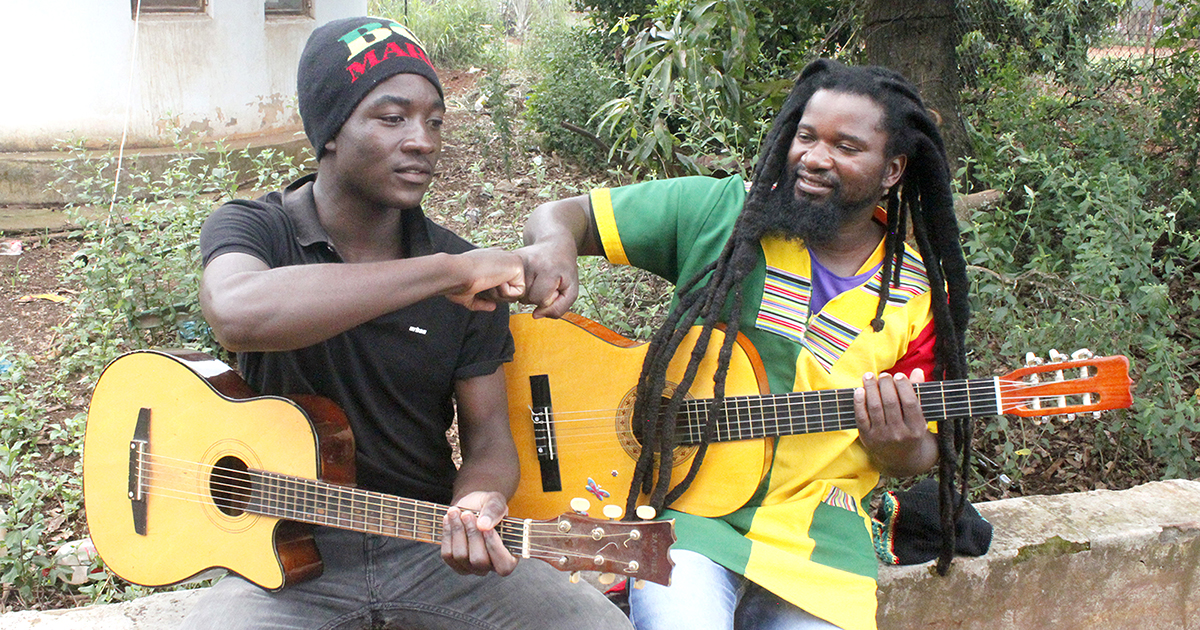
Limpopo Mirror recently caught up with local reggae artist Mpho Mahovha, aka Bongo Natty, to chat about his upcoming album and what he has been up to.
Walking easily, like the late inimitable reggae icon Peter Tosh, Bongo pointed to a spot where we could sit, all the while smiling and strumming his guitar.
He was quick to mention that he was happy to see a journalist entering his self-proclaimed palace at last. Surrounded by other Rastas sitting around the man, I had the honour to hear him play a couple of his songs before the interview started, and I have no doubt that the man has real talent.
Getting back to business, he began telling me about himself and his career as a musician. His music journey started in 2008 with the release of his debut album, called Zwivhuya. On the success of this album, he said that it had done well enough, considering that reggae did not enjoy the same publicity in the media and on radio as other music genres.
"Rastas talk about sensitive things that affect the poor in the communities every day, and the media don't like that. Journalists are all searching for sound, not lyrics. They still treat us as troublemakers who incite the masses to revolt against corrupt political leaders, so reggae music is given very little space on air and in the papers," he said.
In 2010, he released his second album, Ngoma, which also did well under difficult promotional circumstances. In 2018, his third album, Mutendi wa khole, which literally means "Fake Christian", was released. He explained the meaning behind that title: "Most of the people you see these days, dressed in their church uniform with their Bibles under their arms, going to church every weekend, are sheep in wolves' skin. They are there for business."
His latest music offering will be released early next year. This album, he said, is not that different from his previous albums with regard to addressing issues of poverty and the lack of service delivery to the people – something he feels strongly about. "We have to stand up and fight for our rights," he concluded.