
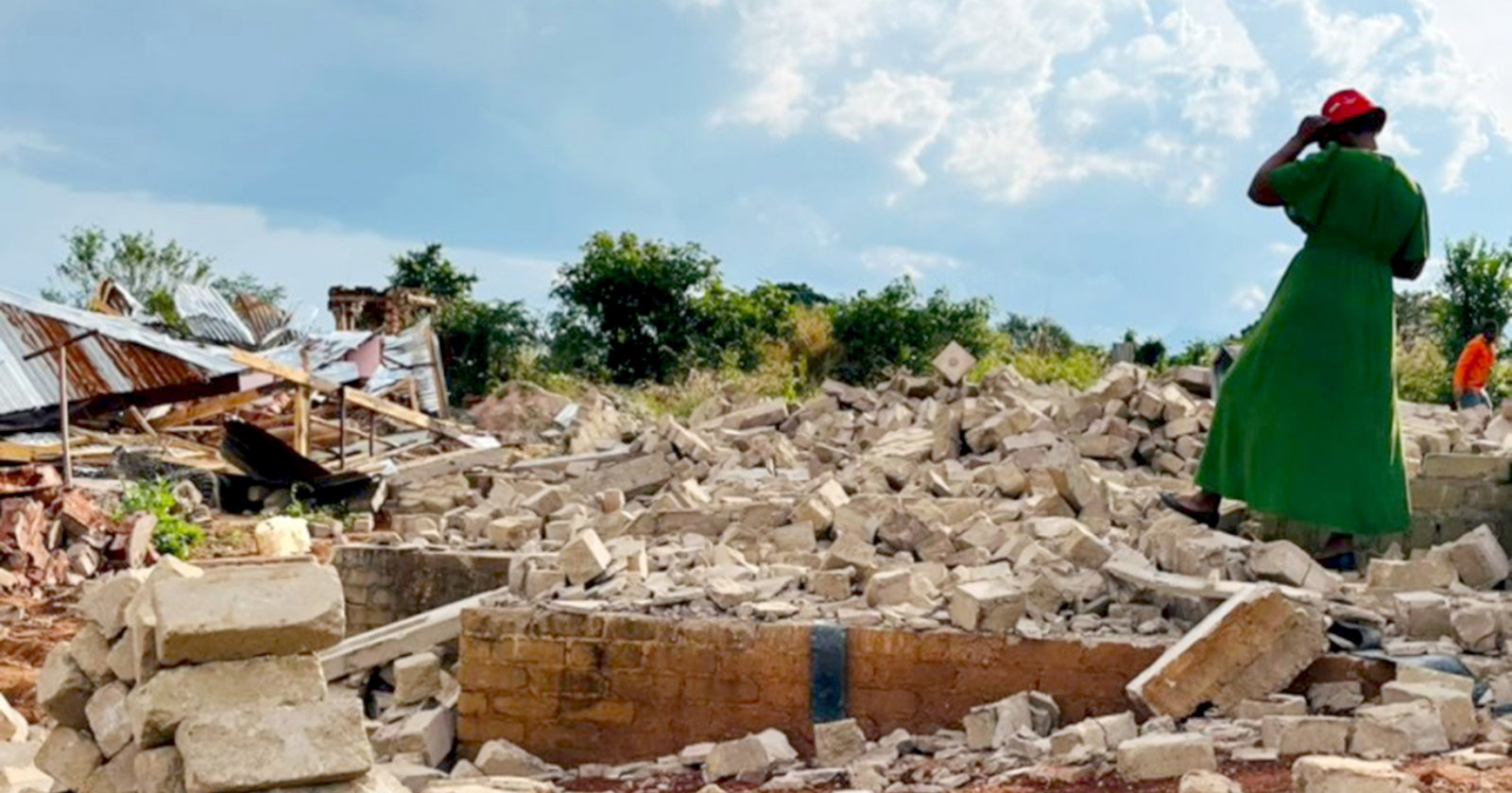
A war of words has erupted between Thulamela Municipality and the Tshivhase Traditional Council after more than 100 houses were bulldozed and reduced to rubble on Friday, 17 April.
At the centre of the dispute are pieces of land in Muledane and Shayandima, with both Thulamela Municipality and the Tshivhase Traditional Council claiming ownership. As the saying goes, when elephants fight, the grass suffers. In this case, residents who settled on the land have become the casualties.
Last Friday, Thulamela Local Municipality moved in with bulldozers, police and private security, saying the structures stood on illegally occupied municipal land.
Residents say they were caught off guard. Rumours had circulated earlier in the week, but many believed no action would be taken without further consultation. At first light, however, the machines rolled in and, despite frantic pleas, the demolitions went ahead.
Among those hardest hit was Mercy Takalani, who lost her 12-room home, built over years with her life’s savings.
“I settled here five years ago. We had Permission to Occupy [certificates] from the Tshivhase Royal Council, which gave us confidence the land was legitimate. To add insult to injury, my house was demolished without prior notice,” she said, adding that they never received any warning letter from the municipality. “We were only tipped off by whistleblowers a day before the demolition. We even went to Mukumbani and were told nothing would happen,” she said.
Fighting back tears, Takalani described the loss as overwhelming.
“In minutes I have lost everything I worked for over a long time. We have nowhere to stay. The municipality could have handled this differently. This is the worst pain I have ever experienced. I am a woman who has gone through labour and has also experienced death, but this pain goes very deep,” she said.
On Monday, 20 April, affected residents from Muledane, led by the community group Community Defenders under activist Hulisani Mani, marched to the municipal offices in Thohoyandou. They handed over a memorandum and staged a sit-in, demanding answers and urgent relief.
In Shayandima, where some families had settled on land belonging to the Nemulalate family, residents have turned to lawyers in a bid to challenge the demolitions.
Municipal spokesperson Nndwamato Tshiila confirmed the operation, saying it followed a court order. “Council resolved to act after repeated warnings to occupants. It was not an overnight decision… we have issued several warnings before,” he said.
According to Tshiila, the municipality has a good working relationship with the Tshivhase leadership and interacts regularly through the mayor and the Mahosi Forum.
Residents, however, are questioning what they describe as selective enforcement. Some properties in the same area, allegedly owned by wealthier individuals, were left untouched, a claim the municipality had not addressed at the time of publication.
Many of the displaced residents say they bought their plots about five years ago, transactions now believed to have been unlawful. This has raised fresh questions about those who sold the land and whether they will be held accountable.
For now, dozens of families remain homeless, sheltering with relatives or in makeshift conditions, with no clear indication of emergency assistance or relocation.
Speaking on behalf of the Tshivhase Traditional Council, Vho Khotsimunene Vho Avhakholwi Tshivhase insisted that the disputed land falls under the authority of the Tshivhase Kingdom, further deepening the standoff between traditional leadership and the municipality.
As tensions rise, residents say they will continue pressing their case through protest action and the courts.
The affected communities have threatened to teach the ruling party, the ANC, a lesson in the forthcoming local government elections.