
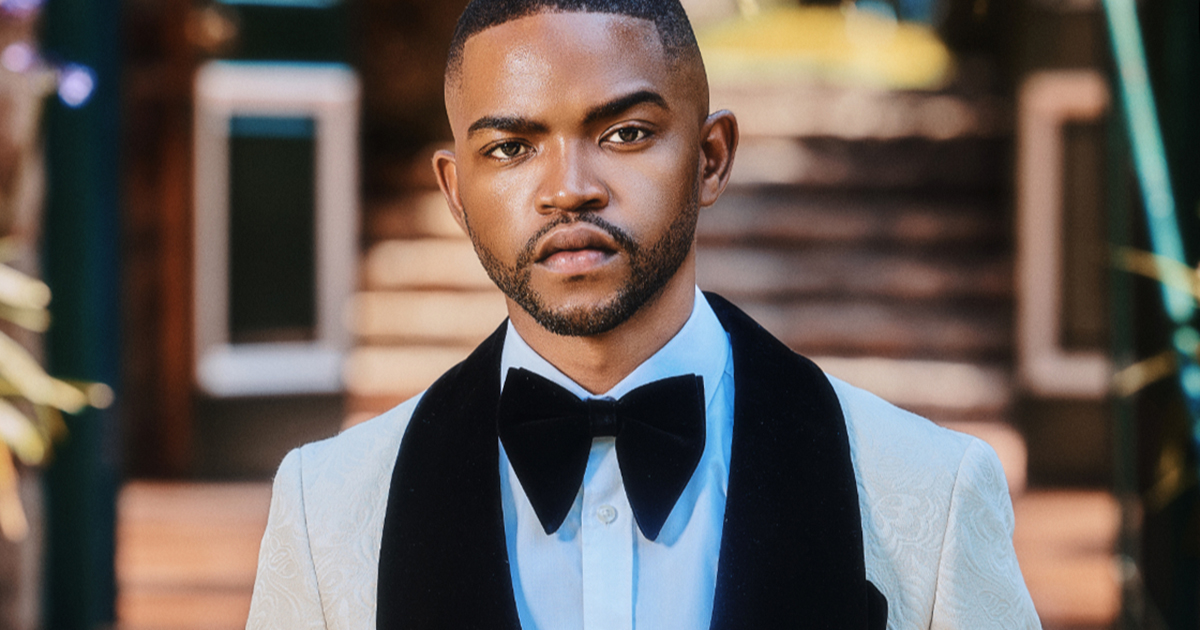
When Una Rams speaks about his journey, it is clear that his music is not only entertainment but also an archive of love, heritage, and cultural pride.
Growing up in Venda, Rams was surrounded by profound love and music that imprinted itself on every memory. The Salvation Army church was his first stage, where he sang soprano on a crate because he was too short to reach the youth choir stand. Those early moments showed him the power of music to move people to tears, to heal, and to unite families.
Even as a child experimenting with a demo version of eJay on the family computer, he learned commitment and vision. "You had to finish a beat in one sitting or lose everything," he recalls. That discipline, combined with an upbringing that valued kindness and faith, laid the foundation for an artist determined to tell his own story.
Rams says his earliest inspirations came not just from music but also from the belief that he could be anything he wanted. Growing up on cartoons and absorbing global media gave him an accent and reinforced a household message that anything was possible. He reflects on how these influences shape his creative vision today: creating music that is authentically his, telling his story, celebrating his heritage, and inspiring others to do the same.
"Today's love songs are rooted in wanting to spread love globally. My gospel background gave me this deep appreciation for beautiful chords and melodies, and I have this unwavering belief that anything is possible," he says. That belief makes him fearless in pursuing his artistic vision, whether transforming funeral songs into wedding celebrations or singing in Venda on international stages.
Over the years, Rams has evolved from creating music he thought the world wanted to hear to making music that genuinely reflects who he is. "The real transformation happened when I stopped trying to fit into existing boxes and started creating my own," he explains. Now, he sings love songs in his mother tongue alongside Afrobeat influences from Ghana. He describes his style as "human," acknowledging that artists are dynamic beings constantly evolving, and his music reflects that journey. Instead of seeking validation from outside, Rams has learned that his most personal, culturally specific music resonates globally. "The world does not need another imitation — it needs the original Una Rams experience," he says.
Collaboration, he insists, is where magic happens, but it must always serve the music. His wife, friends, and fellow artists contribute not only vocals but also creative direction and marketing insights. He recalls working with Amanda Black, breaking his own rule against repeated features because of her exceptional contribution. His Grammy-winning collaboration with Black Coffee reinforced the value of patience in creative partnerships. Rams views collaborations as opportunities to build cultural bridges, bringing together Venda, Zulu, Ghanaian, and international influences in ways that feel organic.
"When I sing ndi a mufuna in Venda over modern production, I am proving that our traditions do not need to be preserved in amber. They need to evolve, to breathe, to find new life in contemporary contexts," he says. This approach culminates in his forthcoming album, Meet Me at the Altar, a project seven years in the making. The album chronicles his journey into love and marriage while preserving heritage, including a praise poem recited by his father that captures their family totem.
Rams sees himself as a storyteller, a healer, and an experimenter. He embraces every aspect of his work with precision, blending Venda traditional music with contemporary production and global sounds. "The music does not belong to me; I am just the vessel through which it finds its way into the world," he says. Coming from Venda, outside mainstream music hubs, presented challenges, but Rams learned that authenticity is his ultimate advantage. The Grammy confirmed that his unique perspective has global value.