
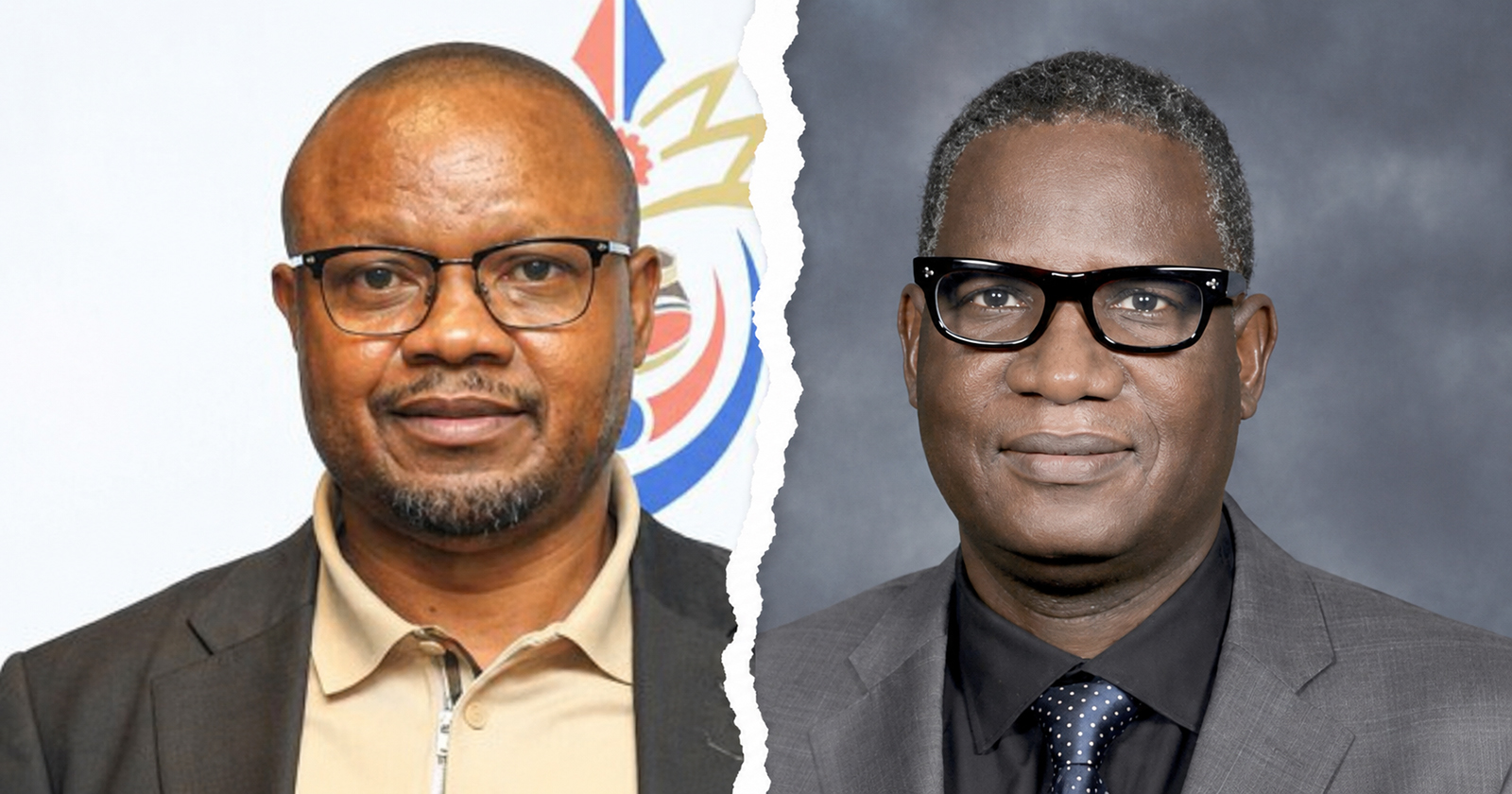
The University of Venda (UNIVEN) is facing a leadership crisis after top management and the university’s Council failed to agree on how to handle allegations of corruption and nepotism. The dispute has now moved to the courts, where Vice-Chancellor and Principal Prof Bernard Nthambeleni on Wednesday, 3 June, sought an interdict to halt attempts to suspend him.
The conflict has been brewing for some time but escalated after anonymous letters circulated containing serious allegations of corruption within the university’s senior management. The letters alleged systemic governance failures, corruption and nepotism, primarily targeting Vice-Chancellor Prof Nthambeleni and Chief Operating Officer (COO) Mr Botwe Kraziya.
In court documents, Nthambeleni described the anonymous whistleblower letters as a smear campaign. He argued that the letters selectively presented internal documents to create a false impression of corruption and asserted that they had been authored by someone within the university seeking to undermine his efforts to “clean up” institutional graft.
The letters triggered an investigation by the Directorate for Priority Crime Investigation (Hawks). In November 2025, the Council acknowledged the investigation and undertook to establish a task team to probe the allegations.
In court documents, however, Council chairperson Rudzani Mushweu alleges that university management actively frustrated the process. Nthambeleni, however, argues that he reported the Hawks’ request to the Council and supported the submission of required documents through proper institutional channels.
First suspension overturned
On 4 May, a special Council meeting was convened to discuss, among other matters, the allegations in the anonymous letters.
The allegations included the irregular employment of a retired registrar, nepotism involving a law firm owned by Nthambeleni’s brother — which allegedly handled a property transaction on behalf of the university — credit card abuse by the COO, and multi-million-rand budget overruns on construction projects.
Earlier anonymous letters contained racially charged undertones, particularly against members of the Indian community. “The VC has sold our university to the Guptas,” the writer stated in a letter sent under the name “John John” on 17 March.
During the 4 May meeting, the Council reportedly resolved to institute a forensic investigation and serve the Vice-Chancellor and COO with notices of intention to suspend them.
Nthambeleni responded by filing an urgent High Court application on 10 May to have the 4 May meeting and its resolutions declared invalid. The matter was heard the following day by Judge Thogomelani Tshidada.
On 13 May, Judge Tshidada declared the special Council meeting of 4 May and all resulting resolutions “unlawful and invalid” because they failed to meet procedural requirements set out in Section 23 of the Amended Statute of the University of Venda. The appointment of Mvundlela and Associates Attorneys Inc. as the university’s attorneys was also declared unlawful.
Second special meeting on 26 May
A second special Council meeting to discuss the whistleblower letters took place on 26 May. This time proper notice was given and the agenda clearly set out what was to be discussed.
After initial debate about whether Nthambeleni should take part, he voluntarily recused himself to allow free deliberation and avoid institutional divisiveness.
Council members agreed that the allegations were too serious to ignore and that failing to act would undermine the Council’s credibility. They agreed that an independent forensic investigation was necessary.
Following extensive debate, the Council resolved to appoint an independent forensic investigator to probe the allegations. Rather than imposing an immediate suspension, a process was to be initiated that could lead to suspension. The VC and COO were to be given 24 hours to provide reasons why they should not be placed on precautionary suspension.
The resolutions were not supported by all Council members. Some members objected, arguing that suspension was premature as no clear evidence of risk had yet been established.
Court again asked to intervene
Nthambeleni again rejected the Council’s approach to the investigation. A Council meeting was scheduled for Wednesday, 3 June, at which his response would be discussed and a decision taken on whether the VC and COO should be provisionally suspended.
His legal team again filed court papers, with a hearing scheduled for 3 June in the Thohoyandou division of the Limpopo High Court.
In his application, Nthambeleni asks for two levels of relief: immediate urgent interim measures and a final review of the Council’s conduct. He asks that the 26 May resolution and all subsequent “Notice of Intention” letters designed to initiate his precautionary suspension be set aside.
Nthambeleni also wants all records of the meetings, the anonymous whistleblower letters, and all correspondence regarding the appointment of external legal firms.
If the court allows the investigation to proceed, Nthambeleni asks that it mandate strict conditions for any future suspension attempt, including proper disclosure and a fair opportunity to respond. He also insists that any Council member whose participation would give rise to actual or perceived bias recuse themselves from deliberations.
Nthambeleni argues the orders are necessary because the current process is a “re-styled suspension process” mirroring the earlier unlawful attempt that was set aside by the court.
At the time of going to press, the outcome of the case was not yet known.
Chamber calls for ministerial intervention
The Limpopo Chamber of Commerce and Industry (LCCI) on Saturday, 30 May, released a statement urging Minister of Higher Education and Training Buti Manamela to intervene. The LCCI said it had become involved in the crisis because it viewed the university as a critical regional economic driver and strategic public asset whose stability is vital to the Vhembe District and Limpopo Province.
The organisation cited a “breakdown of trust and governance coherence at Council level”, noting that the environment had become “unstable, contested and incapable of restoring public confidence on its own”.
The LCCI called for the appointment of an independent assessor to determine whether the current Council remains capable of discharging its fiduciary and legal responsibilities. It also called for Council members whose conduct has been questioned by the court, or who are directly implicated in the crisis, to step aside pending the assessment.
The LCCI received support from Limpopo Legal Solutions (LLS), a non-profit organisation representing advocates and attorneys in the region. In a letter to the Council, LLS demanded an immediate investigation into the conduct of the chairperson and executive committee members of the Council.