
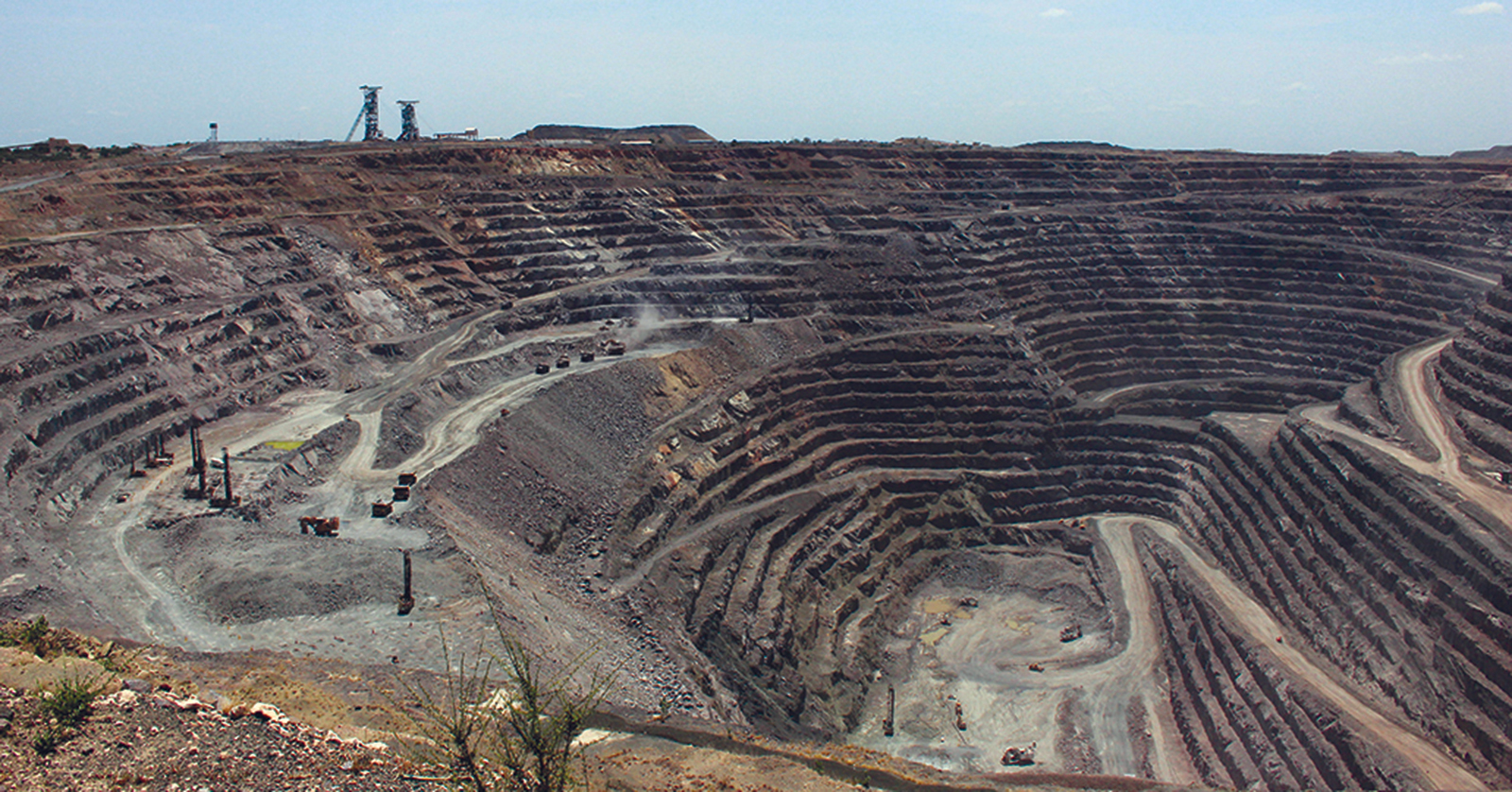
De Beers Group will pause production at its Venetia diamond mine near Musina for two years, a move that will place South Africa's largest diamond mine, and the roughly 4,400 jobs it supports, in limbo.
The diamond producer announced the pause on Monday as part of a broader restructuring of its global business, saying it needed to protect its balance sheet while trading conditions in the rough diamond market remained difficult.
“Consistent with recent actions to improve business resilience, De Beers intends to pause production at the Venetia mine in South Africa for two years to reduce costs while also rephasing capital expenditure on its underground project,” the company said in a statement.
De Beers said the pause would allow it to continue investing in "critical infrastructure" underground so the mine could ramp up production once market conditions improved. The group said it was engaging with stakeholders "in accordance with relevant requirements and the company's values" and would continue to support affected employees and honour its Social and Labour Plan commitments.
Chief executive Al Cook said the changes were intended to strengthen the business over the long term.
“In line with our commitment to focus and streamline our business, we are making a number of changes to De Beers to ensure greater business resilience in the near-term, while supporting long-term value creation,” he said, adding that De Beers was encouraged by early signs of recovering demand for higher-value diamonds even as global rough supply continued to shrink.
Part of a broader retreat
The Venetia production pause is the latest in a series of cost-cutting measures at De Beers, which is majority-owned by Anglo American. Earlier this year, the company mothballed the Tuzo Phase 3 expansion at its Gahcho Kué mine in Canada. It says it has already stripped more than $100 million in annual overhead costs from the business since 2024 under its Origins strategy. Alongside the Venetia pause, De Beers will restructure its global operating model and further reduce its corporate cost base, a move likely to result in job losses at its London headquarters.
The diamond producer is facing one of the industry's toughest downturns in years, driven by a supply glut, competition from lab-grown diamonds and weaker Chinese demand for luxury goods, compounded by broader trade tensions. Anglo American, which has been trying to sell its stake in De Beers, has written down the unit's value for three consecutive years. De Beers said its overall production guidance remained unchanged because output would be redirected to its operations in Botswana and Namibia.
A mine three decades in the making
Venetia has been South Africa's flagship diamond mine since opening in 1992. For three decades it operated as an open-pit mine, at one point producing more than seven million carats a year, before the pit reached its economic limit.
Open-pit mining ended in December 2022 after De Beers invested about $2.3 billion to convert Venetia into an underground mine, one of the largest capital projects in the group's history. Underground production began in July 2023 and was expected to extend the mine's life to at least 2046, with projected output of close to 100 million carats. Venetia produced 2.23 million carats last year, about a tenth of De Beers' total rough diamond production and, by value, its most important asset.
A hard blow for Musina
The mine lies about 80 km from Musina and underpins much of the local economy. It is not the first warning sign for the area. In late 2024, De Beers issued Section 189 notices affecting 458 of Venetia's roughly 1,450 direct employees and terminated a contract with Murray & Roberts Cementation that covered about 1,400 more workers. The decision also affected smaller local businesses, including transport operators ferrying mine employees. Wage disputes and a shift-pattern dispute that resulted in the dismissal, and later reinstatement, of 85 workers have also strained relations between De Beers and the National Union of Mineworkers over the past two years.
A two-year production pause raises the stakes considerably beyond those earlier retrenchments. De Beers has not said how many of the roughly 4,400 people employed at Venetia could lose their jobs, although a company spokesperson indicated the pause was expected to result in "significant" layoffs, with support to be offered to affected employees. For a town where many households depend directly or indirectly on the mine, and where municipal finances are already under pressure, the impact is likely to extend well beyond the mine gate, affecting municipal revenue, small suppliers, transport operators and traders who rely on Venetia's payroll.