
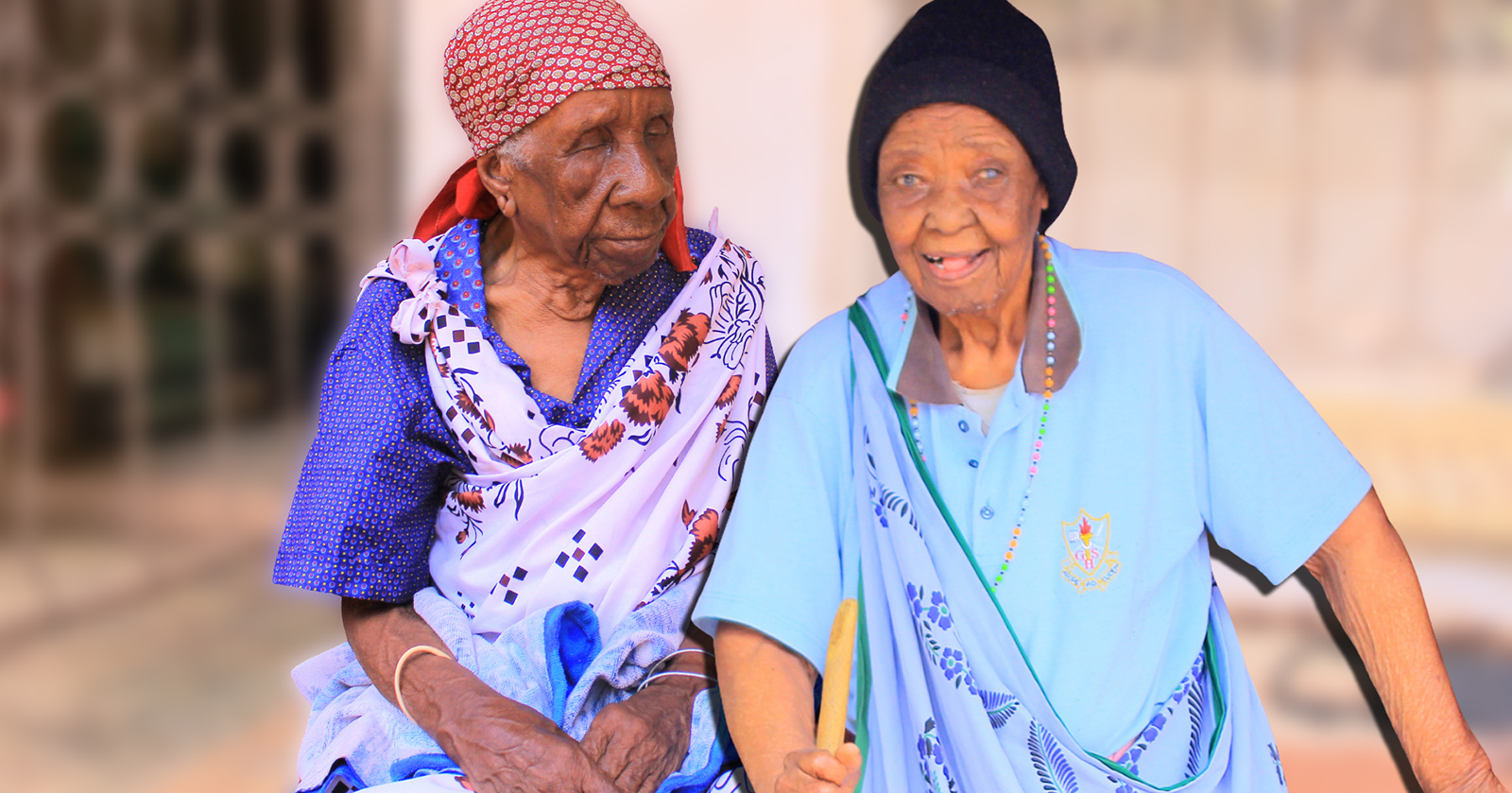
The Vhembe district has a striking age demographic. Of the more than 1.5 million people living there, fewer than 83,000 are aged 65 or older. However, when residents do reach old age, they tend to live very long lives, with more than 1,200 centenarians (people aged 100 years and older).
These statistics are derived from the 2022 census, which also shows a significant gender imbalance among older people. Only one in 10 people aged 80 and older is male. This is also reflected in Limpopo, where 79,508 of the 105,233 residents aged 80 and older are women.
The Vhembe district has a relatively young population, with only 5.4% of residents aged 65 or older. This helps explain the low mortality rate, also referred to as the crude death rate, which is the lowest in the province (7.6 deaths per 1,000 people for the 2021–2026 period).
The statistics also reveal another worrying aspect: 71% of older people can be described as vulnerable, living below the Upper Bound Poverty Line. This is much higher than the national average of 52.6%. In Limpopo, 97% of elderly people rely on government support.
Who cares for the centenarians?
Limpopo Mirror tracked down five women aged over 100 living in the Elim Hlanganani district. Those caring for them say there is little support for the elderly and very few dedicated frail care services.
Languta Baloyi, acting director of the Elim Hlanganani Society for the Care of the Aged, said older people face a shortage of basic support and care.
Baloyi said there is a lack of equipment, such as walking sticks and wheelchairs, and a shortage of caregivers. “There is a need for a frail care centre, as families are struggling to cope with caring for them,” she said.
Baloyi said the organisation is currently supporting five centenarians, most of whom struggle with limited mobility, weak eyesight and reduced appetite. “They eat less and are more selective. Some spend time talking about how they used to live and how they grew up,” she said.
She added that there is no dedicated nutrition programme for the elderly. “We only provide food when we receive donations,” she said.
The organisation checks in on the elderly and provides assistance where needed. Family members, however, remain their primary caregivers.
Healthy eating and strong faith
Limpopo Mirror interviewed three of the five centenarians, asking them what they believe has helped them live so long. Their answers were simple: food, faith and the way they were raised.
One of the women, Francina Mabula (105) from Waterval, was the first-born in her family. She had 10 children, of whom only two are still alive.
“We grew up eating vegetables,” she said. She was never on chronic medication and enjoyed good health for most of her life. “I don’t get injected and I am still strong,” she said.
She said the only health problem she now struggles with is pain in her left ankle. She recalls a childhood shaped by physical labour. They ploughed maize fields and produced their own maize meal at home. “We grew up eating food with maize meal,” she said. Vegetables formed part of their daily meals, with food grown in the fields and prepared at home.
She worked on a farm for several years. There was no electricity in the village at the time, and girls were not allowed to attend school. Instead, they kept themselves busy with chores, cutting firewood and helping at home.
In the evenings, families gathered to listen to elders tell stories. “We used to beat boredom by keeping ourselves busy and laughing,” she said.
She said she has never smoked or consumed alcohol.
Stick to a simple lifestyle
The second centenarian, Nyanisi Khosa (100) from Nwamurima village, now living in Magangeni, also attributes her long life to simple living. She said she drank alcohol when she was younger but later stopped. She has since lost her eyesight but remains clear in her speech.
“The secret to my longevity is God and eating healthy and living a good lifestyle,” she said.
A third centenarian, Mijaji Chauke (112), her mother’s only child, recently fell inside her house during the night. She was admitted to Elim Hospital and is now recovering at home. Like other elderly women of her generation, she used to plough her own fields.
Both women described growing up in homes where meals were basic and largely plant-based. Maize meal was a staple, and vegetables were eaten regularly. Meat was not an everyday food. Their daily lives involved physical work: water had to be fetched, firewood cut and fields worked.
When asked what has kept them alive for more than a century, they did not mention modern medicine. Instead, they spoke about eating vegetables, avoiding harmful habits and placing their trust in God.